Stock Analysis · Intel Corporation (INTC)
Overview
Intel Corporation designs and sells semiconductor products and related solutions. In simple terms, Intel makes the “brains” (processors and other chips) that help computers, servers, and many connected devices do their work. Intel also develops platforms that combine hardware and software features aimed at performance, security, and manageability for business and consumer customers.
Intel reports its business through major product groups that broadly map to how chips are used. The largest revenue areas are typically related to client computing (PC-related) and data center / server computing, with additional contributions from networking/edge uses and emerging manufacturing services (where Intel aims to produce chips for other companies). The exact mix can shift materially from year to year depending on PC demand cycles, cloud spending, and product competitiveness.
Main revenue sources (largest to smallest, categories as described in Intel filings; shares vary by year):
- Client Computing (PC processors and related chipsets/platform components)
- Data Center / Server (processors and related products for servers and cloud infrastructure)
- Network & Edge (chips used in networking equipment and edge computing)
- Foundry / Manufacturing services (building chips for external customers; still developing relative to Intel’s traditional product businesses)
- Other / smaller businesses (varies by reporting period and organizational structure)
What has recently stood out financially is that Intel’s revenue base has been meaningfully lower than earlier in the decade, while spending and investment needs (especially manufacturing and R&D) remain high. That combination tends to pressure profits and cash generation until volumes, pricing, and efficiency improve.
Over the last several years shown, total revenue declined from about $79.0B (2021) to about $52.9B (2025). At the same time, several major cost lines remained large: research and development stayed in the mid–teens of billions of dollars annually, and operating expenses rose sharply in 2024. Net income swung from ~$19.9B profit (2021) to a large loss in 2024, then near break-even again in 2025, illustrating how sensitive results can be to industry conditions and execution.
Key Figures
| Metric | Value | Industry ⓘ |
|---|---|---|
| Date | Feb 07, 2026 | |
| Context | ||
| Sector | Technology | |
| Industry | Semiconductors | |
| Market Cap ⓘ | $252.71B | |
| Beta ⓘ | 1.38 | |
| Fundamental | ||
| P/E Ratio ⓘ | N/A | 45.89 |
| Profit Margin ⓘ | -0.51% | 9.42% |
| Revenue Growth ⓘ | -4.10% | 13.10% |
| Debt to Equity ⓘ | 40.76% | 25.62% |
| PEG ⓘ | 0.50 | |
| Free Cash Flow ⓘ | -$4.95B | |
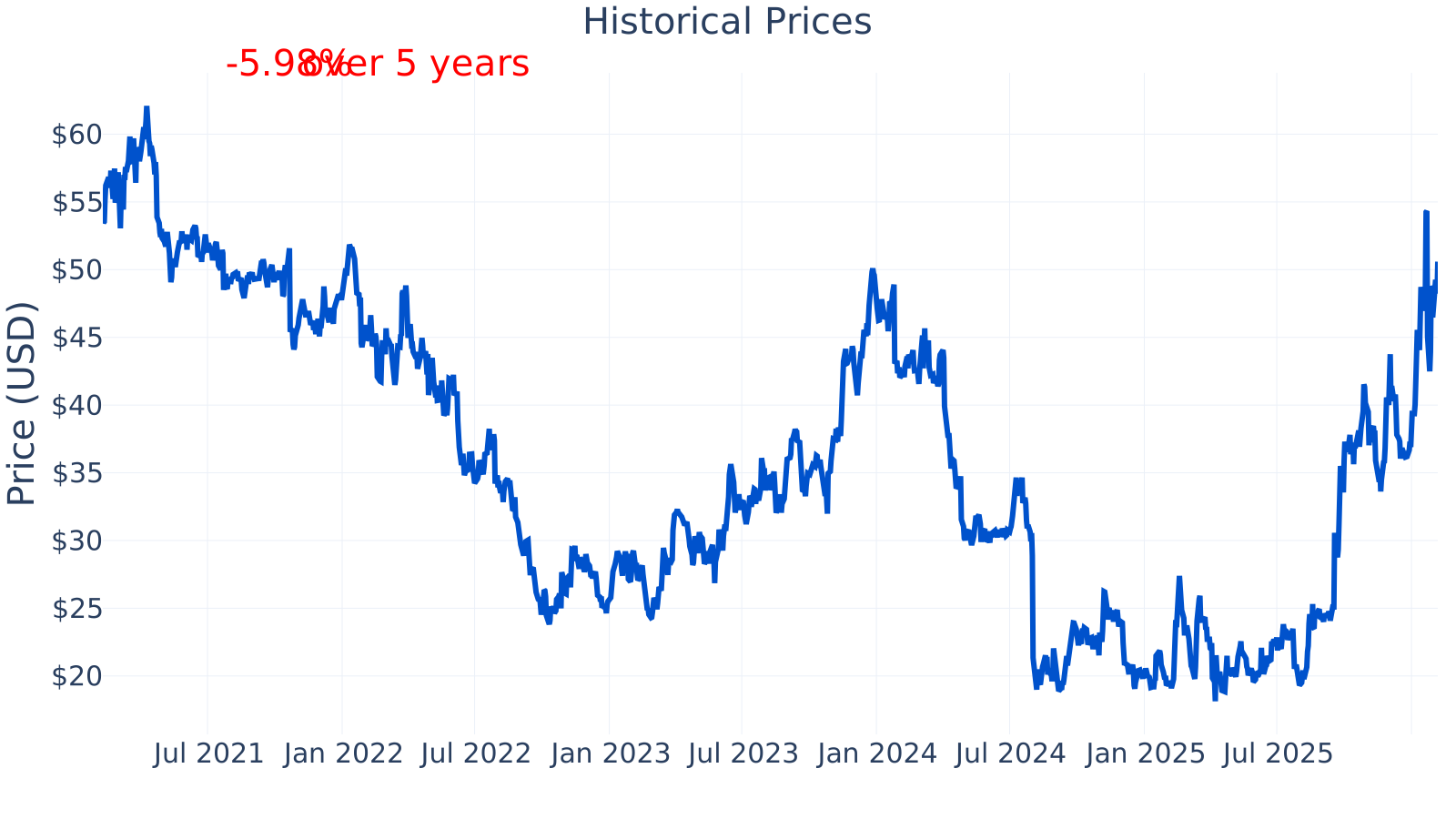
Intel’s market capitalization is about $252.7B, placing it among the larger global semiconductor companies. The stock’s beta of ~1.38 suggests it has historically moved more than the overall market (up and down). Recent profitability and growth metrics are weaker than the median company in the semiconductor peer set shown: profit margin is around -0.5% versus an industry median near 9.4%, and year-over-year revenue growth is about -4.1% versus an industry median near 13.1%. Balance-sheet leverage is higher than the peer median with debt-to-equity around 40.8% versus ~25.6% for the median. Free cash flow over the trailing twelve months is about -$4.95B, meaning cash outflows exceeded cash generated from operations after capital spending over that period.
Growth (medium)
The semiconductor industry is structurally important and supported by long-term demand drivers: cloud computing, artificial intelligence workloads, cybersecurity needs, advanced networking, and the steady digitization of products and services. However, it is also cyclical. Demand can swing with consumer PC upgrades, enterprise/server spending, and inventory cycles across the supply chain.
Intel’s growth strategy can be understood in two tracks. First, it aims to strengthen its core product competitiveness in PCs and servers by delivering improved architectures and more competitive performance per watt. Second, Intel is investing to expand manufacturing capabilities and offer production services to external customers. If executed well, this could diversify revenue over time beyond Intel-branded chips and potentially benefit from demand for geographically diversified manufacturing.
The revenue growth pattern shown is uneven: Intel experienced large year-over-year declines during the 2022–2023 period, then periods of stabilization and modest recovery, followed by renewed weakness later. The most recent point shows about -4.1% year-over-year, which is below the broader peer median in the semiconductor group displayed. For long-term outcomes, a key question is whether Intel can return to sustained growth through improved product cycles and higher utilization of its manufacturing footprint.
Free cash flow has been under pressure. The chart shows a move from strongly positive levels in 2021 to deeply negative territory in 2023, remaining negative through the latest periods shown. This matters because Intel is a capital-intensive business: building and upgrading fabrication plants requires very large, multi-year spending. For long-term compounding, durable positive free cash flow tends to provide flexibility for reinvestment, balance-sheet strength, and shareholder distributions—so this is a central area to watch as new capacity ramps and margins normalize.
Risks (high)
This article is for informational purposes only and does not constitute financial advice. Some content is AI-generated. See Disclaimer


