Stock Analysis · Installed Building Products Inc (IBP)
Overview
Installed Building Products, Inc. (IBP) is a U.S. specialty contractor focused on installing building products, with a strong footprint in residential construction. In simple terms, IBP helps builders finish homes by installing key “inside-the-walls” and finishing components. The company operates through a large network of local branches, serving homebuilders and, to a lesser extent, repair/remodel customers.
Based on company disclosures, IBP’s work spans insulation (its largest category), plus a range of complementary installation services that can be bundled for builders. Revenue is primarily generated from providing installation labor along with the related materials for those projects. While exact up-to-date percentages can vary by year, IBP commonly describes its revenue mix along these lines:
- Insulation installation (typically the largest revenue contributor)
- Complementary building products installation (examples often include waterproofing, gutters, garage doors, window blinds, shower doors/mirrors, shelving/closet systems, and similar installed products)
- Repair/remodel activity (generally smaller than new residential construction exposure)
The company’s operating model is built around scale (purchasing power for materials), standardized processes, and local execution. It also has a long history of expanding its branch network through acquisitions of local installers, then integrating them into IBP’s broader platform.
From 2021 to 2024, total revenue increased from about $2.0B to about $2.94B. Over the same period, net income grew from about $119M to about $257M. Costs and overhead rose as the business expanded, but operating income also increased (about $185M to about $383M), indicating that profitability grew alongside the larger revenue base.
Key Figures
| Metric | Value | Industry ⓘ |
|---|---|---|
| Date | Feb 07, 2026 | |
| Context | ||
| Sector | Consumer Cyclical | |
| Industry | Residential Construction | |
| Market Cap ⓘ | $8.87B | |
| Beta ⓘ | 1.94 | |
| Fundamental | ||
| P/E Ratio ⓘ | 35.44 | 12.00 |
| Profit Margin ⓘ | 8.60% | 8.48% |
| Revenue Growth ⓘ | 2.30% | -4.90% |
| Debt to Equity ⓘ | 145.20% | 34.53% |
| PEG ⓘ | 1.20 | |
| Free Cash Flow ⓘ | $52.90M | |
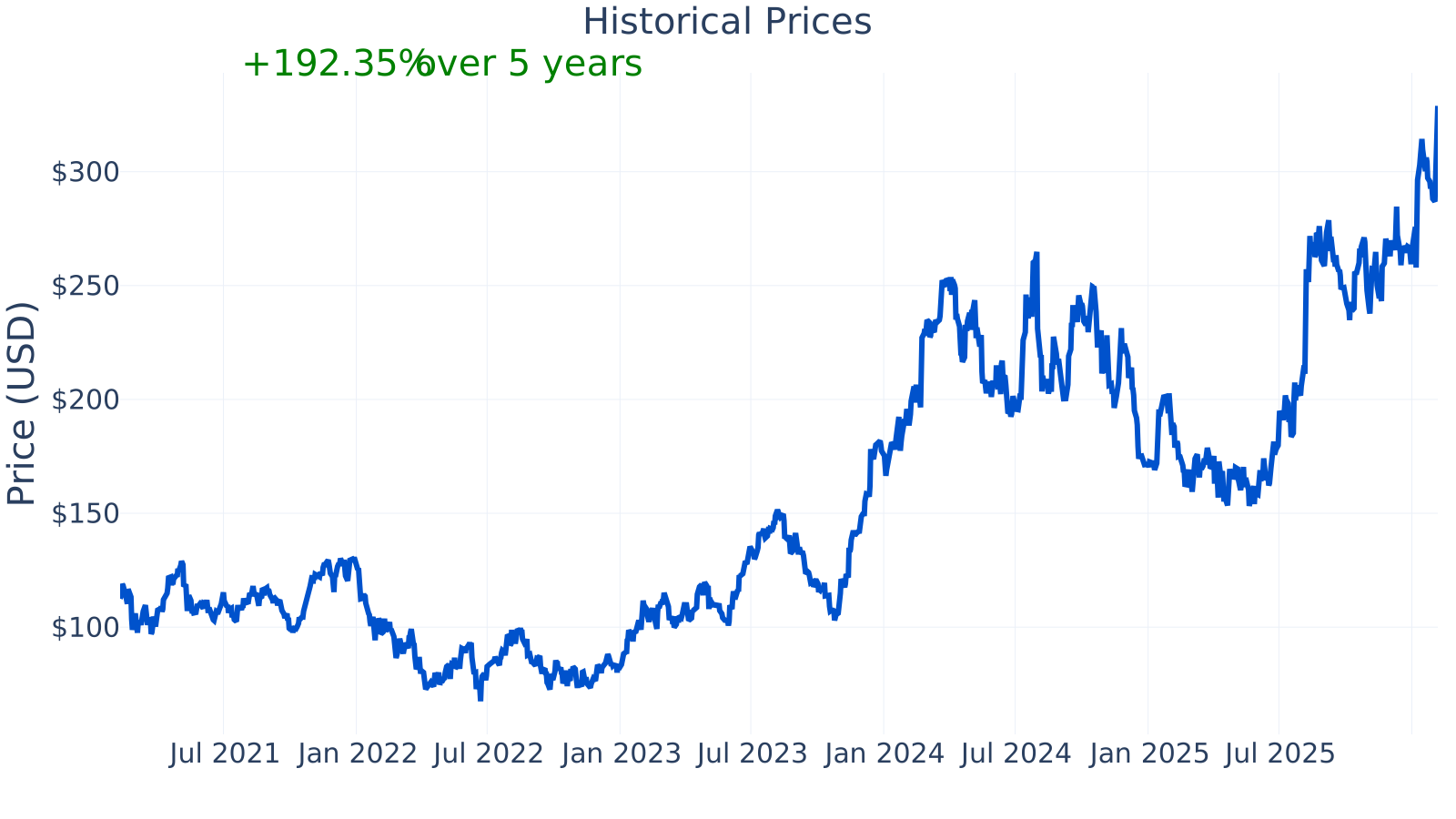
IBP’s market capitalization is about $8.9B, placing it in mid-cap territory. The stock’s beta (~1.94) suggests it has tended to move more than the broader market, which can matter for long-term holders during housing upcycles and downcycles. Current profitability is a key reference point: net profit margin is about 8.6%, roughly in line with the industry median (~8.5%). Recent year-over-year revenue growth is about 2.3%, while the industry median is negative (around -4.9%), indicating IBP has recently held up better than many peers. One notable metric is leverage: debt-to-equity is about 145%, materially above the industry median (~35%). The P/E ratio is about 35.4 versus an industry median near 12.0, meaning the market is valuing IBP at a higher earnings multiple than many comparable residential construction-related firms.
Growth (Medium)
IBP operates in a cyclical industry tied closely to U.S. residential construction activity, especially new homebuilding. Over long periods, demand for housing tends to be supported by household formation, housing stock aging, and regional migration trends, but shorter periods can be heavily influenced by mortgage rates and affordability. This makes the industry “growth-capable” over time, but not steadily predictable year to year.
IBP’s strategy is designed to grow through a mix of (1) capturing more work per home by offering multiple installed product categories and (2) expanding geographically and adding branches through acquisitions. This model can make sense in a fragmented contractor market where local players are common and scale can improve purchasing, recruiting, training, and scheduling efficiency.
The revenue growth pattern shows a surge during 2021–2022 (often above 20%–40% year-over-year in several quarters), followed by a cooldown into low single digits and occasional slight declines (for example, around -1.2% in early 2025, then back to low positive growth). This kind of arc is consistent with a housing-driven business moving from a strong cycle into a more normalized environment.
Free cash flow (cash left after operating needs and capital spending) has been positive in the periods shown, reaching roughly $283M (TTM) at one point and about $260M more recently in the graph. However, the latest metrics table lists free cash flow (TTM) around $52.9M, which highlights an important reality for this type of business: cash generation can fluctuate meaningfully due to working capital needs (timing of customer payments, supplier payments, and inventory/material flows) and the pace of expansion or acquisitions.
Potential business catalysts are typically tied to (a) a re-acceleration in housing starts or completions, (b) stronger repair/remodel activity, and (c) successful acquisitions that add new territories or service lines and can be integrated without eroding margins.
Risks (High)
This article is for informational purposes only and does not constitute financial advice. Some content is AI-generated. See Disclaimer