Stock Analysis · Insight Enterprises Inc (NSIT)
Overview
Insight Enterprises Inc. is a technology solutions provider that helps organizations plan, buy, and manage IT. In plain terms, it acts as both (1) a large-scale seller of hardware and software (often from major vendors) and (2) a services partner that supports areas like cloud, data center, networking, cybersecurity, and digital workplace needs. This mix generally means a business with high sales volume (especially from product resale) and relatively thin profit margins, while services and solutions work aims to add stickier customer relationships and higher-value offerings.
Insight’s revenue is typically described in two broad buckets in company filings:
- Product and software resale (often the largest share): hardware, software licenses, and related items sold to commercial and public-sector customers.
- Services and solutions: professional services, managed services, cloud-related work, and other implementation/support activities.
The company also provides geographic and customer-type breakdowns in its annual reporting (for example, by region and by public sector vs. commercial), which helps show where demand is coming from and how diversified the business is.
Across the years shown, total revenue trends lower from the 2022 peak (about $10.4B) to 2025 (about $8.2B). Over the same period, operating income declines (roughly $420M in 2022–2024 to about $311M in 2025), and interest expense rises notably by 2025 (about $85M vs. ~$40M in earlier years), which can matter for profitability when borrowing costs or debt levels increase.
Key Figures
| Metric | Value | Industry ⓘ |
|---|---|---|
| Date | Feb 08, 2026 | |
| Context | ||
| Sector | Technology | |
| Industry | Electronics & Computer Distribution | |
| Market Cap ⓘ | $2.81B | |
| Beta ⓘ | 0.92 | |
| Fundamental | ||
| P/E Ratio ⓘ | 18.34 | 18.34 |
| Profit Margin ⓘ | 1.91% | 1.85% |
| Revenue Growth ⓘ | -1.20% | 9.70% |
| Debt to Equity ⓘ | 96.21% | 54.56% |
| PEG ⓘ | 0.78 | |
| Free Cash Flow ⓘ | -$16.29M | |
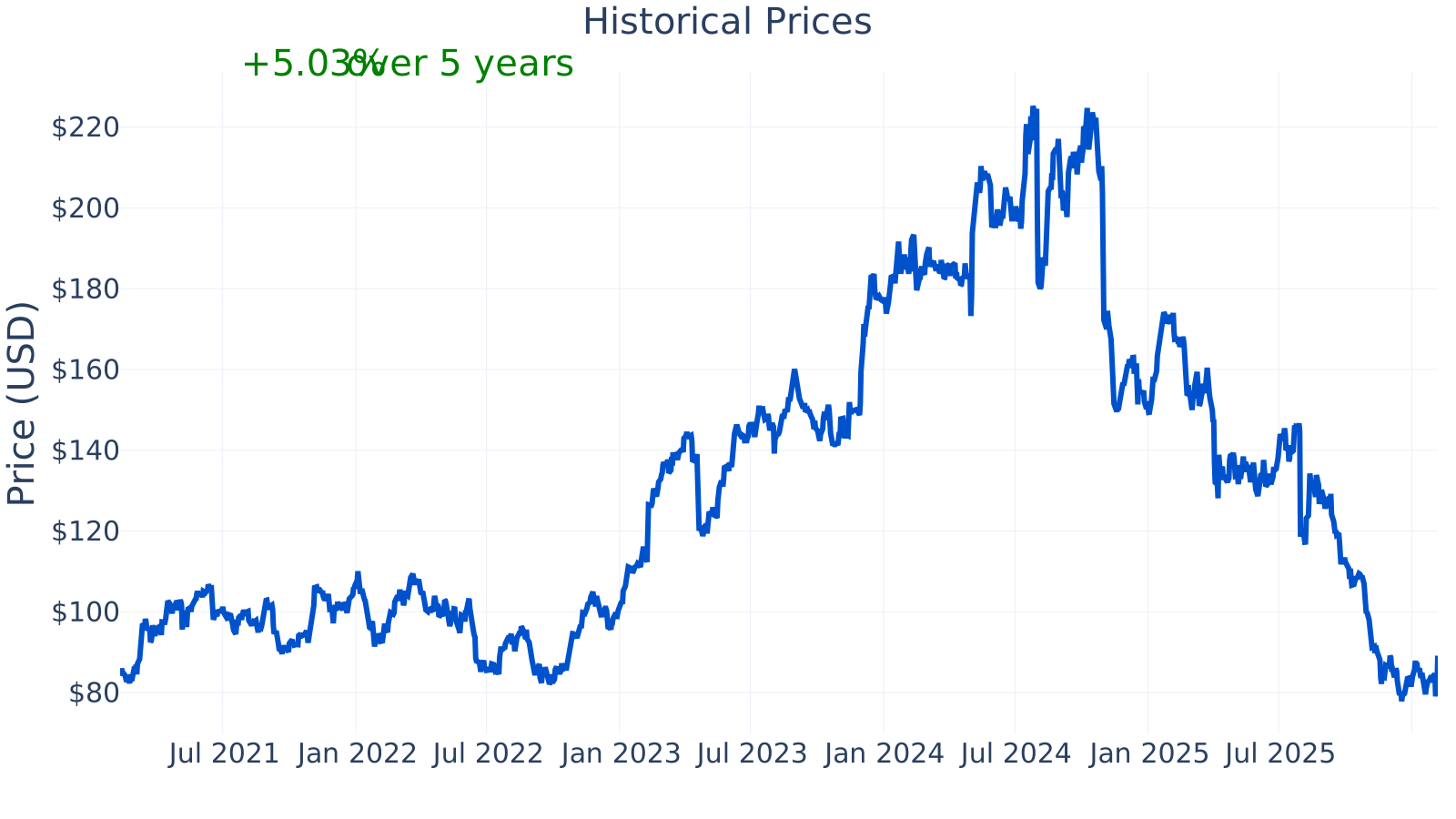
Based on the latest metrics shown, Insight has a market capitalization of about $2.8B and a beta of ~0.92 (historically somewhat less volatile than the broader market). The company’s P/E ratio is ~18.34, in line with the displayed industry median. Net profit margin is ~1.91% (industry median ~1.85%), reflecting the thin-margin nature of IT distribution/resale. Recent year-over-year revenue growth is about -1.2% versus an industry median shown near +9.7%. Debt-to-equity is ~96% (industry median ~55%), indicating heavier use of debt than the median peer group. The PEG ratio is ~0.78 (a ratio that relates valuation to expected growth, though it depends heavily on the growth assumptions behind it). Finally, free cash flow (TTM) is about -$16.3M, which signals that, over the most recent trailing period shown, cash generated after capital spending was slightly negative.
Growth (Medium)
Insight operates in a broad, long-running IT spending environment rather than a single “winner-take-all” niche. Many customers continue to refresh devices, modernize data centers, adopt cloud services, and invest in security. This backdrop can support steady demand over time, but it is also competitive and can be cyclical—especially for product sales tied to corporate or government budgeting cycles.
A key part of Insight’s strategy—commonly discussed in company communications and filings—is to expand beyond product fulfillment into higher-value solutions and services (such as cloud and managed offerings). In practice, this can help reduce reliance on one-time hardware cycles and can deepen relationships with enterprise clients, but it also requires ongoing investment in talent, tools, and delivery capabilities.
The year-over-year revenue pattern shown is uneven. There was strong growth in parts of 2021–2022, followed by multiple quarters of contraction through 2023 and much of 2024–2025. This kind of swing is consistent with a business exposed to hardware/software purchasing cycles and normalization after stronger periods, but it also means growth may not be smooth from year to year.
Free cash flow is also volatile in the period shown: it moves from negative in 2022 (about -$233M) to strongly positive in 2023–2024 (about $488M to $670M), then moderates in 2025 (about $163M) and is slightly negative on the latest trailing basis shown (-$16M). For a reseller/distributor-like business, working capital (inventory and customer/vendor payment timing) can materially affect cash generation, so this variability is an important feature to monitor over time.
Risks (Medium)
This article is for informational purposes only and does not constitute financial advice. Some content is AI-generated. See Disclaimer


