Stock Analysis · Infosys Ltd (INFY)
Overview
Infosys Ltd (INFY) is a global information technology services company. In simple terms, it helps other organizations build, run, and modernize their software and digital operations. This typically includes designing and maintaining business applications, moving systems to the cloud, improving cybersecurity, using data and analytics to make better decisions, and supporting large-scale technology projects for enterprises.
Infosys primarily earns revenue by providing technology and consulting services to business customers under long-term contracts. Its work is often “mission-critical” (systems that companies need to keep running every day), which can support recurring demand, while project-based work (like major modernization programs) can create ups and downs depending on client spending cycles.
Public filings describe revenue mainly in service lines and industry verticals rather than a simple consumer-style product breakdown. A typical breakdown includes areas such as digital transformation, cloud and infrastructure services, application development and maintenance, and consulting/implementation services. The mix can shift over time as clients prioritize cost optimization versus modernization.
Over recent fiscal years, total revenue increased from about $13.6B (FY2021) to about $19.3B (FY2025). Operating income also rose over the same period (roughly $3.6B to $4.5B), while net income increased more modestly (about $2.6B to about $3.16B). This pattern suggests that profitability expanded in absolute dollars as the business grew, even though margins can fluctuate based on wage costs, pricing, and client demand.
Key Figures
| Metric | Value | Industry ⓘ |
|---|---|---|
| Date | Feb 07, 2026 | |
| Context | ||
| Sector | Technology | |
| Industry | Information Technology Services | |
| Market Cap ⓘ | $68.13B | |
| Beta ⓘ | 0.26 | |
| Fundamental | ||
| P/E Ratio ⓘ | 21.87 | 21.13 |
| Profit Margin ⓘ | 16.15% | 4.91% |
| Revenue Growth ⓘ | 3.20% | 6.15% |
| Debt to Equity ⓘ | 10.59% | 54.49% |
| PEG ⓘ | 2.64 | |
| Free Cash Flow ⓘ | $3.80B | |
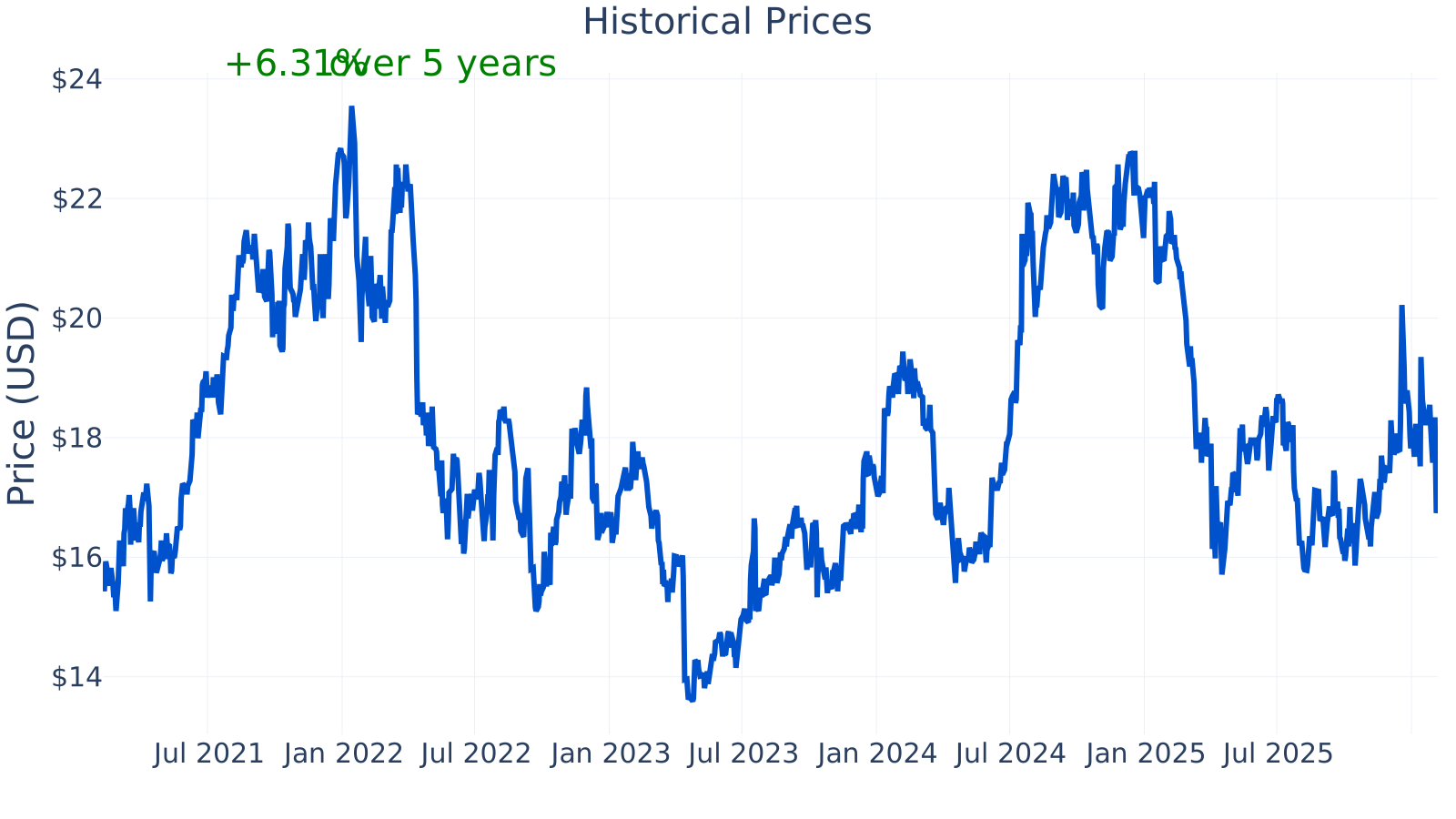
Infosys has a market capitalization of about $68.1B and a low beta of 0.26, which indicates the stock has historically moved less than the broader market. The P/E ratio is 21.87 versus an industry median near 21.13, placing it close to the sector’s central range. Profitability stands out: profit margin is about 16.15% compared with an industry median around 4.91%. Growth is more mixed: year-over-year revenue growth is about 3.2% versus an industry median near 6.15%. Leverage looks conservative: debt-to-equity is about 10.59% versus an industry median around 54.49%. The PEG ratio is 2.64 (a valuation metric that relates P/E to growth), and trailing twelve-month free cash flow is about $3.80B.
Growth (Medium)
Infosys operates in the IT services industry, which is supported over the long run by ongoing digitization: companies continue to modernize legacy systems, move workloads to cloud platforms, strengthen cybersecurity, and use data/AI to improve processes. Demand, however, can be cyclical in the short term because enterprise clients may delay discretionary technology projects during uncertain economic periods.
Revenue growth has slowed materially from the high growth rates seen in 2021–2022 to low single digits more recently (around 3% in the latest period shown). This often aligns with a normalization after strong post-pandemic spending and with clients focusing more on cost control. For a long-term view, a key question is whether growth re-accelerates as technology budgets shift back toward modernization programs, and whether Infosys can expand share in higher-value work (for example, large transformation deals, industry platforms, and AI-enabled services).
Free cash flow has been meaningfully positive across the period shown and rose to about $4.15B by FY2025 (trailing twelve months shown separately at about $3.80B). For an IT services company, sustained free cash flow can matter because it provides flexibility for investment in talent and tools, resilience during slower demand phases, and room for shareholder returns—while also acting as a “quality check” that reported earnings are backed by cash generation.
Potential catalysts are typically execution-driven rather than one-time events: winning and successfully delivering large, multi-year client programs; expanding in faster-growing service areas (such as cloud, cybersecurity, and data/AI services); and maintaining efficient delivery while managing wage inflation and employee utilization.
Risks (Medium)
This article is for informational purposes only and does not constitute financial advice. Some content is AI-generated. See Disclaimer


