Stock Analysis · Imax Corp (IMAX)
Overview
IMAX Corporation is an entertainment technology company best known for its large-format movie presentation. In simple terms, IMAX helps theaters offer a “premium” movie experience through its proprietary screens, projection systems, sound systems, and the IMAX brand. The company works with movie studios to bring selected films to the IMAX format and works with theater operators to install and operate IMAX systems.
Its business model is built around two broad activities: (1) enabling theaters to show movies in IMAX through equipment and long-term arrangements, and (2) earning ongoing revenue when audiences buy tickets for IMAX showings (typically through a share of box office results), plus other related fees and services. This structure means performance tends to be closely tied to the health of moviegoing and the strength of the film release calendar.
In its filings, IMAX commonly describes revenue coming from a mix of theater system activity (such as sales or long-term system arrangements, maintenance, and other services) and content-related activity (such as a percentage of box office receipts on IMAX presentations and other content services). Exact percentages can shift materially from year to year based on the timing of system installations and the box office performance of major titles, so a single “fixed” split is not always stable across periods.
Over recent years, total revenue increased from about $255 million (2021) to about $410 million (2025), while net income moved from a loss (2021–2022) to positive results (2023–2025). This points to a recovery phase after earlier losses, with operating income expanding meaningfully by 2025 in the figures shown.
Key Figures
| Metric | Value | Industry ⓘ |
|---|---|---|
| Date | Apr 28, 2026 | |
| Context | ||
| Sector | Communication Services | |
| Industry | Entertainment | |
| Market Cap ⓘ | $2.04B | |
| Beta ⓘ | 0.40 | |
| Fundamental | ||
| P/E Ratio ⓘ | 58.92 | 54.89 |
| Profit Margin ⓘ | 8.50% | 3.44% |
| Revenue Growth ⓘ | 35.10% | 7.65% |
| Debt to Equity ⓘ | 88.02% | 80.15% |
| PEG ⓘ | 0.89 | |
| Free Cash Flow ⓘ | $118.69M | |
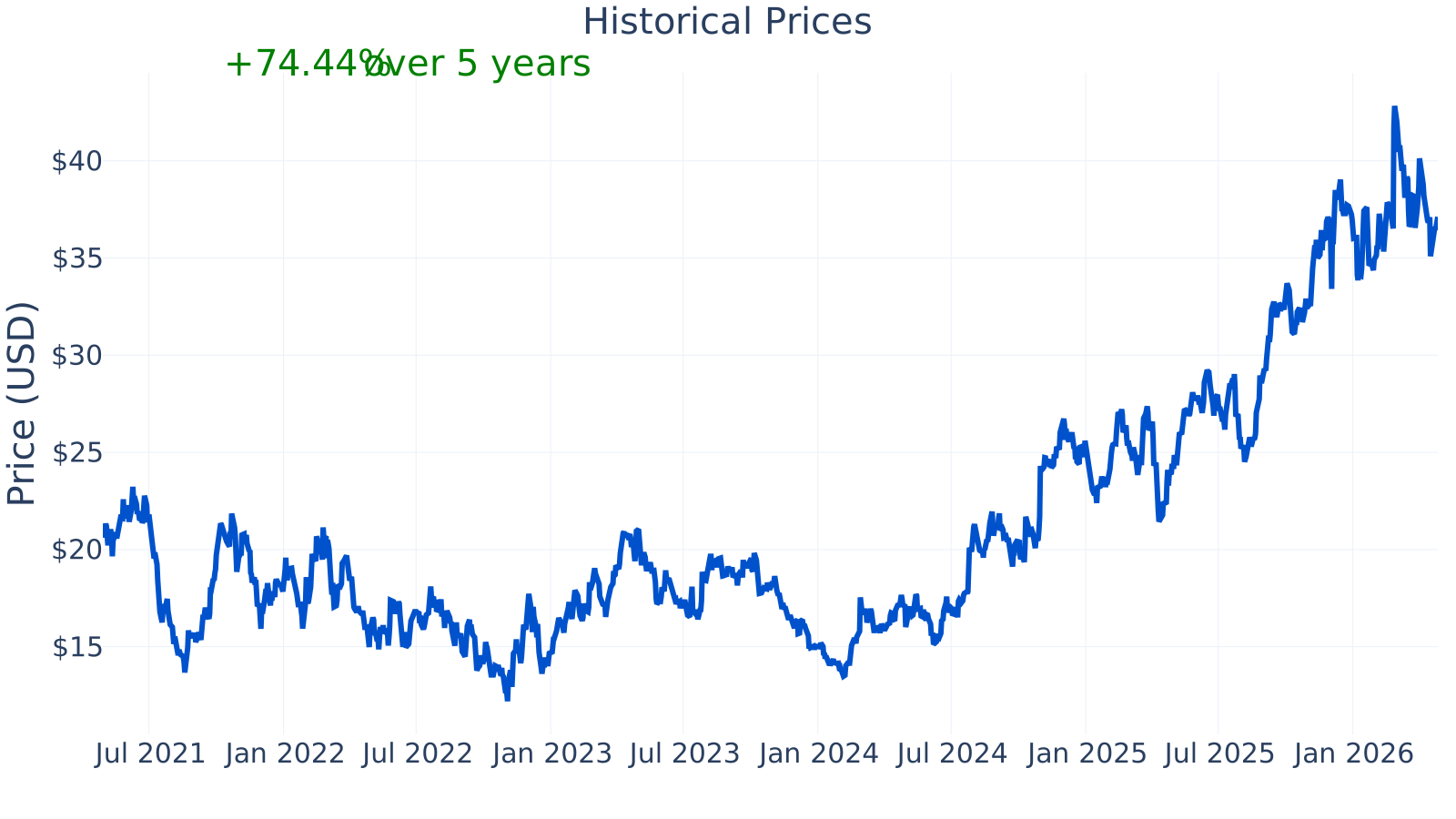
IMAX’s market capitalization is about $2.04 billion. The stock’s beta of about 0.40 suggests it has historically moved less than the broader market on average (though beta can change over time and does not capture all risks).
Profit margin is about 8.5% versus an industry median around 3.4%, indicating stronger recent profitability than the median peer in its listed industry group. Revenue growth year-over-year is about 35.1% versus an industry median around 7.7%, signaling a notably faster recent growth rate (this metric can be volatile for companies tied to box office cycles).
Leverage is moderate: debt-to-equity is about 88% versus an industry median around 80%. Free cash flow over the trailing twelve months is about $118.7 million, which is a key indicator of cash generation after operating needs and capital spending.
Growth (Medium)
IMAX operates within the theatrical exhibition ecosystem, which tends to be mature overall but can still grow in “premium formats” where audiences pay more for higher-end experiences. IMAX is positioned specifically in this premium segment. A core long-term question for growth is whether theaters and studios continue to prioritize premium screens and whether consumers keep choosing higher-priced premium tickets often enough to support expansion.
The company’s strategy—partnering with theaters to expand or upgrade premium auditoriums and monetizing popular film releases through IMAX presentations—can benefit when the global film slate is strong and when premium experiences remain differentiated versus at-home viewing. Potential catalysts typically include: a stronger lineup of blockbuster releases, more IMAX system installations (or higher utilization of existing systems), and continued adoption of premium experiences in international markets. Because the model is partly tied to box office performance, results can improve quickly when several high-performing releases occur in close succession.
The year-over-year revenue growth rate has been uneven, including several negative quarters in 2024 before turning positive again, ending with a strong 35.1% most recently shown. This pattern is consistent with a business influenced by movie release timing and comparisons against prior-year periods.
Free cash flow has also been volatile, moving from negative levels (notably in 2022 and again in early 2024 in the series shown) to a stronger positive level by 2025. For long-term business durability, sustained positive free cash flow matters because it supports reinvestment, debt servicing, and flexibility during weaker box office periods.
Risks (High)
IMAX’s results can be sensitive to the overall moviegoing environment. If the theatrical market weakens due to shifting consumer behavior, fewer wide-release blockbusters, changes in studio distribution strategies, or macroeconomic pressure on discretionary spending, IMAX’s box-office-linked revenue and theater investment activity can be affected. This cyclicality can lead to uneven quarter-to-quarter and year-to-year performance.
Competitive pressure is another consideration. IMAX competes for premium screens and audience attention against other large-format and premium theater offerings (including competing proprietary large-format screens and other premium concepts offered by major theater chains). In addition, IMAX depends on partnerships with both studios (to secure IMAX releases) and exhibitors (to install and operate systems). If studios prioritize other release windows or formats, or if exhibitors reduce capital spending, that can slow growth.
IMAX does have recognizable competitive strengths: a globally known brand associated with premium presentation, proprietary technology and quality standards, and long-standing relationships across studios and exhibitors. In many markets, IMAX is one of the best-known premium large-format brands, but it is not the only premium option available to theaters and consumers.
Debt-to-equity has generally ranged from roughly the mid-60% area up to around 120% in the period shown, ending near 88%. That places leverage slightly above the industry median at the latest point shown. Higher leverage can reduce flexibility during downturns, particularly for businesses with revenue tied to box office cycles.
Profit margin improved dramatically from deeply negative levels in 2021–2022 to positive territory from mid-2023 onward, reaching around 8.5% most recently shown. The trend suggests operational recovery, but the historical swing also illustrates that profitability can compress quickly when revenue falls or costs rise.
Valuation
IMAX’s current price-to-earnings (P/E) ratio is about 58.9 compared with an industry median around 54.9. In general terms, a higher P/E implies the market is valuing the company more richly relative to current earnings, which can be consistent with expectations for future growth or improving profitability. However, it also means the valuation can be more sensitive if earnings growth slows or if profits fluctuate.
Historically in the period shown, IMAX’s P/E was not meaningful in many earlier dates (often occurring when earnings were low or negative), then became measurable and at times elevated. More recently, the P/E has often been above the industry median. This context fits a company that moved from losses to profits and is being valued with expectations that profitability holds and expands.
Conclusion
IMAX is a premium theatrical technology and brand company whose performance is closely tied to moviegoing trends and the strength of major film releases. Recent years show a clear shift from losses to sustained profitability, alongside revenue growth returning strongly in the most recent period shown and free cash flow improving.
At the same time, the business remains exposed to cyclical industry forces (box office variability, studio and exhibitor decisions, and consumer behavior). The company’s brand and established relationships are meaningful strengths, but competition in premium formats and the inherently uneven nature of theatrical release cycles remain central risks. The valuation, as reflected by a P/E modestly above the industry median, implies the market is assigning meaningful value to continued earnings progress, which increases sensitivity to execution and industry conditions.
Sources:
- SEC EDGAR — IMAX Corporation Form 10-K (Annual Report)
- SEC EDGAR — IMAX Corporation Form 10-Q (Quarterly Report)
- IMAX Investor Relations — SEC Filings & Reports (company-hosted)
- Wikipedia — “IMAX Corporation” (basic company background)
This article is for informational purposes only and does not constitute financial advice. Some content is AI-generated. See Disclaimer