Stock Analysis · Imax Corp (IMAX)
Overview
IMAX Corporation is an entertainment-technology company best known for its large-format movie presentation. In simple terms, it helps movie theaters deliver a more immersive experience through a combination of proprietary theater systems (including projection and sound), film remastering, and ongoing support services. The business model is largely tied to how well movies perform in theaters and how many IMAX screens are installed and operating worldwide.
IMAX’s revenue is generally built around two broad activities: (1) the “Network” side, which earns money as movies are shown on IMAX screens (typically through a share of box-office results and other fees), and (2) “Technology Products and Services,” which includes selling or leasing IMAX systems to exhibitors and providing maintenance and related services. In its filings, IMAX reports results by these segments, and the mix can vary year to year depending on new system installations and the box-office slate.
Main revenue sources (high-level):
- Network revenue: Fees tied to the IMAX theater network and performance of films shown on IMAX screens (often the largest driver over time).
- Technology Products and Services: Sales/leases of IMAX systems, upgrades, and ongoing services and maintenance.
From an operating perspective, IMAX has shown a post-pandemic recovery pattern: total revenue rose from about $254.9M (2021) to $300.8M (2022), then to $374.8M (2023), before easing to $352.2M (2024). Over the same period, the company moved from net losses in 2021–2022 to positive net income in 2023–2024.
Across 2021–2024, the overall picture shows a rebound in profitability: net income shifted from losses in 2021–2022 (about -$22M each year) to profits in 2023–2024 (about $25–26M). Operating income also turned positive and remained positive in 2023–2024, suggesting improved operating leverage as revenue recovered.
Key Figures
| Metric | Value | Industry ⓘ |
|---|---|---|
| Date | Feb 08, 2026 | |
| Context | ||
| Sector | Communication Services | |
| Industry | Entertainment | |
| Market Cap ⓘ | $2.01B | |
| Beta ⓘ | 0.37 | |
| Fundamental | ||
| P/E Ratio ⓘ | 52.51 | 50.96 |
| Profit Margin ⓘ | 10.47% | 4.93% |
| Revenue Growth ⓘ | 16.60% | 5.20% |
| Debt to Equity ⓘ | 73.59% | 80.15% |
| PEG ⓘ | 0.89 | |
| Free Cash Flow ⓘ | $91.56M | |
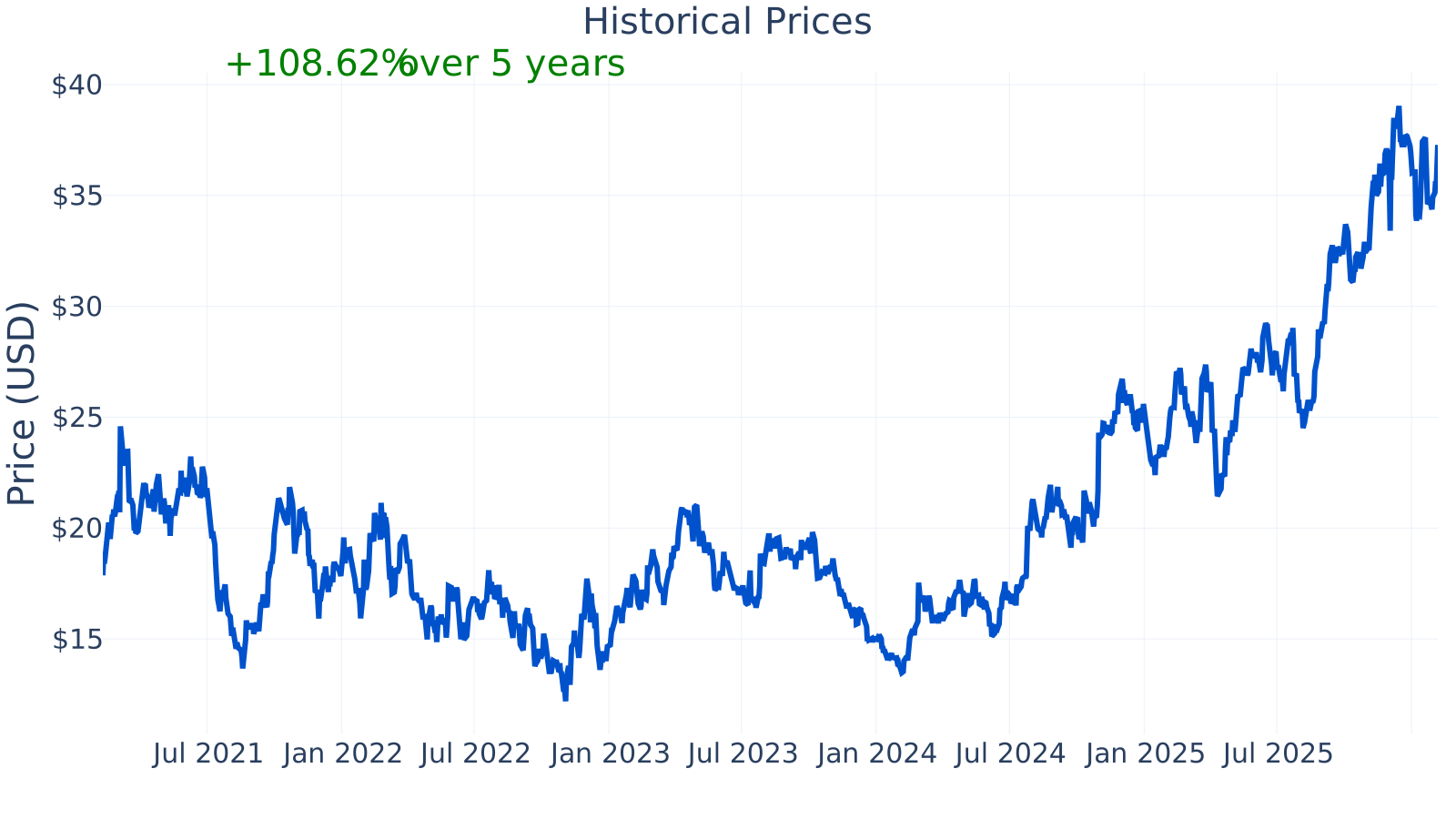
At the latest point shown, IMAX has a market capitalization of about $2.01B and a beta of ~0.37 (a measure that has recently indicated lower historical volatility versus the broad market). The table also shows a P/E ratio of ~52.5, close to the industry median (~51.0). Profitability is stronger than the industry median on this snapshot: profit margin ~10.5% versus ~4.9% for the median. The most recent year-over-year revenue growth is ~16.6% compared with an industry median of ~5.2%. Leverage appears somewhat below the industry median: debt-to-equity ~73.6% versus ~80.1%. Trailing twelve-month free cash flow is shown at about $91.6M.
Growth (Medium)
IMAX operates within the theatrical exhibition ecosystem, which tends to be mature overall, but it competes in a “premium experience” niche. That niche is driven by consumer willingness to pay more for blockbuster releases and event-style movies—an area that can perform differently from the broader box office. IMAX’s strategy aligns with this positioning: expanding and upgrading its installed base of IMAX screens and monetizing each screen through ongoing film performance fees and services.
The revenue growth pattern shown is uneven, which is typical for a business influenced by film release timing and comparisons to strong or weak prior-year quarters. After very high growth rates during the recovery period, growth turned negative during parts of 2024, then returned to positive territory more recently. The latest displayed year-over-year revenue growth is ~16.1% (2025-09-30), which indicates a return to expansion compared with earlier declines.
Free cash flow has also been volatile. The chart shows negative trailing twelve-month free cash flow in 2021 and again around 2024, but a move into clearly positive territory more recently, reaching about $53.0M by 2025-03-31. The latest metric table indicates trailing twelve-month free cash flow of about $91.6M, which—if sustained—can support balance sheet flexibility and reinvestment (while still remaining sensitive to year-to-year working capital swings and the timing of system installations).
Potential catalysts for longer-term growth generally come from execution on network expansion (more IMAX screens in operation), the cadence and performance of blockbuster and premium-format film releases, and continued adoption of IMAX technology upgrades by theater partners. Because IMAX earnings power is linked to both the number of screens and their utilization, incremental screen growth and strong film lineups can have an outsized impact compared with a purely equipment-sales business.
Risks (High)
This article is for informational purposes only and does not constitute financial advice. Some content is AI-generated. See Disclaimer