Stock Analysis · The Home Depot Inc (HD)
Overview
The Home Depot, Inc. is a home improvement retailer serving both do-it-yourself customers and professional contractors (“Pros”). The company sells a wide range of building materials, home improvement products, and services through large-format stores and digital channels, with fulfillment options such as in-store pickup, delivery, and jobsite delivery. Home Depot operates primarily in the United States, with additional operations in Canada and Mexico.
From a business model perspective, Home Depot’s results are closely tied to activity in home improvement and repair projects. These projects tend to be influenced by factors such as housing turnover, home prices, household budgets, the age of the housing stock, and broader consumer and contractor demand.
In its reporting, Home Depot presents results as a single operating segment, and public filings generally do not provide a detailed percentage split of revenue by product category. Revenue is primarily generated from product sales, with additional revenue from services (such as installation and other offerings). Key merchandise departments commonly discussed in filings include:
- Building Materials
- Lumber
- Plumbing
- Electrical
- Hardware
- Paint
- Flooring
- Kitchens & Bath
- Appliances
- Millwork
- Tools
- Outdoor/Garden
- Decor
Over the last several years, the income statement mix shows a large cost of goods component, substantial store and operating expenses (including labor and related operating costs), and meaningful profitability after those costs. Interest expense has also become more noticeable as it increased over time, which can matter when comparing operating performance versus bottom-line results.
Looking at the recent multi-year pattern, revenue has moved within a relatively narrow range, while selling, general and administrative expenses increased over time. Operating income and net income have trended lower from their earlier peaks, and interest expense rose meaningfully versus earlier years, which can reduce net income even when operations remain solid.
Key Figures
| Metric | Value | Industry ⓘ |
|---|---|---|
| Date | Mar 02, 2026 | |
| Context | ||
| Sector | Consumer Cyclical | |
| Industry | Home Improvement Retail | |
| Market Cap ⓘ | $379.01B | |
| Beta ⓘ | 1.09 | |
| Fundamental | ||
| P/E Ratio ⓘ | 26.74 | |
| Profit Margin ⓘ | 8.60% | |
| Revenue Growth ⓘ | -3.80% | |
| Debt to Equity ⓘ | 148.36% | |
| PEG ⓘ | 3.48 | |
| Free Cash Flow ⓘ | $12.65B | |
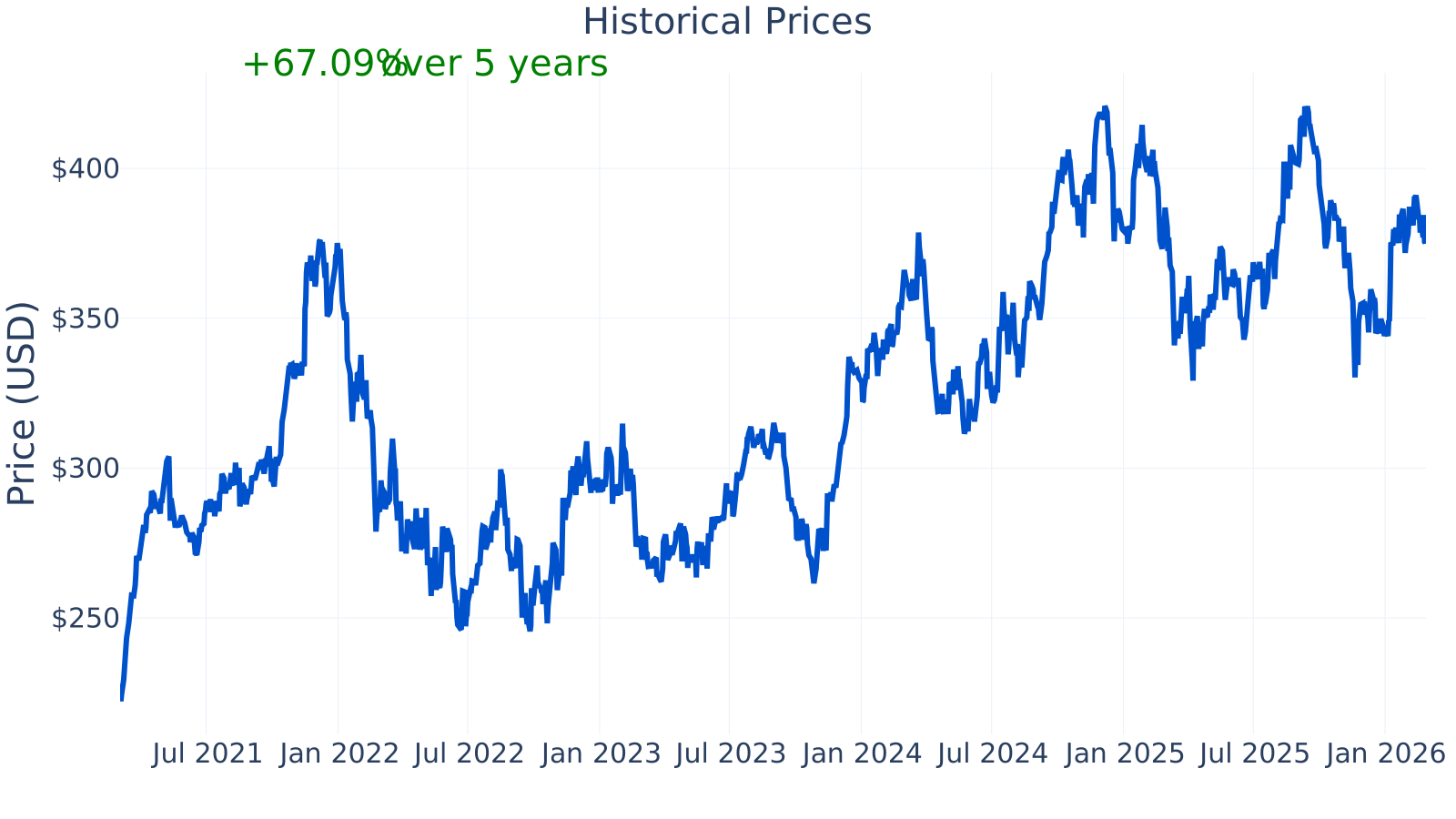
At the latest point shown, Home Depot’s market capitalization is about $379B and the stock’s beta is ~1.09, which indicates price movements that have been slightly more volatile than the overall market on average. The P/E ratio is ~26.7. Net profit margin is ~8.6%, year-over-year revenue growth is about -3.8%, and debt-to-equity is ~148%. The company generated roughly $12.6B in trailing twelve-month free cash flow, and the PEG ratio is ~3.48 (a metric that relates valuation to growth expectations).
Growth (medium)
Home improvement retail is a large, mature industry, and demand is often “cycle-driven” rather than steadily rising every year. Even in slower periods, repair and maintenance needs do not disappear, because homes age and require ongoing upkeep. That said, big discretionary projects can be postponed when consumers feel pressure from inflation, higher borrowing costs, or an uncertain economic outlook.
Home Depot’s strategy emphasizes serving both homeowners and Pros, supported by investments in supply chain capacity, delivery capabilities, and digital experiences. For long-term growth, the Pro customer base is especially important because Pros can be higher-frequency shoppers and often buy larger-ticket items tied to ongoing projects.
The year-over-year revenue trend shows sharp growth earlier in the period, followed by a stretch of declines and then a partial recovery, with the most recent point returning to a decline (about -3.8%). This pattern is consistent with a business that can experience demand swings rather than steady annual expansion.
Free cash flow has remained substantial in absolute dollars (roughly $11.5B to $17.9B across the period shown), but it has not moved in a straight line. The latest trailing twelve-month figure is about $12.6B, below the more recent highs, which may reflect a combination of operating performance, working capital needs, and investment levels.
Risks (medium)
Home Depot’s results are exposed to the health of the housing and remodeling ecosystem. When mortgage rates are higher or consumer budgets tighten, larger renovation projects can slow, which can weigh on sales volumes—especially in categories tied to bigger projects. The business can also be affected by cost inflation (wages, transportation, and product costs) and by supply chain disruptions that impact in-stock levels or delivery timelines.
Competition is another ongoing factor. The company competes most directly with Lowe’s (the other major U.S. home improvement big-box chain) and also faces pressure from Menards (regional), Walmart, Amazon, and many specialized local and regional retailers across categories such as paint, appliances, flooring, and hardware. Home Depot is widely viewed as one of the leaders in home improvement retail at scale, with advantages that typically come from store footprint, brand recognition, purchasing scale, and fulfillment capabilities. Still, competitive pricing and service levels can influence market share over time, particularly for Pros who compare reliability, speed, and availability across suppliers.
The debt-to-equity ratio shown is elevated and volatile across the period, with the latest value around 148%. A higher ratio can indicate greater financial leverage, which may increase sensitivity to interest rates and refinancing conditions. (It can also be affected by accounting equity levels, including the impact of share repurchases over time.)
Profit margin has trended down from roughly the 10%–11% range earlier in the series to about 8.6% at the latest point. This can be important because, in retail, modest margin shifts can have an outsized effect on earnings if sales growth is not strong enough to offset cost increases.
Valuation
The P/E ratio shown has generally moved from the mid-to-high teens at earlier points to the mid-to-high 20s at some later points, with the latest P/E around 26.7. In simple terms, a higher P/E indicates the market is valuing the company at a higher multiple of its earnings than it did at certain times in the past. Whether that level is sustained over time often depends on factors such as the stability of earnings, confidence in future growth, and how investors compare Home Depot’s cash generation and competitive position versus other large companies.
When a company shows slower or uneven revenue growth (as the recent year-over-year pattern suggests) and some margin compression, valuation tends to rely more heavily on durability of demand, strength of the franchise, and the ability to maintain strong cash generation across cycles. In that context, the current valuation level appears more dependent on long-term business resilience than on near-term rapid growth.
Conclusion
Home Depot is a large-scale home improvement retailer with a well-established position serving both homeowners and professional customers. The business generates significant revenue and substantial free cash flow, supported by a broad product assortment and an interconnected store-and-digital operating model.
At the same time, the company operates in a mature, cycle-sensitive part of the consumer economy, and recent patterns show uneven growth and lower profit margins than earlier peaks. Leverage is also a relevant consideration given the elevated debt-to-equity level and the increase in interest expense over recent years.
Overall, the long-term investment discussion for Home Depot typically centers on balancing (1) brand and scale advantages and cash generation against (2) housing/remodeling cyclicality, competitive pressure, margin trends, and the implications of financial leverage, while also considering how the market’s current earnings multiple compares with the company’s recent history.
Sources:
- The Home Depot, Inc. — Form 10-K (Annual Report) (Business, MD&A, Risk Factors, Financial Statements)
- SEC EDGAR — The Home Depot, Inc. filings (10-K, 10-Q, 8-K)
- The Home Depot Investor Relations — Annual Reports and SEC Filings
- Wikipedia — “The Home Depot” (basic company background)
This article is for informational purposes only and does not constitute financial advice. Some content is AI-generated. See Disclaimer


