Stock Analysis · The Home Depot Inc (HD)
Overview
The Home Depot, Inc. is a home improvement retailer that sells products and services used to build, repair, and maintain homes and commercial properties. It operates large-format stores as well as digital channels, serving both do-it-yourself customers and professional contractors (“Pros”). Its offering spans building materials, home improvement products (like tools, paint, flooring, and appliances), and installation and other services arranged through the company.
Home Depot reports its business as one operating segment and does not provide a detailed public revenue split by product category in the same way some retailers do. In broad terms, revenue is primarily generated from merchandise sales in stores and online, with an additional portion from services such as installations and other project-related offerings (as described in company filings).
At a high level, the company’s economics show a large revenue base with substantial product costs and meaningful store and operating expenses. Over the last few fiscal years, revenue has been relatively stable around the mid-$150 billions, while interest expense has risen as financing costs increased.
From fiscal 2022 to fiscal 2025, total revenue moved from about $151.2B to $159.5B, while net income moved from about $16.4B to $14.8B. Over the same period, interest expense increased (about $1.35B to $2.32B), and operating expenses increased (about $27.8B to $31.8B), which helps explain why profit did not rise in line with revenue.
Key Figures
| Metric | Value | Industry ⓘ |
|---|---|---|
| Date | Feb 07, 2026 | |
| Context | ||
| Sector | Consumer Cyclical | |
| Industry | Home Improvement Retail | |
| Market Cap ⓘ | $383.42B | |
| Beta ⓘ | 1.09 | |
| Fundamental | ||
| P/E Ratio ⓘ | 26.25 | |
| Profit Margin ⓘ | 8.77% | |
| Revenue Growth ⓘ | 2.80% | |
| Debt to Equity ⓘ | 486.51% | |
| PEG ⓘ | 5.44 | |
| Free Cash Flow ⓘ | $13.93B | |
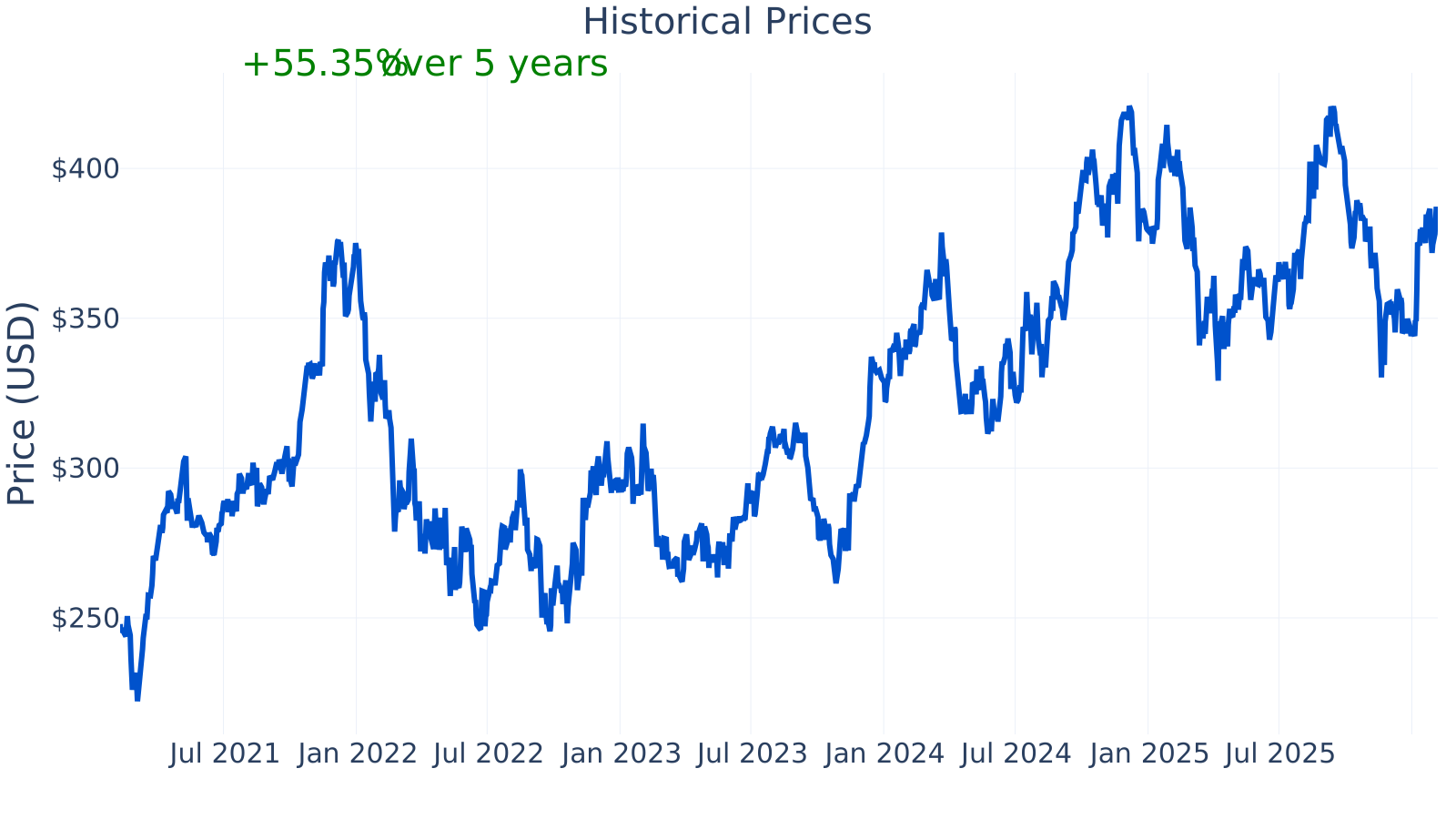
The latest snapshot shows a very large company (market cap about $383B) with moderate overall market sensitivity (beta ~1.09). Profitability is positive but has been under pressure (profit margin about 8.8%). Recent year-over-year revenue growth is modest (about 2.8%). The company produces substantial cash (free cash flow about $13.9B over the trailing twelve months). Reported debt-to-equity is high (about 487%), which is important to interpret in context because Home Depot has used significant shareholder returns and balance-sheet structure choices that can reduce accounting equity and inflate this ratio.
Growth (Medium)
Home Depot operates in the home improvement retail industry, which is closely tied to long-term housing stock needs (maintenance, repair, and remodeling) as well as to shorter-term cycles in housing turnover, consumer spending, and contractor activity. Even when new home sales slow, existing homes still require ongoing repair and replacement spending; however, big discretionary projects can be delayed during weaker economic periods.
Strategically, the company emphasizes serving professional customers, strengthening product availability, and improving fulfillment capabilities across stores and digital channels (for example, options like delivery and pick-up). This type of strategy can support growth by increasing share of wallet from Pros and improving convenience and in-stock reliability, which tend to matter in project-driven purchases.
Revenue growth has been cyclical: it was very strong in parts of 2021 (for example, above 30% year-over-year in one period), cooled materially through 2023–2024 (including several quarters of negative growth), and returned to positive growth more recently (about 2.8% year-over-year in the latest period shown). This pattern is consistent with a business influenced by broader consumer and housing-related cycles.
Free cash flow has remained sizable across the periods shown, ranging from about $11.5B (fiscal 2023) up to about $17.9B (fiscal 2024), and about $13.9B most recently. For a retailer, sustained cash generation can provide flexibility for reinvestment in operations and funding shareholder distributions, though cash flow can vary with inventory needs and demand conditions.
Risks (Medium)
This article is for informational purposes only and does not constitute financial advice. Some content is AI-generated. See Disclaimer