Stock Analysis · Himax Technologies Inc (HIMX)
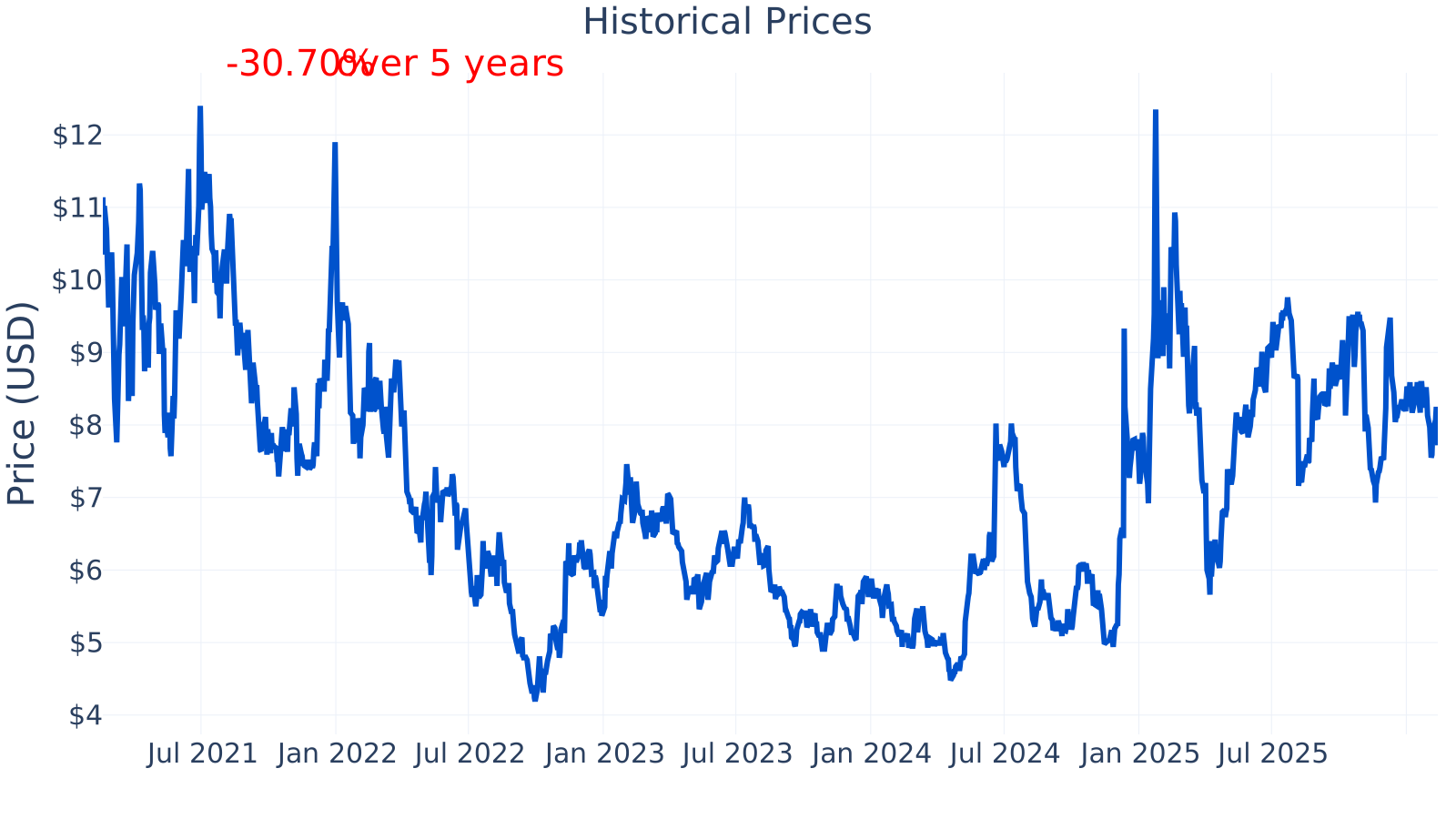
Overview
Himax Technologies Inc. (HIMX) is a fabless semiconductor company. In simple terms, it designs specialized chips and related components, while manufacturing is typically handled by external foundries. Himax is best known for display-related semiconductors that help screens show images efficiently and accurately. These products are used in areas such as smartphones and tablets, TVs and monitors, laptops, and other electronic devices that need display control and image processing.
Because Himax operates in semiconductors tied to consumer electronics and industrial demand cycles, its business tends to move through periods of stronger and weaker orders. The company also invests in research and development to maintain and update its product portfolio, which is an important part of competing in chip design markets.
Main revenue breakdown (largest to smallest) varies by year and customer demand, and detailed category percentages are typically presented in the company’s annual report (Form 20-F) and quarterly reports (Form 6-K) rather than being fixed across time. Common revenue groupings for Himax include:
- Display driver ICs (chips that control how a display panel operates)
- Timing controllers / display-related processing (components coordinating data flow to the panel)
- Image sensing and other non-driver products (varies by period)
Over the last few years, total revenue declined from 2021 to 2024, and profitability compressed sharply versus the 2021 peak. Research and development spending remained a meaningful, relatively steady operating cost, which can support future product competitiveness but also weighs on near-term operating profit when revenue is under pressure.
Key Figures
| Metric | Value | Industry ⓘ |
|---|---|---|
| Date | Feb 16, 2026 | |
| Context | ||
| Sector | Technology | |
| Industry | Semiconductors | |
| Market Cap ⓘ | $1.35B | |
| Beta ⓘ | 1.87 | |
| Fundamental | ||
| P/E Ratio ⓘ | 30.88 | 45.38 |
| Profit Margin ⓘ | 5.28% | 10.84% |
| Revenue Growth ⓘ | -14.40% | 15.50% |
| Debt to Equity ⓘ | 68.44% | 25.62% |
| PEG ⓘ | 2.81 | |
| Free Cash Flow ⓘ | $138.91M | |
The company’s market capitalization is about $1.35B, placing it in the smaller end of publicly traded semiconductor names. The stock’s beta of 1.87 indicates it has historically moved more than the broader market, which can matter for long-term investors who prefer smoother price behavior. The P/E ratio is 30.88, below the industry median shown here (about 45.38), while the profit margin is 5.28%, below the industry median (about 10.85%). Recent year-over-year revenue growth is -14.4% versus an industry median of about +15.5%, showing a weaker near-term sales trend than many peers. Debt-to-equity is 68.4%, higher than the industry median (about 25.6%). Free cash flow over the trailing twelve months is about $138.9M, indicating the business recently generated cash after operating needs and capital spending.
Growth (Medium)
Himax participates in the broader semiconductor industry, which is supported over the long run by ongoing growth in electronics content across devices and systems. Display-related semiconductors can benefit from trends like higher-resolution screens, faster refresh rates, power efficiency improvements, and new device categories. However, demand is also closely tied to end markets such as consumer electronics, which can be cyclical.
The revenue growth pattern shown is uneven. There was exceptionally strong growth in 2021, followed by a major downturn across 2022–2023, and then a mixed, low-growth pattern through 2024–2025 with several quarters negative year over year. This kind of variability is common in parts of semiconductors exposed to consumer demand and inventory adjustments, but it also means long-term growth is not a straight line.
Free cash flow has also been volatile: it was very high in 2022, dropped sharply in 2023, and then recovered in 2024–2025. For long-term business strength, sustained cash generation across cycles generally matters because it can support R&D, working capital needs, and balance sheet flexibility even when sales slow.
Potential long-term catalysts typically discussed in company materials for display and imaging chip designers include product cycle upgrades at major device makers, adoption of new display technologies, and broader recovery in electronics demand. Whether these translate into durable growth depends on customer design wins, pricing conditions, and how the overall display supply chain evolves.
Risks (High)
Himax’s results can be highly sensitive to the semiconductor cycle and to consumer electronics demand. When customers reduce orders or work through excess inventory, revenue and margins can fall quickly. This cyclicality is visible in the multi-year revenue and profitability swings.
Leverage has risen versus earlier periods. Debt-to-equity increased from roughly the mid-20% range in 2021–2022 to about 68% most recently, while the industry median shown is much lower (low-to-mid 20% range). Higher leverage can reduce flexibility during weaker demand periods, particularly if profitability is under pressure.
Profitability has also changed materially over time. Profit margin peaked around 2021–2022 (well above 20% in several quarters), then compressed to mid-single digits in 2023–2024, and more recently improved into the high-single digits before easing again to around 7.18% most recently. Compared with the industry median values shown, Himax has been below the median for much of the downturn period, which may reflect product mix, pricing pressure, or scale effects.
Competition is a key risk in display semiconductors and related areas because customers often have multiple sourcing options, and pricing can be competitive. Himax competes with other semiconductor companies that offer display driver ICs, timing controllers, and imaging/display-related components. In general terms, competitors can include large diversified chip suppliers as well as specialized display IC vendors. Relative positioning tends to come down to customer relationships, cost structure, pace of product upgrades, and the ability to win designs for next-generation devices. Without relying on market-share claims, it is safest to view Himax as a specialized participant rather than assuming category leadership across all segments it serves.
Additional risks commonly disclosed in annual filings for globally distributed semiconductor businesses include customer concentration, reliance on third-party foundries and assembly/test partners, foreign exchange exposure, geopolitical and trade/regulatory constraints, and intellectual property risks.
Valuation
The P/E ratio has varied widely over the period shown, moving from low single digits in parts of 2022 (when earnings were still elevated relative to price) to higher levels in 2024–2025. The most recent P/E shown is in the mid-20s, while the industry median shown is higher in many periods. A lower-than-median P/E can reflect multiple realities at once, such as lower expected growth, higher earnings volatility, or business-specific risks.
For context, several fundamentals point in different directions at the same time: recent revenue growth has been negative versus the industry median, profit margins are below the industry median in the latest snapshot, and leverage is higher than the industry median, while free cash flow is positive on a trailing basis. As a result, valuation discussion depends heavily on whether earnings and revenue stabilize and improve through the next cycle, and on how sustainable cash generation is if demand weakens again.
Conclusion
Himax is a specialized semiconductor designer focused on display-related chips and adjacent components, operating in an industry with long-run demand drivers but meaningful cyclicality. The company has experienced a significant downshift in revenue and profitability from 2021 to 2024, with mixed growth signals more recently. Margins have recovered from their lows but remain modest versus the industry median in the latest snapshot, and leverage has increased compared with earlier years and versus the peer median shown.
From a long-term perspective, the main factual points to weigh are (1) the company’s exposure to cyclical end markets, (2) its ability to maintain R&D investment while restoring stronger and more stable profitability, (3) balance sheet trends given higher debt-to-equity than peers, and (4) whether future product cycles and design wins translate into sustained revenue expansion rather than short rebounds.
Sources:
- SEC EDGAR — Himax Technologies, Inc. filings (Form 20-F, Form 6-K)
- Himax Technologies, Inc. Investor Relations — Annual reports and financial results press releases
- Wikipedia — “Himax Technologies” (basic company background)
This article is for informational purposes only and does not constitute financial advice. Some content is AI-generated. See Disclaimer


