Stock Analysis · Hilton Grand Vacations Inc (HGV)
Overview
Hilton Grand Vacations Inc. (HGV) is a vacation ownership company. In simple terms, it sells “points” (or timeshare-style interests) that give customers access to stays at resorts in its network, and it also manages member relationships over time. The business combines (1) selling vacation ownership products, (2) financing some of those purchases, and (3) collecting recurring fees from existing owners/members.
Revenue is typically driven by a mix of one-time sales and more recurring, contract-like income streams. Based on how HGV describes its operations in its SEC filings, the main sources of revenue generally include:
- Vacation ownership sales (selling vacation ownership intervals/points and related products)
- Financing income (interest and related income when customers finance their purchases through HGV)
- Resort and club management / member fees (fees paid by owners for management, operations, and membership-related services)
- Other resort-related revenue (items like rental and ancillary services, depending on the period)
Across 2021 to 2024, total revenue increased meaningfully in dollar terms (from about $2.3B in 2021 to about $5.0B in 2024). Over the same period, operating income did not rise in line with revenue, and net income dropped sharply in 2024, which suggests that cost structure and financing costs (interest expense) became more of a constraint as the company grew.
One notable pattern is that while total revenue rose from 2021 to 2024, interest expense increased substantially (from about $105M in 2021 to about $329M in 2024). This helps explain why net income in 2024 was much lower than in 2022–2023, even with higher revenue.
Key Figures
| Metric | Value | Industry ⓘ |
|---|---|---|
| Date | Feb 08, 2026 | |
| Context | ||
| Sector | Consumer Cyclical | |
| Industry | Resorts & Casinos | |
| Market Cap ⓘ | $4.20B | |
| Beta ⓘ | 1.44 | |
| Fundamental | ||
| P/E Ratio ⓘ | 86.62 | 22.13 |
| Profit Margin ⓘ | 1.19% | 6.12% |
| Revenue Growth ⓘ | -0.70% | 4.30% |
| Debt to Equity ⓘ | 525.78% | 525.78% |
| PEG ⓘ | N/A | |
| Free Cash Flow ⓘ | $113.00M | |
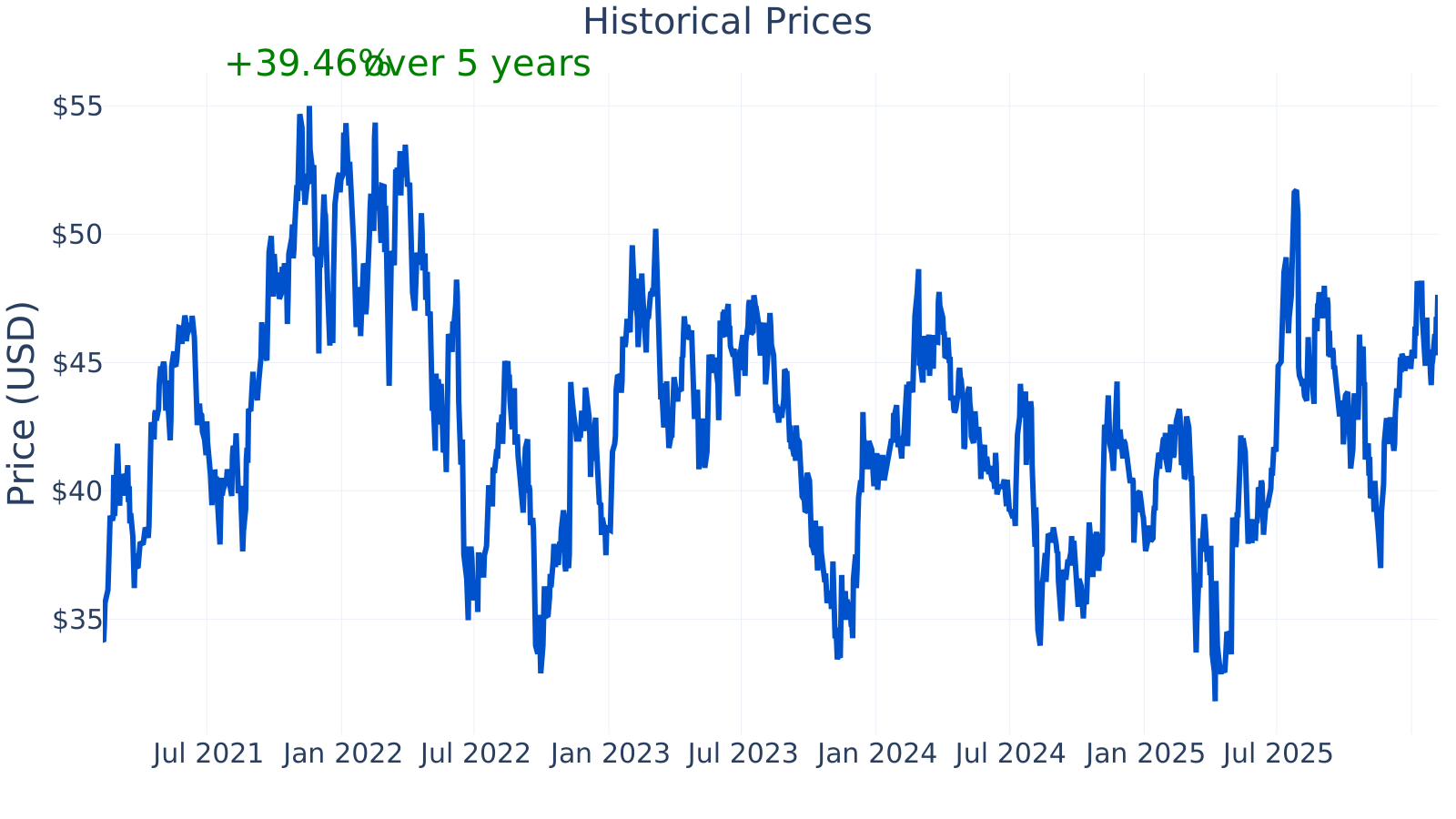
HGV’s market capitalization is about $4.2B. The stock’s beta of ~1.44 indicates it has historically been more volatile than the overall market. The latest P/E ratio is ~86.6, which is far above the industry median shown here (~22.1), while the latest profit margin is ~1.19% versus an industry median near 6.12%. Year-over-year revenue growth in the latest snapshot is around -0.7% versus an industry median around 4.3%. Debt-to-equity is about 526% (and the industry median shown is similar), reflecting a balance sheet that relies heavily on debt financing. Trailing twelve-month free cash flow is about $113M.
Growth (Medium)
HGV operates within travel and leisure, where demand tends to be supported over long periods by household formation, preferences for experiences, and resort destinations. At the same time, this is a cyclical area of the economy: when consumers feel pressure from inflation, job uncertainty, or higher borrowing costs, big-ticket discretionary purchases like vacation ownership can slow.
Strategically, a vacation ownership model can support growth in multiple ways. Product sales can expand with marketing reach and resort inventory, while financing and member fees can create additional income streams that may persist after the initial sale. This “ongoing relationship” feature is a key part of the model’s long-run logic: a larger owner base can support recurring fee revenue and opportunities for upgrades, exchanges, and additional purchases.
Revenue growth has been uneven. It was extremely high in 2021–2022 (partly reflecting comparisons to weaker periods), then became more moderate, and recently moved around flat to slightly negative (around -0.7% in the latest data point shown). That pattern is consistent with a business where demand can accelerate quickly in strong travel environments but cool when conditions normalize.
Free cash flow over the trailing twelve months has been positive in recent years, but it has also declined from earlier peaks (roughly $419M in 2023 to about $113M in the latest figure shown). For long-term fundamentals, sustained free cash flow matters because it can support debt reduction, reinvestment in inventory, and resilience during weaker demand periods.
Risks (High)
This article is for informational purposes only and does not constitute financial advice. Some content is AI-generated. See Disclaimer