Stock Analysis · Jack Henry & Associates Inc (JKHY)
Overview
Jack Henry & Associates, Inc. (JKHY) is a U.S. technology company that provides software and technology services mainly to banks and credit unions. In simple terms, it helps financial institutions run day-to-day operations (such as core banking processing), manage digital banking channels, support payments, and handle data-related services that keep accounts, transactions, and customer interactions working reliably.
Its business model is largely built around long-term customer relationships. Financial institutions typically rely on these systems for many years because switching core systems can be complex, time-consuming, and risky. That dynamic often supports recurring revenue through ongoing service arrangements, processing, and software usage over time.
In its reporting, Jack Henry organizes revenue into broad categories rather than a consumer-style product list. The main sources generally include:
- Processing (running core systems and transaction processing on behalf of customers)
- Services and Support (implementation, support, training, and related services)
- Licenses (software licenses, where applicable)
Exact percentages by category can vary by fiscal year and are disclosed in the company’s annual report.
Over the period shown, total revenue increased (from about $1.76B to about $2.38B). Operating income and net income also rose, and interest expense remained relatively small compared with operating income, which is consistent with a business that is not heavily reliant on borrowing to operate.
Key Figures
| Metric | Value | Industry ⓘ |
|---|---|---|
| Date | Feb 16, 2026 | |
| Context | ||
| Sector | Technology | |
| Industry | Information Technology Services | |
| Market Cap ⓘ | $11.35B | |
| Beta ⓘ | 0.71 | |
| Fundamental | ||
| P/E Ratio ⓘ | 22.49 | 19.24 |
| Profit Margin ⓘ | 20.59% | 4.91% |
| Revenue Growth ⓘ | 7.90% | 5.85% |
| Debt to Equity ⓘ | 4.88% | 58.47% |
| PEG ⓘ | 2.45 | |
| Free Cash Flow ⓘ | $654.23M | |
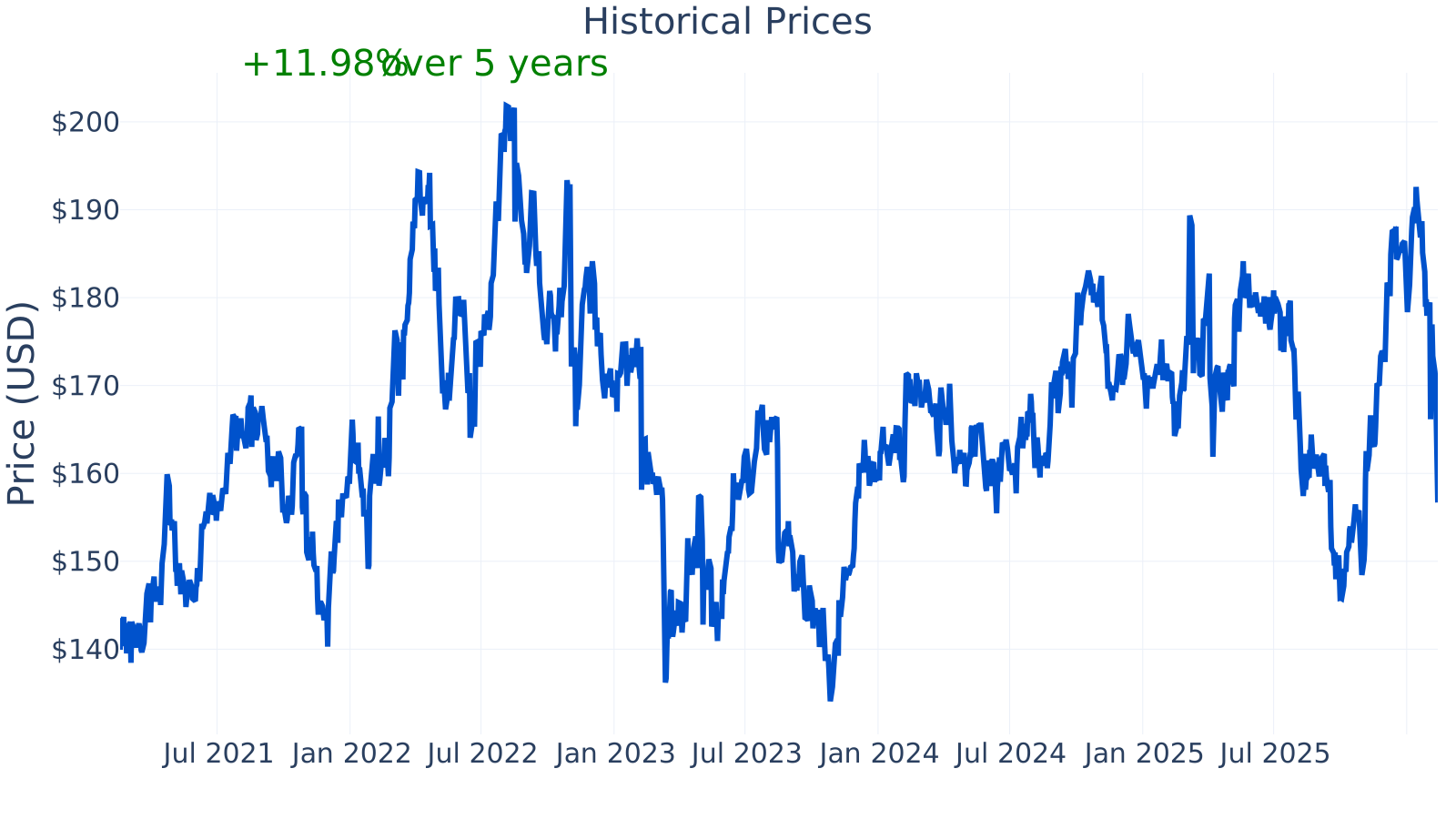
Jack Henry’s market capitalization is about $11.35B, and its beta of ~0.71 indicates the stock has historically moved less than the broader market on average. The company’s profit margin is ~20.6%, which is notably higher than the industry median (~4.9%), suggesting stronger profitability than many peers in the same broad industry grouping. Recent year-over-year revenue growth is ~7.9% (vs. ~5.9% industry median). Debt appears modest with debt-to-equity around ~4.9% (vs. ~58.5% industry median). Trailing twelve-month free cash flow is about $654M, which matters because cash generation helps fund investment in the business and shareholder returns without depending as much on external financing.
Growth (Medium)
Jack Henry operates in a part of the financial technology ecosystem that is shaped by long-running trends: ongoing digitization of banking, rising customer expectations for mobile and online features, security needs, and increasing complexity in payments and data connectivity. Community and mid-sized financial institutions, which are a core customer base for Jack Henry, still need modern technology to compete, comply with regulations, and serve customers efficiently.
The company’s strategy generally centers on deepening relationships with existing customers (adding more products and services over time) and continuing to modernize its technology stack. Because core systems sit at the center of a bank or credit union’s operations, customer retention can be meaningful, and incremental product adoption can be a steady growth driver when executed well.
The year-over-year revenue growth shown is mostly in the mid-single-digit to low-double-digit range, with the latest point around 7.9%. That pattern is consistent with a mature business that can still expand through a combination of new wins, additional modules, and ongoing processing and support revenue.
Free cash flow has fluctuated over time (including a weaker point around 2023) but trends higher in the most recent periods shown, reaching roughly $481M (as of 2025-03-31 on the chart) and about $654M on a trailing twelve-month basis in the latest metrics. For long-term business durability, consistently converting earnings into cash is important because it can support reinvestment, acquisitions, and capital returns.
Risks (Medium)
This article is for informational purposes only and does not constitute financial advice. Some content is AI-generated. See Disclaimer


