Stock Analysis · Hasbro Inc (HAS)
Overview
Hasbro, Inc. is a global toy and game company. It develops and sells products such as action figures, dolls, preschool toys, board games, and trading card games, and it also earns money by licensing its brands for use in entertainment and consumer products. Well-known Hasbro-owned or Hasbro-controlled brands include MAGIC: THE GATHERING, Dungeons & Dragons, Monopoly, Nerf, My Little Pony, and Transformers (brand lists and business description are provided in company filings and public company information).
Hasbro’s business is commonly discussed through its reporting segments, which helps explain where revenue comes from. In recent years, Hasbro has emphasized “play” that can extend beyond physical toys (for example, hobby/trading card games and brand licensing), while also managing a traditional toy business that is more seasonal and retailer-driven.
Main revenue sources are generally described as follows (largest to smaller can change by year, especially due to product cycles and retailer ordering patterns):
- Wizards of the Coast and Digital Gaming (MAGIC: THE GATHERING and Dungeons & Dragons-related products and digital initiatives)
- Consumer Products (toys and games sold through retailers and other channels across Hasbro’s brand portfolio)
- Entertainment and licensing (brand licensing and entertainment-related revenue, which can be lumpier depending on releases and deals)
For exact percentages by segment in the most recent fiscal year, the most reliable reference is Hasbro’s latest annual report (Form 10‑K) segment note, because segment mix can shift meaningfully from one year to the next.
Business performance snapshot (income statement structure over time): From 2021 to 2025, total revenue in the provided timeline declines from about $6.4B (2021) to about $4.7B (2025). Profitability is also uneven: operating income turns sharply negative in 2023, returns to positive in 2024, and is close to break-even in 2025, while interest expense remains a recurring cost each year. This pattern suggests that results have been influenced by significant one-time or cyclical factors (in addition to normal demand changes) rather than a smooth operating trend.
Key Figures
| Metric | Value | Industry ⓘ |
|---|---|---|
| Date | Feb 23, 2026 | |
| Context | ||
| Sector | Consumer Cyclical | |
| Industry | Leisure | |
| Market Cap ⓘ | $14.24B | |
| Beta ⓘ | 0.55 | |
| Fundamental | ||
| P/E Ratio ⓘ | N/A | 27.69 |
| Profit Margin ⓘ | -6.86% | 7.44% |
| Revenue Growth ⓘ | 31.30% | 7.30% |
| Debt to Equity ⓘ | 577.35% | 56.65% |
| PEG ⓘ | 1.38 | |
| Free Cash Flow ⓘ | $829.90M | |
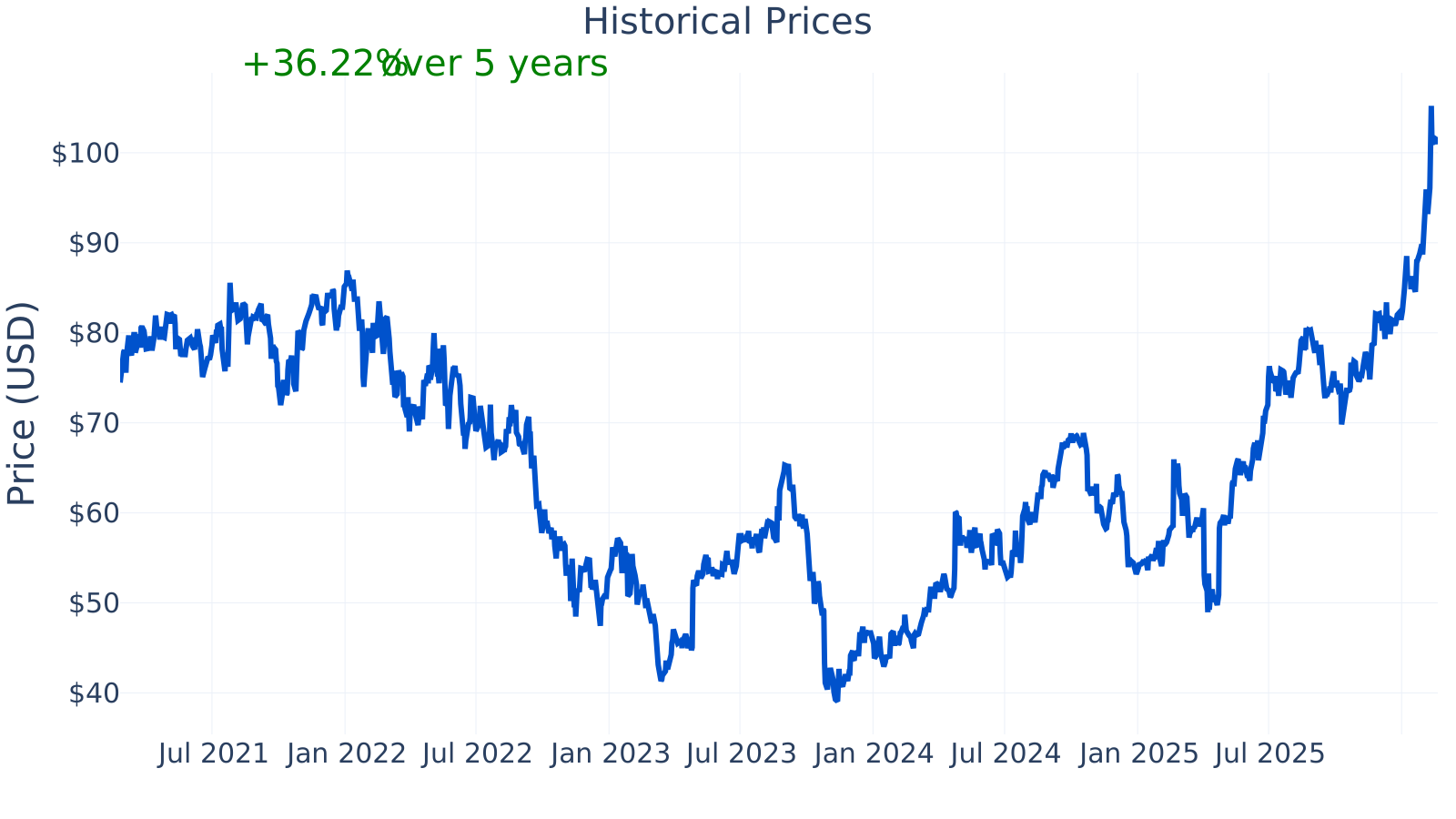
Hasbro’s market capitalization is about $14.2B, placing it among the larger publicly traded toy and game companies. The stock’s beta of ~0.55 indicates it has historically moved less than the broader market on average (though that does not prevent meaningful ups and downs, as the price history shows).
Profitability is currently a key point to watch: the latest profit margin shown is about -6.9%, compared with an industry median around 7.4%. On growth, the most recent year-over-year revenue growth shown is about 31.3%, above the industry median (about 7.3%), suggesting a recent rebound or easy comparison period. Free cash flow over the last twelve months is shown at about $830M, which indicates the business is producing cash even while net profitability is uneven.
Balance sheet leverage stands out: debt-to-equity is shown at about 577%, far above the industry median (about 56.7%). This can matter because higher leverage often increases sensitivity to interest rates, refinancing needs, and unexpected business slowdowns.
Growth (Medium)
Hasbro operates in the broad leisure and play market, where demand is influenced by consumer spending, entertainment trends, and product cycles. Parts of Hasbro’s portfolio (notably hobby gaming and brand-driven ecosystems) can benefit from recurring engagement—players keep buying new cards, accessories, or content—while traditional toy lines tend to be more dependent on hit products and retail restocking patterns.
A central long-term growth idea in Hasbro’s strategy has been to build brand “franchises” that can live across physical products, games, and licensing. In practice, this approach can create multiple revenue streams from the same intellectual property, but it also requires consistent brand management and continued investment in product development and marketing.
The year-over-year revenue trend shown is volatile: strong growth in parts of 2021 is followed by a multi-quarter decline through 2024, then a return to positive growth by late 2025 (with the latest point around +31%). For a long-term view, this suggests the company has been moving through a downcycle and recovery rather than delivering steady expansion.
Cash generation has also swung meaningfully. Trailing twelve-month free cash flow is shown falling from about $943M (2021) to about $129M (2023), then recovering to about $613M (2024) and $642M (2025), with the latest metric table indicating about $830M. For many businesses, sustained free cash flow supports reinvestment in brands, debt reduction, and resilience during weaker demand periods; the variability here makes the consistency of that support an open question.
Potential catalysts (in a neutral, factual sense) typically include: successful product refresh cycles for major brands, growth in higher-engagement categories (like trading card games), and improved operating efficiency. The company’s own filings also emphasize the importance of licensing/brand monetization and disciplined cost management as drivers of future results.
Risks (High)
This article is for informational purposes only and does not constitute financial advice. Some content is AI-generated. See Disclaimer


