Stock Analysis · HP Inc (HPQ)
Overview
HP Inc. is a global technology company best known for selling personal computers (such as laptops, desktops, and workstations) and printers, along with related supplies and services. The business is generally tied to device replacement cycles (people and companies upgrading PCs and printers) and to ongoing printing usage (ink/toner and related services).
HP reports results primarily through two main segments, which together make up the core of its revenue mix:
- Personal Systems (PCs): commercial and consumer PCs, workstations, and related services.
- Printing: printers, supplies (such as ink and toner), and related solutions and services.
In recent years, total revenue has been broadly stable to modestly lower compared with earlier peaks, while profitability has depended heavily on disciplined costs, pricing, and the higher-margin parts of Printing (particularly supplies). The flow from revenue to operating profit and net income also shows how meaningful manufacturing and component costs are in this type of hardware business, with operating expenses (including selling costs and R&D) as another major driver of outcomes.
Across the periods shown, revenue levels shift (notably lower versus earlier years), while costs of revenue remain the largest expense line. Net income is meaningfully below operating income in some years, reflecting items such as interest expense and taxes, which can matter when assessing the impact of leverage and financing costs.
Key Figures
| Metric | Value | Industry ⓘ |
|---|---|---|
| Date | Mar 02, 2026 | |
| Context | ||
| Sector | Technology | |
| Industry | Computer Hardware | |
| Market Cap ⓘ | $17.75B | |
| Beta ⓘ | 1.20 | |
| Fundamental | ||
| P/E Ratio ⓘ | 7.17 | 25.05 |
| Profit Margin ⓘ | 4.46% | 4.46% |
| Revenue Growth ⓘ | 6.90% | 21.50% |
| Debt to Equity ⓘ | 284.68% | 5.95% |
| PEG ⓘ | 1.58 | |
| Free Cash Flow ⓘ | $2.88B | |
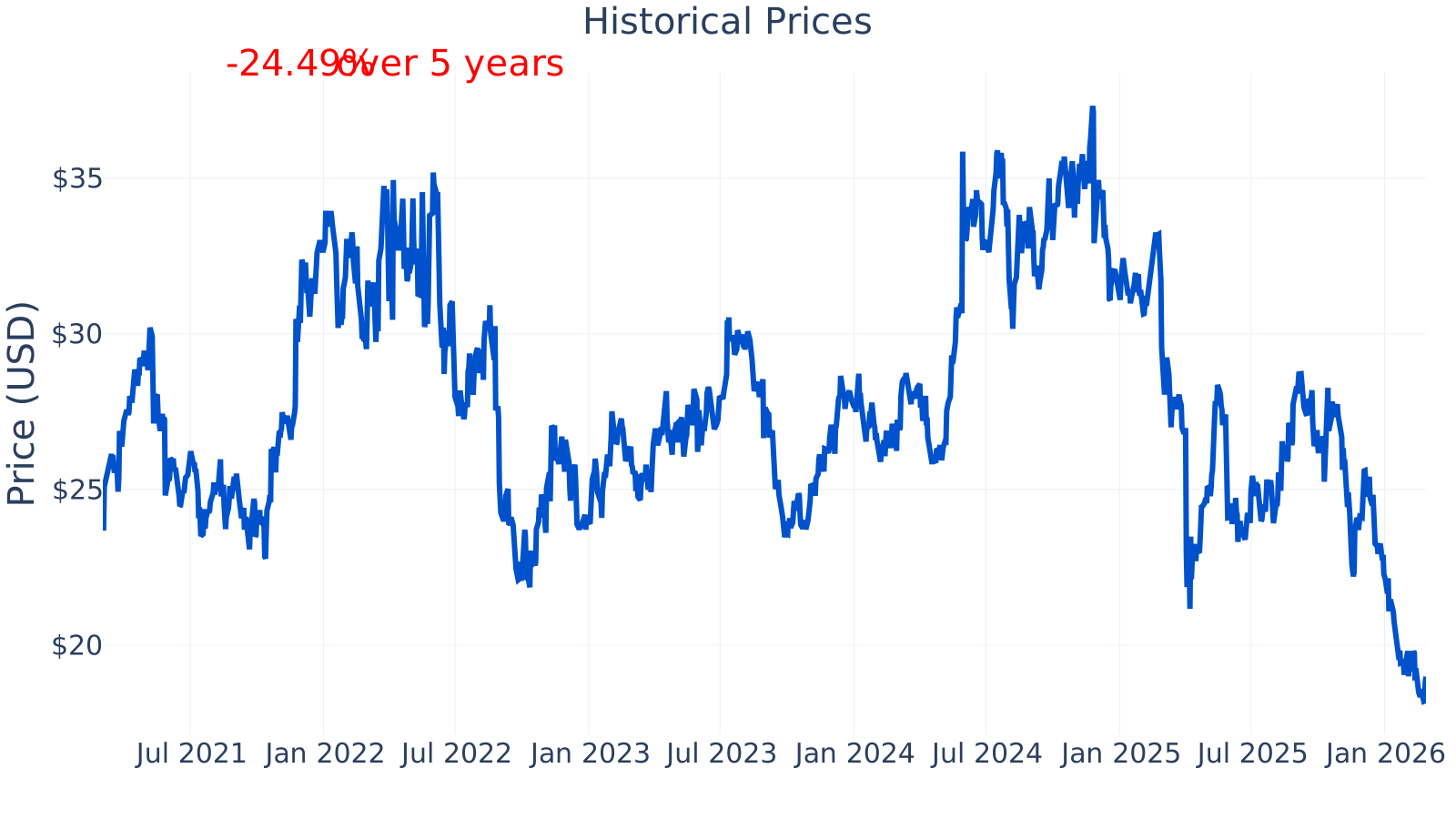
HP Inc. has a market capitalization of about $17.7B and a beta of about 1.20, which indicates the stock has historically moved somewhat more than the broader market. The current P/E ratio is ~7.17, which is below the industry median (~25.05) shown here. Profit margin is about 4.46%, in line with the industry median in this comparison. Revenue growth year-over-year is about 6.9%, which is below the industry median (~21.5%). Debt-to-equity is shown at roughly 285%, far above the industry median (about 5.95%), and trailing twelve-month free cash flow is about $2.88B.
Growth (Low to Medium)
HP operates in mature categories—PCs and printers—where long-term unit growth is typically limited and demand can fluctuate with corporate IT budgets, consumer spending, and replacement timing. This means the company’s growth profile often depends less on rapid market expansion and more on execution: product mix, cost management, supply chain efficiency, and capturing recurring or repeat revenue where possible (for example, printing supplies and managed print/services offerings described in company filings).
The year-over-year revenue trend shown is cyclical: a period of declines followed by a return to positive growth, reaching about 6.9% most recently. For a long-term view, an important question is whether growth can be sustained beyond a rebound phase in the cycle, especially given competitive pricing in PCs and the secular pressure on office printing volumes in some environments.
Free cash flow remains a notable feature of the story. While it has varied over time (with a large figure in 2022 and a lower level afterward), the most recent trailing twelve-month free cash flow is about $2.88B. In mature hardware markets, consistent cash generation can be a key support for ongoing investment in products, restructuring efforts, and shareholder returns, but durability depends on maintaining margins and managing working capital through cycles.
Potential catalysts discussed in HP’s public materials typically relate to commercial PC refresh cycles, product innovation (including higher-end commercial devices), and efforts to grow services and solutions around printing and workplace devices. The magnitude of any catalyst tends to be moderated by the competitive nature of the markets and by how quickly customers adopt new device categories.
Risks (High)
HP faces several structural risks common to consumer and enterprise hardware companies. Demand can weaken quickly during economic slowdowns as customers delay upgrades. Competitive intensity is high, especially in PCs where products can be difficult to differentiate and pricing pressure can rise. Printing brings its own risks: fewer pages printed in some settings over time, competition from alternative printing ecosystems, and customer behavior shifting toward lower-cost supplies options.
Leverage is a key area to monitor. Debt-to-equity is shown at roughly 285% (versus an industry median near 3.9%–6% depending on the point of comparison). This is a large gap relative to peers and can increase sensitivity to interest rates, refinancing conditions, and profit volatility. It can also reduce flexibility during downturns if operating results weaken.
Profitability has trended down from higher levels earlier in the series to about 4.46% most recently, which matches the industry median shown here. In a hardware-centric model, small margin changes can have an outsized effect on earnings and cash flow. Margin pressure can come from PC price competition, component cost changes, supply chain disruptions, and shifts in printing mix (for example, less supplies volume or more competitive supplies pricing).
From a competitive position standpoint, HP is one of the best-known global PC and printer brands, with broad distribution across consumer and commercial channels. However, competitive advantages are often narrower than in software businesses: differentiation tends to come from scale, relationships with enterprise customers, device management features, brand, and operational execution rather than strong switching costs. Major competitors typically include other global PC manufacturers (such as Lenovo, Dell, and Apple) and printing competitors (such as Canon, Epson, Brother, and others), depending on geography and customer segment. HP’s placement is generally that of a large-scale incumbent, but not a market with “winner-takes-all” dynamics.
Valuation
On an earnings multiple basis, HP’s valuation has often appeared lower than the industry median shown on the chart, and the latest P/E in the table is about 7.17 versus an industry median around 25.05. A lower multiple can reflect the market’s view of slower long-term growth, higher cyclicality, and/or balance-sheet risk (including leverage), rather than indicating anything definitive on its own.
In context, a P/E near this level can be consistent with a business that generates meaningful cash flow but operates in mature categories with competitive pressure and limited structural growth. Whether the current price level is “justified” depends on how an observer weighs (1) the stability of long-term PC and printing demand, (2) the sustainability of margins, (3) ongoing cash generation, and (4) the implications of higher leverage for resilience across cycles.
Conclusion
HP Inc. is a large, established hardware company centered on PCs and printing, with financial results that tend to move with replacement cycles and competitive conditions. The recent return to positive revenue growth and the company’s continued free cash flow generation are notable, particularly for a mature business.
At the same time, the long-term profile includes meaningful constraints: mature end markets, intense competition, and a balance-sheet structure that appears more leveraged than the industry median in the comparison shown. The valuation metrics presented (including a relatively low P/E versus the industry median) align with a market assessment that balances cash generation against these growth and risk considerations.
Sources:
- U.S. SEC EDGAR — HP Inc. Form 10-K (Annual Report)
- HP Inc. Investor Relations — Annual Report materials and SEC filings archive
- Wikipedia — “HP Inc.” (basic company background)
This article is for informational purposes only and does not constitute financial advice. Some content is AI-generated. See Disclaimer