Stock Analysis · HP Inc (HPQ)
Overview
HP Inc. is a global technology company best known for personal computers (desktops, notebooks, workstations, and related services) and printers (home and office printers, plus the supplies and services that go with them). The company operates primarily through two reporting segments: Personal Systems and Printing, selling through retail, commercial channels, and direct-to-customer routes.
In simple terms, HP’s business model mixes (1) devices that are often purchased infrequently (PCs and printers) with (2) ongoing, repeat purchases tied to usage (especially printer supplies like ink and toner, plus certain services). This mix can make results sensitive to PC replacement cycles and demand for printing, while also benefiting from recurring supplies revenue tied to its installed base of printers.
Main revenue sources (largest to lowest) are typically:
- Personal Systems (PCs and related services)
- Printing (printers, supplies such as ink/toner, and related services)
Percentages vary by fiscal year and are reported in HP’s annual filing by segment; the mix often shifts with the PC cycle and printing demand.
Across recent fiscal years shown, total revenue moved from about $63.5B (FY2021) down to roughly $53–55B (FY2023–FY2025), while profitability also came down from the unusually strong FY2021 level. A key takeaway is that HP’s costs are dominated by the direct costs of making and buying products (cost of revenue), so small changes in pricing, component costs, and demand can meaningfully affect operating income.
Key Figures
| Metric | Value | Industry ⓘ |
|---|---|---|
| Date | Feb 07, 2026 | |
| Context | ||
| Sector | Technology | |
| Industry | Computer Hardware | |
| Market Cap ⓘ | $18.37B | |
| Beta ⓘ | 1.20 | |
| Fundamental | ||
| P/E Ratio ⓘ | 7.42 | 25.91 |
| Profit Margin ⓘ | 4.57% | 3.74% |
| Revenue Growth ⓘ | 4.20% | 21.50% |
| Debt to Equity ⓘ | -3145.09% | 4.92% |
| PEG ⓘ | 1.30 | |
| Free Cash Flow ⓘ | $2.80B | |
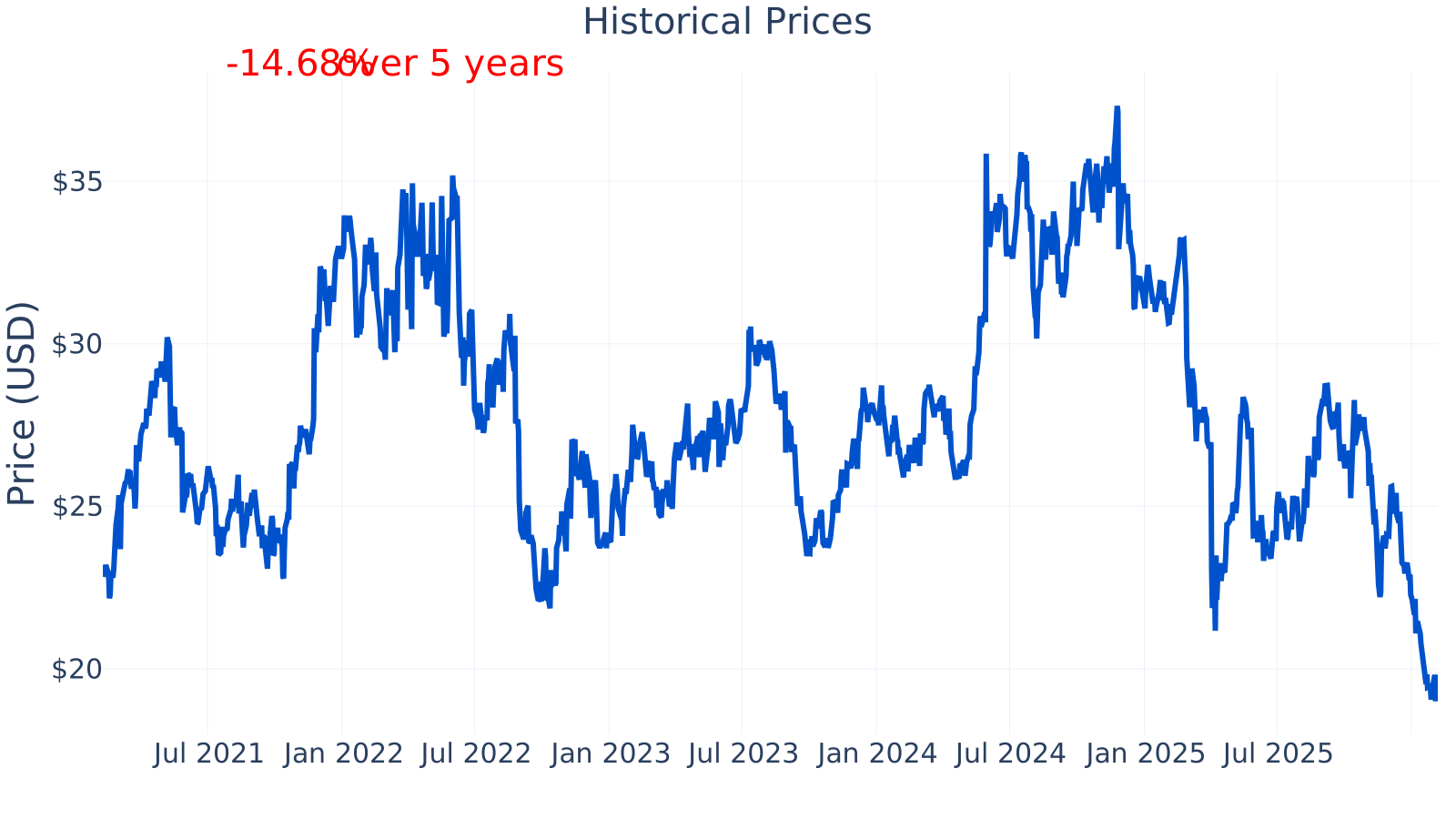
HP’s market capitalization is about $18.4B. The stock’s beta of ~1.20 suggests it has historically moved somewhat more than the overall market. The current P/E ratio is ~7.4, which is below the industry median (~25.9) in the provided peer set. HP’s profit margin is ~4.6% versus an industry median ~3.7%, while year-over-year revenue growth is ~4.2% versus an industry median ~21.5%. Free cash flow over the trailing twelve months is about $2.8B.
Growth (Low to Medium)
HP participates in mature markets. PCs and consumer/office printing are widely adopted categories where growth tends to be driven more by replacement cycles, customer mix (consumer vs. commercial), and product refreshes than by rapid expansion of the total addressable market. That can support steady demand in normal conditions, but it usually does not look like “high-growth tech.”
HP’s strategy for sustaining performance over time generally centers on (1) maintaining scale in PCs, (2) protecting and expanding its printing installed base, and (3) emphasizing higher-value areas such as commercial devices, managed services, and recurring revenue elements (for example, supplies and certain subscription-like offerings). In practice, a meaningful “catalyst” for HP often comes from the PC cycle (enterprise refreshes, new form factors, or operating system upgrade cycles) rather than a single new product category transforming the business.
The pattern shown indicates a swing from strong growth in 2021 to declines through much of 2022–2024, followed by a return to modest positive growth in 2024–2025 (ending around ~4% year-over-year). Relative to the industry median shown, HP’s recent growth rate appears lower, which aligns with its exposure to mature categories.
Free cash flow (cash generated after operating needs and capital spending) was about $6.3B (FY2022), then dropped to about $2.1B (FY2023), and recovered to roughly $3.1B–$3.3B (FY2024–FY2025), with the latest trailing figure around $2.8B. For long-term evaluation, this measure matters because it reflects how much cash the business can generate through a cycle, which can be used for debt reduction, reinvestment, or returning capital to shareholders.
Risks (Medium to High)
This article is for informational purposes only and does not constitute financial advice. Some content is AI-generated. See Disclaimer