Stock Analysis · HNI Corp (HNI)
Overview
HNI Corp is a U.S.-based manufacturer focused on workplace furnishings and residential building products. In simple terms, it sells items that help businesses furnish offices and other commercial spaces, and it also sells products used in homes (especially fireplaces and related accessories). The company operates through two main business segments that are reported in its official filings: Workplace Furnishings and Residential Building Products.
Because end-markets differ, HNI’s results tend to be shaped by (1) business spending on offices and commercial facilities and (2) housing and remodeling activity that influences demand for fireplaces and related products. These are cyclical markets, meaning they can strengthen or weaken depending on the broader economy.
Main sources of revenue are typically presented by segment in HNI’s annual report and SEC filings. In general terms, revenue comes from:
- Workplace Furnishings (commercial office and workplace furniture sold through dealers and other channels)
- Residential Building Products (hearth products such as fireplaces, inserts, stoves, and accessories)
The company’s 2024 results show a higher revenue base compared with earlier years, alongside improved profitability, suggesting a period of operational progress even as the environment for furniture and building products can fluctuate.
From 2021 to 2024, total revenue increased (about $2.18B to about $2.53B), while operating income rose more sharply (about $84M to about $206M). This indicates that, over that span, profit improved faster than sales—often a sign of better pricing, product mix, productivity, or cost control.
Key Figures
| Metric | Value | Industry ⓘ |
|---|---|---|
| Date | Feb 23, 2026 | |
| Context | ||
| Sector | Consumer Cyclical | |
| Industry | Furnishings, Fixtures & Appliances | |
| Market Cap ⓘ | $3.54B | |
| Beta ⓘ | 0.92 | |
| Fundamental | ||
| P/E Ratio ⓘ | 16.75 | 19.28 |
| Profit Margin ⓘ | 5.47% | 3.93% |
| Revenue Growth ⓘ | 1.70% | 1.70% |
| Debt to Equity ⓘ | 54.96% | 100.45% |
| PEG ⓘ | 1.09 | |
| Free Cash Flow ⓘ | $191.20M | |
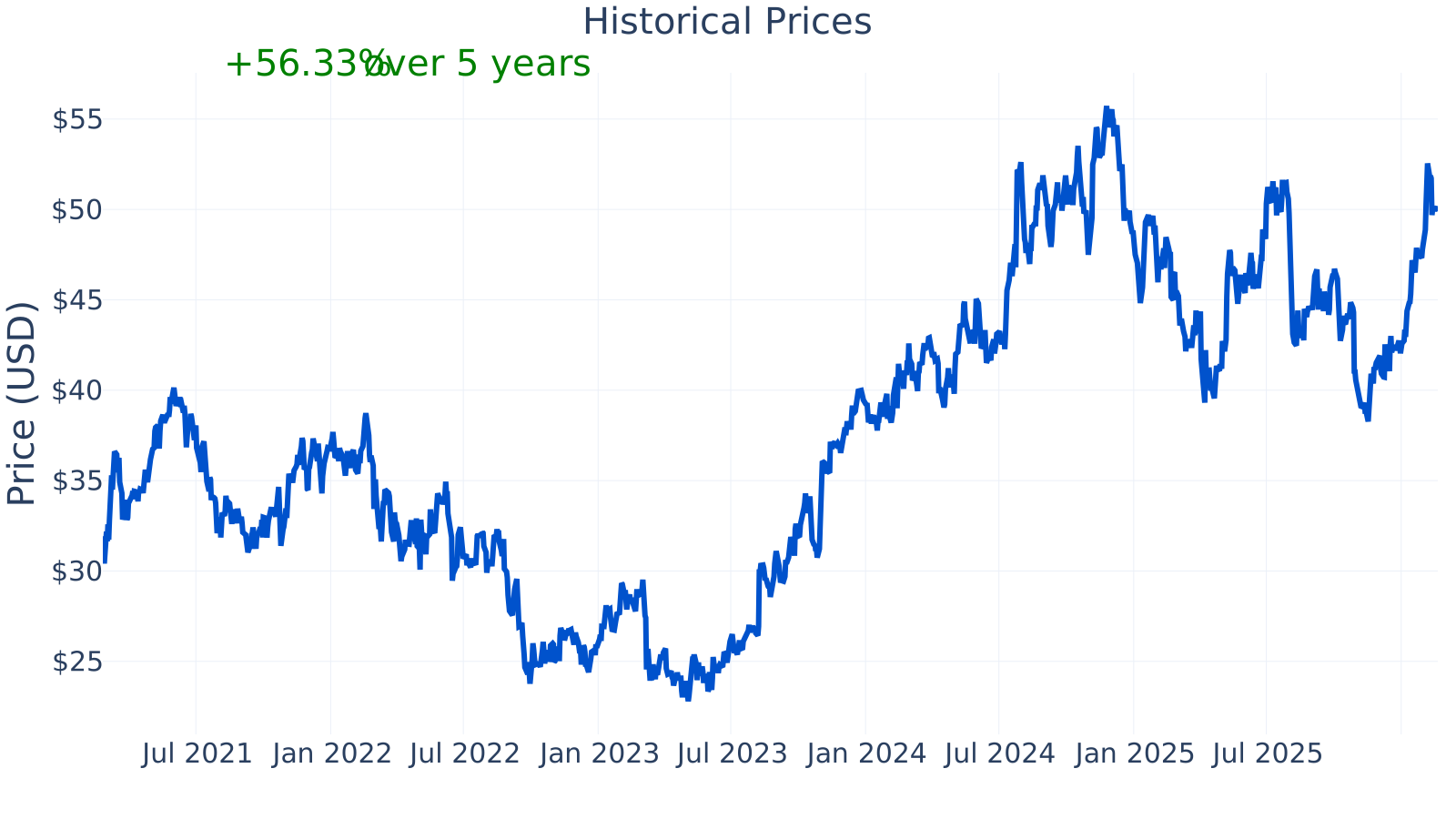
HNI’s market capitalization is about $3.54B, and its beta is about 0.92, which is commonly interpreted as historically a bit less volatile than the overall stock market. The company’s P/E ratio is ~16.7, below the listed industry median (~19.3). Profitability (profit margin) is about 5.47%, above the industry median shown (~3.93%). Revenue growth year-over-year is about 1.7%, roughly in line with the industry median (~1.7%). Leverage (debt-to-equity) is about 55%, below the industry median shown (~100%). Trailing twelve-month free cash flow is about $191.2M.
Growth (medium)
HNI operates in markets that are mature and cyclical rather than consistently high-growth. Workplace furniture demand is influenced by employment levels, corporate capital spending, and office usage patterns. Residential building products demand is tied to housing turnover, new construction, and remodeling activity. These drivers can create multi-year ups and downs, even for well-run companies.
The year-over-year revenue trend shows noticeable swings across quarters, including periods of declines and rebounds. Most recently, growth appears modest (around 1.7% year-over-year), which points to a more stable (but slower) top-line environment compared with the larger spikes seen earlier in the series.
Free cash flow (cash left after operating needs and capital spending) improved meaningfully versus the low point in 2022 (about $38.6M as of 2022-03-31), and has been stronger in the last two reported points (about $176.5M as of 2024-03-31 and about $187.9M as of 2025-03-31). For long-term analysis, sustained free cash flow matters because it supports debt repayment, reinvestment in operations, and shareholder returns (depending on management decisions).
Potential long-term catalysts (in a neutral, “what could move results” sense) generally include improved commercial order activity, stabilization in housing/remodeling, and continued efficiency gains that protect margins during slower demand periods. Since HNI’s end-markets are cyclical, catalysts often come from the economy and industry conditions as much as from company-specific actions.
Risks (medium)
This article is for informational purposes only and does not constitute financial advice. Some content is AI-generated. See Disclaimer