Stock Analysis · Guidewire Software Inc (GWRE)
Overview
Guidewire Software Inc (GWRE) develops software used by property-and-casualty (P&C) insurance companies (the insurers behind auto, home, and commercial coverage). Its products help insurers run core operations such as issuing and renewing policies, billing, and handling claims. Guidewire’s tools are typically mission-critical: once an insurer adopts a core platform, switching can be costly and time-consuming because these systems sit at the center of daily operations and must integrate with many other applications.
Over the past several years, Guidewire has been moving from traditional on-premises software (installed in a customer’s data center) toward cloud-based subscriptions. In a cloud model, customers pay recurring fees, upgrades are delivered continuously, and Guidewire can standardize and improve the platform across customers. This shift is important because it tends to increase recurring revenue visibility but can also reshape profitability during the transition period.
In its filings, Guidewire generally describes revenue in a few main categories, with subscriptions and related services becoming increasingly important as the business shifts to the cloud. A simplified view of the main sources is:
- Subscription and support revenue (cloud subscriptions and maintenance/support tied to Guidewire platforms)
- Services revenue (implementation and professional services, often delivered with partners and systems integrators)
- License revenue (more typical of older on-premises arrangements; smaller as cloud adoption grows)
The exact mix can change year to year depending on cloud adoption and the timing of large projects; company filings provide the most precise breakdown by period.
One notable operational shift over time is that total revenue has grown meaningfully (from about $743 million in FY2021 to about $1.20 billion in FY2025), while operating results improved from sizable operating losses to positive operating income in FY2025. This pattern is consistent with a business moving through a multi-year product and delivery transition and starting to show improved scale benefits.
Key Figures
| Metric | Value | Industry ⓘ |
|---|---|---|
| Date | Mar 09, 2026 | |
| Context | ||
| Sector | Technology | |
| Industry | Software - Application | |
| Market Cap ⓘ | $14.36B | |
| Beta ⓘ | 1.09 | |
| Fundamental | ||
| P/E Ratio ⓘ | 159.31 | 27.00 |
| Profit Margin ⓘ | 14.11% | 7.87% |
| Revenue Growth ⓘ | 24.00% | 16.65% |
| Debt to Equity ⓘ | 46.67% | 25.51% |
| PEG ⓘ | 1.50 | |
| Free Cash Flow ⓘ | $309.56M | |
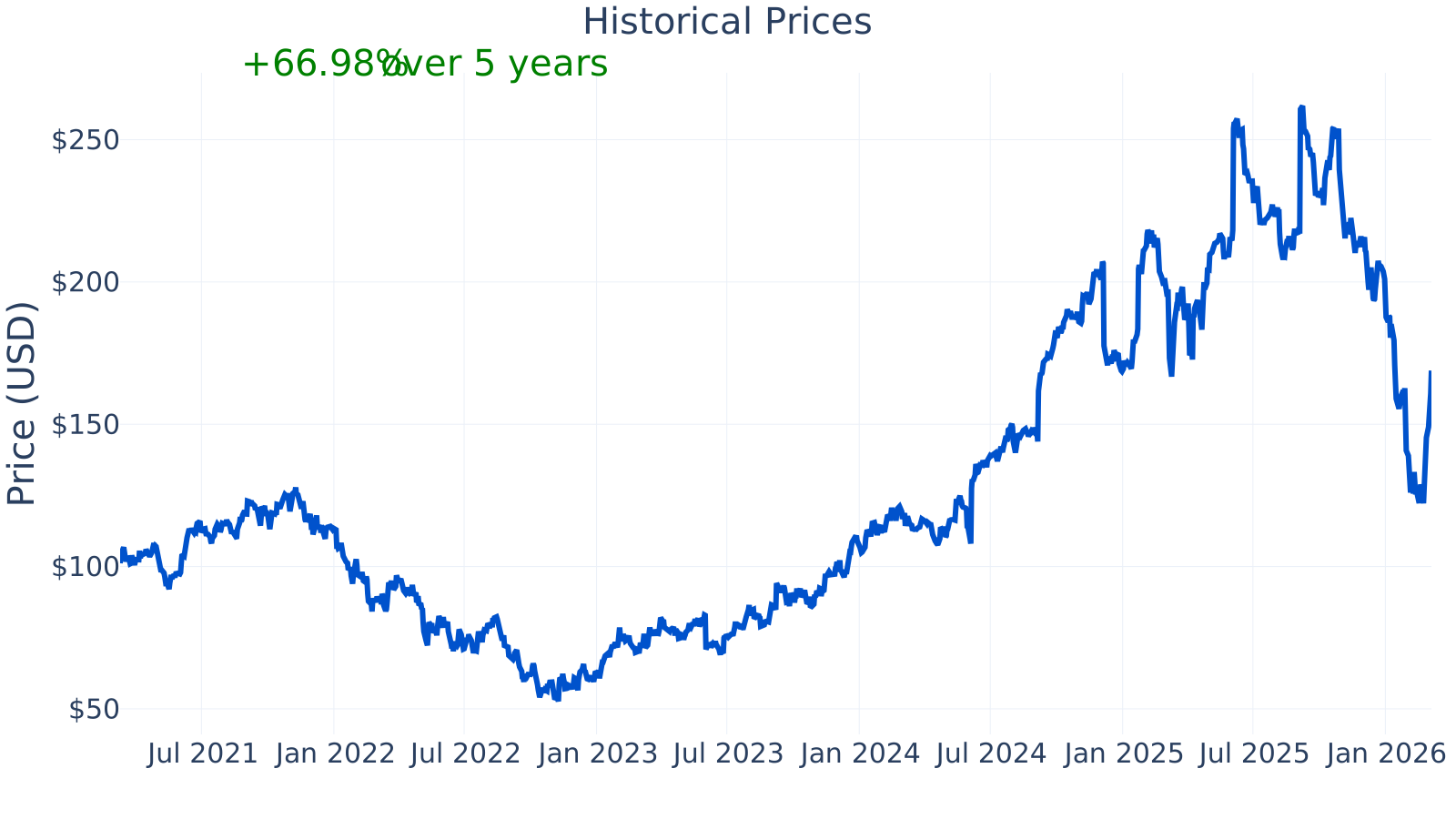
Guidewire’s market capitalization is about $14.4 billion and the stock’s beta is ~1.10, which indicates price moves that have been slightly more sensitive than the broader market historically. The company’s latest profit margin is ~14.1%, above the industry median (~7.9%), reflecting improved profitability versus prior years. Year-over-year revenue growth is ~24.0%, also above the industry median (~16.7%). Free cash flow over the trailing twelve months is about $310 million, indicating the company is currently generating cash after operating needs and capital spending. Valuation metrics show a P/E ratio of ~159, well above the industry median (~27), which implies the market is pricing in continued growth and/or further margin expansion.
Growth (Medium)
Guidewire operates in the insurance technology market, which is shaped by long-term modernization needs. Many P&C insurers still rely on legacy systems that can be costly to maintain and slow to update. Over time, regulatory changes, the need for faster product updates, data-driven pricing, and digital customer experiences create incentives for insurers to upgrade core platforms. Because core system replacements are large, multi-year projects, the market tends to move in “waves,” but the overall direction has been toward modernization and cloud delivery.
Guidewire’s strategy centers on expanding cloud adoption of its core platforms and surrounding capabilities (such as data, digital engagement, and analytics). If this transition continues successfully, it can increase the portion of revenue that is recurring and potentially improve unit economics as the platform scales. Another important element is the partner ecosystem: large implementation projects often involve global systems integrators, and execution quality (both Guidewire and partners) influences customer outcomes and sales momentum.
Recent growth has been stronger than earlier periods. Year-over-year revenue growth reached about 24% most recently, after being in the low-to-mid single digits at points in 2023–2024 and accelerating into the 20%+ range more recently. This type of acceleration can be consistent with increased cloud momentum and improved delivery capacity, though it can also be influenced by contract timing and multi-year project cycles.
Cash generation has improved substantially. Free cash flow moved from negative levels in 2022 and 2023 to about $102 million in 2024, $208 million in 2025, and about $310 million most recently. For a company transitioning to cloud delivery, sustained positive free cash flow can matter because it provides flexibility to invest in product development and customer success without relying on external funding.
Risks (Medium)
A primary business risk is execution risk on large insurer transformation programs. Core system replacements are complex, can take years, and involve many stakeholders. Delays, cost overruns, or implementation issues can affect customer satisfaction, renewal decisions, and the pace of new bookings.
Another key risk is competitive pressure. Guidewire is widely recognized as a leading provider of core systems for P&C insurers, but it competes with other enterprise software providers and specialist insurtech vendors. Competitors include:
- Duck Creek Technologies (P&C core systems and cloud offerings)
- Sapiens (insurance software across multiple lines, including P&C in some markets)
- Majesco (cloud insurance platform offerings)
- Large enterprise software and system integrators offering custom-built or hybrid approaches (varies by insurer and region)
Guidewire’s competitive positioning often relies on depth in P&C workflows, references with large insurers, and the breadth of its platform and partner ecosystem. Even with these strengths, pricing, implementation capacity, and product pace remain important to defend share.
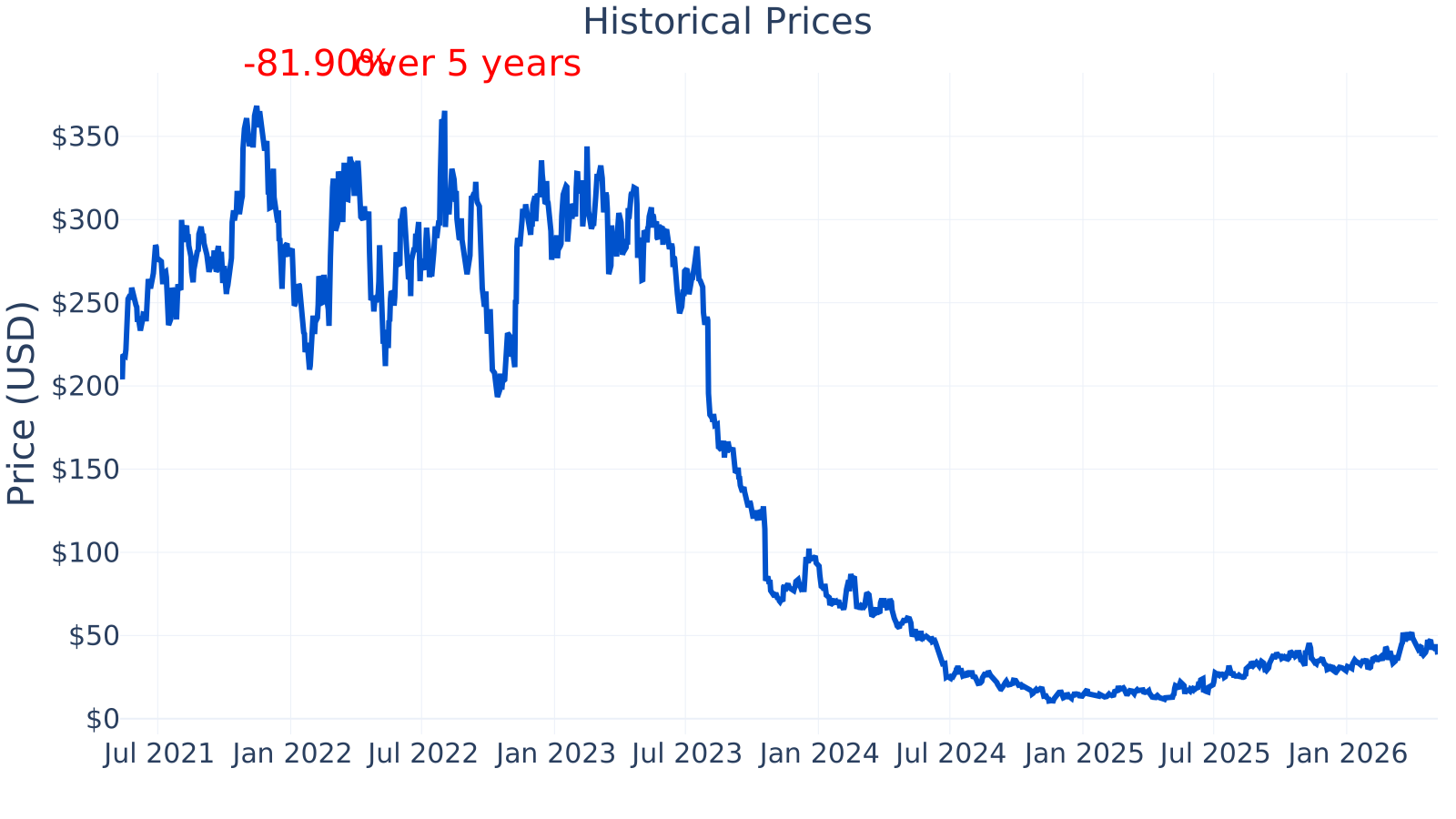
From a balance sheet perspective, Guidewire’s latest debt-to-equity is ~46.7%, above the industry median (~25.5%). The ratio increased sharply around late 2024 and remains elevated versus earlier years. Higher leverage can add risk if business conditions soften, although the company’s improving free cash flow can help offset some balance sheet pressure if that trend continues.
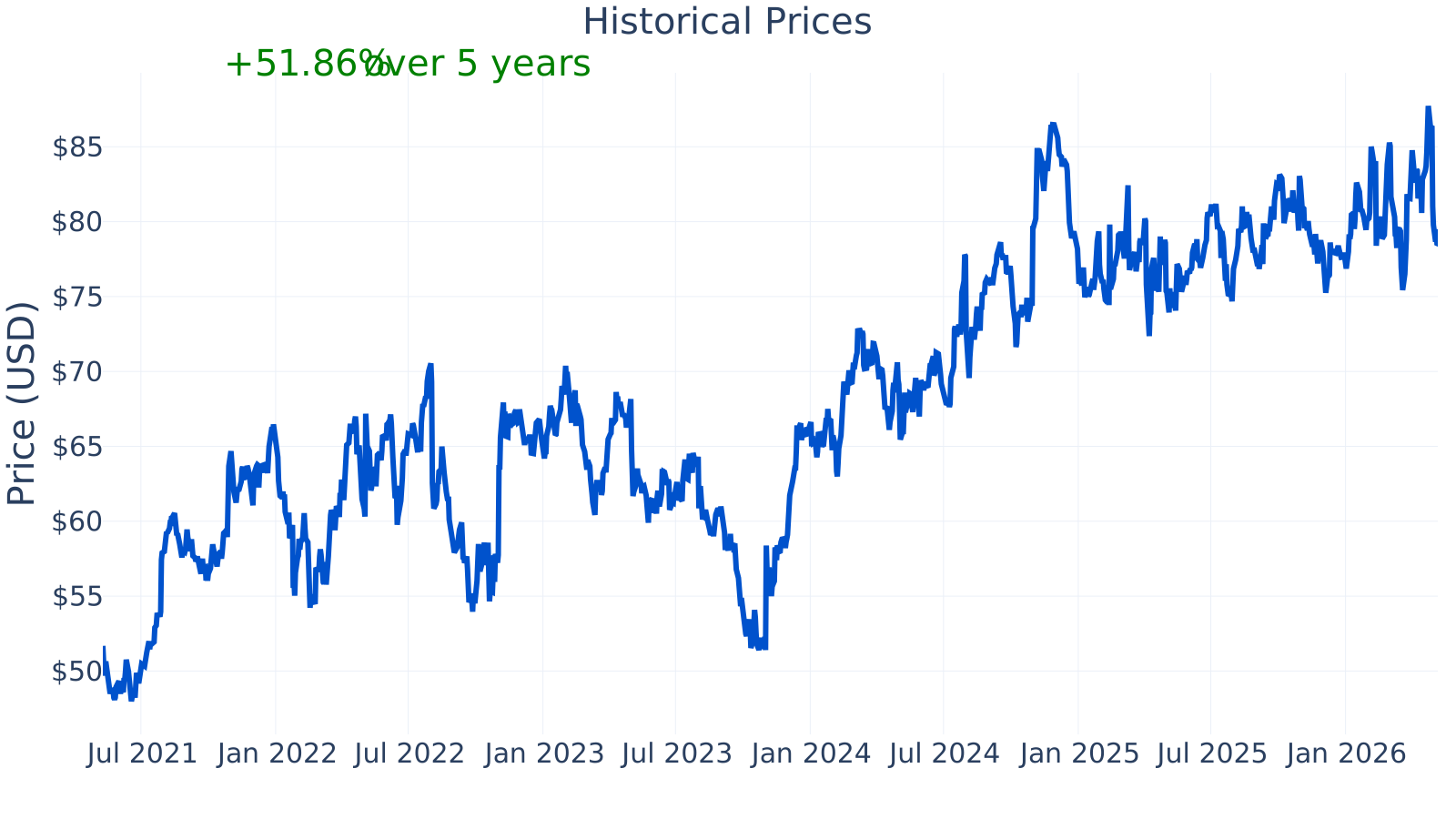
Profitability has improved, but it has also been volatile during the transition period. The margin trend shows losses earlier in the period (notably in 2021–2023), improving toward break-even in 2024, and rising to about 14.1% most recently (above the industry median of ~9.0%). A risk is that margins could fluctuate with investment levels (R&D, sales capacity, cloud operations) and with the mix of subscription revenue versus services.
Valuation
Valuing a company like Guidewire often depends on expectations for (1) sustained subscription growth, (2) continued improvement in operating leverage as cloud scale increases, and (3) durability of customer relationships in a mission-critical category.
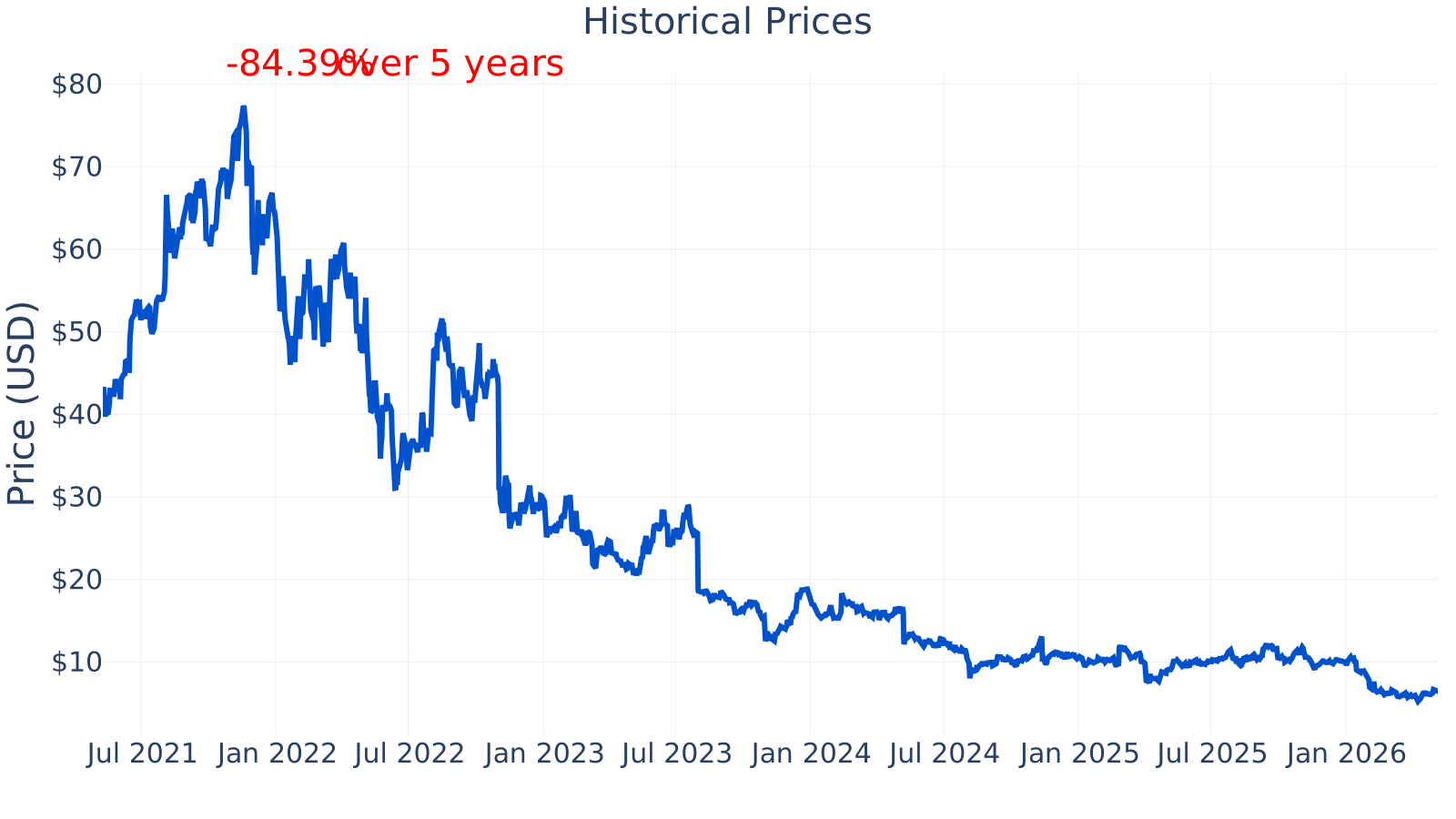
The current P/E ratio is ~159, which is substantially higher than the industry median of roughly 27. The historical P/E shown on the chart varies widely and is not always meaningful in years when earnings were low or negative (P/E can become unstable in those conditions). A high P/E typically indicates that the market is assigning significant value to expected future earnings growth and/or margin expansion; it also means the stock price can be more sensitive to disappointments in growth, profitability, or guidance.
Conclusion
Guidewire is focused on software that runs core operations for P&C insurers, a category with long replacement cycles but persistent modernization demand. The business has shown stronger recent revenue growth and a notable improvement in cash generation, alongside a shift toward profitability that appears to be strengthening.
At the same time, the company faces execution risk inherent to large insurance platform transformations, an active competitive landscape, and a balance-sheet leverage level above the industry median. The valuation also stands out: the P/E ratio is far above the industry median, indicating that the current market price reflects significant expectations for continued growth and improved profitability over time.
Sources:
- U.S. Securities and Exchange Commission (SEC) EDGAR — Guidewire Software Inc filings (Form 10-K, 10-Q, 8-K)
- Guidewire Software Inc — Investor Relations materials and SEC filing documents (company-hosted)
- Wikipedia — “Guidewire Software” (basic company background)
This article is for informational purposes only and does not constitute financial advice. Some content is AI-generated. See Disclaimer