Stock Analysis · Guidewire Software Inc (GWRE)
Overview
Guidewire Software Inc. (GWRE) develops software used by property and casualty (P&C) insurance companies to run core operations. In simple terms, its products help insurers manage key “back-office” work such as creating and servicing insurance policies, handling claims, and billing customers. Because these processes sit at the center of an insurer’s daily activity, the software tends to be deeply integrated and used for many years once adopted.
Guidewire’s business model combines recurring software subscriptions (increasingly cloud-based) and services that help customers implement, configure, and maintain these systems. Over time, the company has been emphasizing cloud delivery, which typically shifts revenue toward subscription arrangements and ongoing support rather than one-time license sales.
Main revenue sources (as typically presented in company filings) include:
- Subscription and support (recurring revenue tied to software access and ongoing support)
- Services (implementation, consulting, and related professional services)
- License (where applicable, more common historically than in a cloud-first model)
Exact percentages can vary by fiscal year and are disclosed in the company’s annual report; the broad direction in recent years has been toward a higher share of recurring subscription-related revenue as cloud adoption expands.
Across the years shown, total revenue rises from about $743M (FY2021) to about $1.20B (FY2025). Over the same period, operating results improve materially, moving from operating losses to positive operating income by FY2025. Research and development and selling/administrative costs also grow, but at a slower pace than gross profit in the most recent year shown, which helps explain the swing toward profitability.
Key Figures
| Metric | Value | Industry ⓘ |
|---|---|---|
| Date | Feb 07, 2026 | |
| Context | ||
| Sector | Technology | |
| Industry | Software - Application | |
| Market Cap ⓘ | $10.90B | |
| Beta ⓘ | 1.06 | |
| Fundamental | ||
| P/E Ratio ⓘ | 120.93 | 27.79 |
| Profit Margin ⓘ | 7.23% | 6.02% |
| Revenue Growth ⓘ | 26.50% | 15.80% |
| Debt to Equity ⓘ | 45.94% | 25.15% |
| PEG ⓘ | 1.14 | |
| Free Cash Flow ⓘ | $286.00M | |
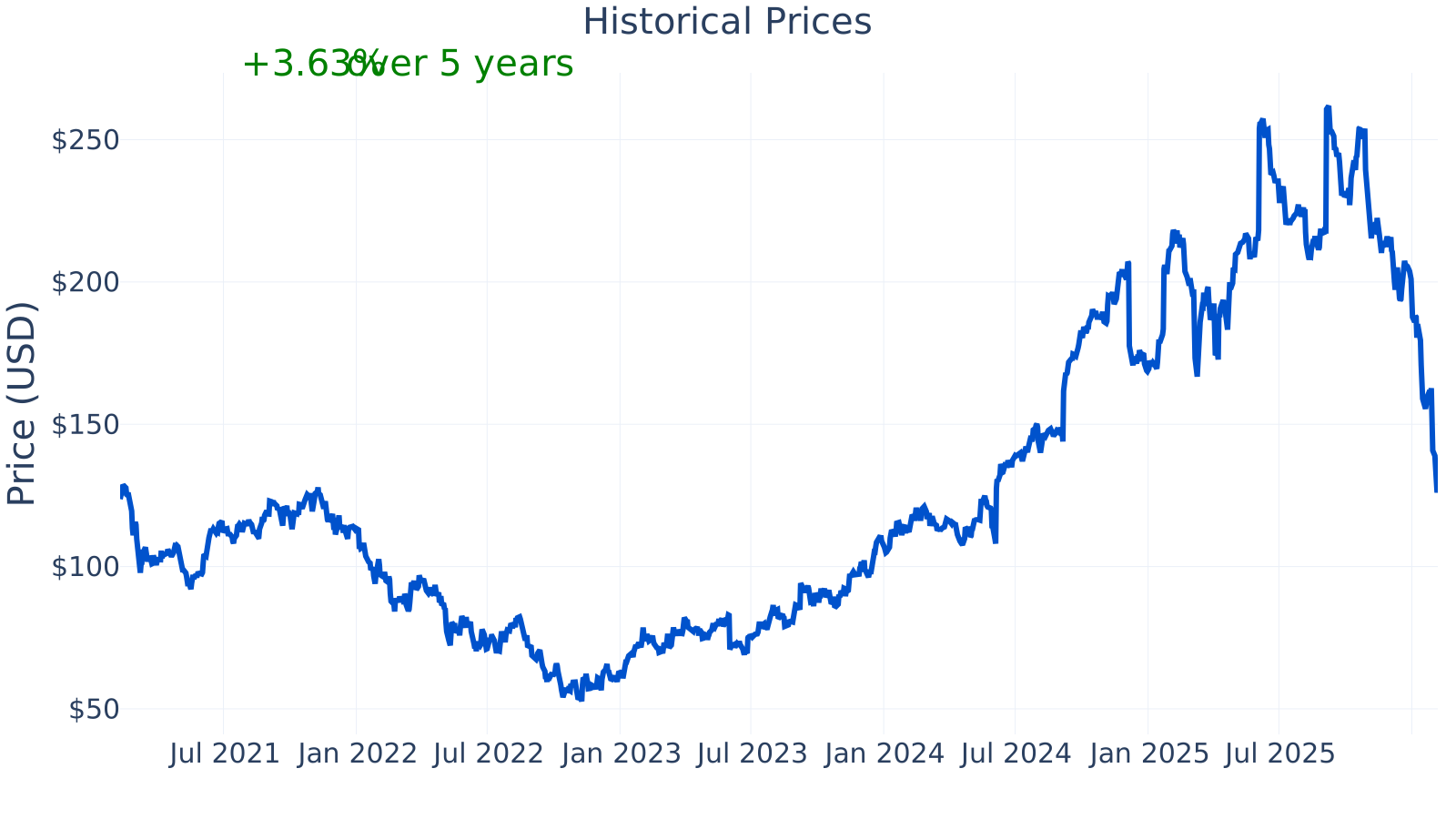
Guidewire’s market capitalization is about $10.9B, and its beta of ~1.07 suggests its stock has historically moved roughly in line with the broader market. The latest profit margin shown is ~7.23% (above the industry median of ~6.03%), while year-over-year revenue growth is ~26.5% (above the industry median of ~15.8%). Debt-to-equity is ~45.9%, which is higher than the industry median of ~25.2%. Free cash flow over the last twelve months is shown at ~$286M, indicating the business has recently been generating cash after operating needs and capital spending.
Growth (Medium)
Guidewire operates in the market for insurance technology, specifically the core systems that P&C insurers rely on to run mission-critical processes. This is an area where many insurers have historically used older, customized systems, and modernization can be a multi-year effort. That creates a long runway for vendors that can successfully migrate large insurers to newer platforms, particularly cloud-based solutions.
A key part of Guidewire’s strategy is moving customers from older on-premises deployments toward cloud offerings. For customers, the cloud approach can reduce internal infrastructure burden and make it easier to adopt new features over time. For Guidewire, it can increase the share of recurring revenue and create a more predictable long-term revenue profile once implementations are complete.
The year-over-year revenue growth trend shown improves over time and reaches the mid-20% range in the most recent periods displayed (about 26–27%). While quarterly growth can fluctuate, the overall pattern shown supports the idea that revenue momentum has strengthened compared with earlier periods.
Free cash flow shifts from negative in 2022 and 2023 to positive in 2024 and 2025 (from roughly -$28M and -$31M to about $102M and $208M, and the latest table shows ~$286M). This pattern is often important for software companies transitioning business models, because it can indicate improving efficiency and better conversion of revenue into cash over time.
Risks (Medium)
This article is for informational purposes only and does not constitute financial advice. Some content is AI-generated. See Disclaimer