Stock Analysis · Grindr Inc (GRND)
Overview
Grindr Inc. operates a location-based social networking and dating application primarily serving the LGBTQ+ community. The platform helps users connect through profiles, messaging, and discovery features. As a digital platform business, Grindr’s operating model is built around monetizing its user base through paid features and advertising.
In general terms, Grindr’s revenue is typically generated from two main streams:
- Subscription revenue (paid plans): recurring payments that unlock premium features.
- Advertising and other revenue: ads shown in the app and other monetization features.
Exact revenue mix percentages can vary by period and are disclosed in company filings.
Across 2021–2024, total revenue increased meaningfully (from about $145.8M to about $344.6M). Over the same span, gross profit also grew (about $108.5M to about $257.1M), indicating that the core product scaled. Operating income in 2024 appears positive while net income is negative, which suggests costs outside core operations (for example interest, taxes, and/or non-operating or non-cash items) had a significant impact that year.
Key Figures
| Metric | Value | Industry ⓘ |
|---|---|---|
| Date | Feb 08, 2026 | |
| Context | ||
| Sector | Technology | |
| Industry | Software - Application | |
| Market Cap ⓘ | $1.96B | |
| Beta ⓘ | 0.23 | |
| Fundamental | ||
| P/E Ratio ⓘ | N/A | 27.79 |
| Profit Margin ⓘ | -11.99% | 6.02% |
| Revenue Growth ⓘ | 29.60% | 15.80% |
| Debt to Equity ⓘ | 21.14% | 25.15% |
| PEG ⓘ | N/A | |
| Free Cash Flow ⓘ | $140.01M | |
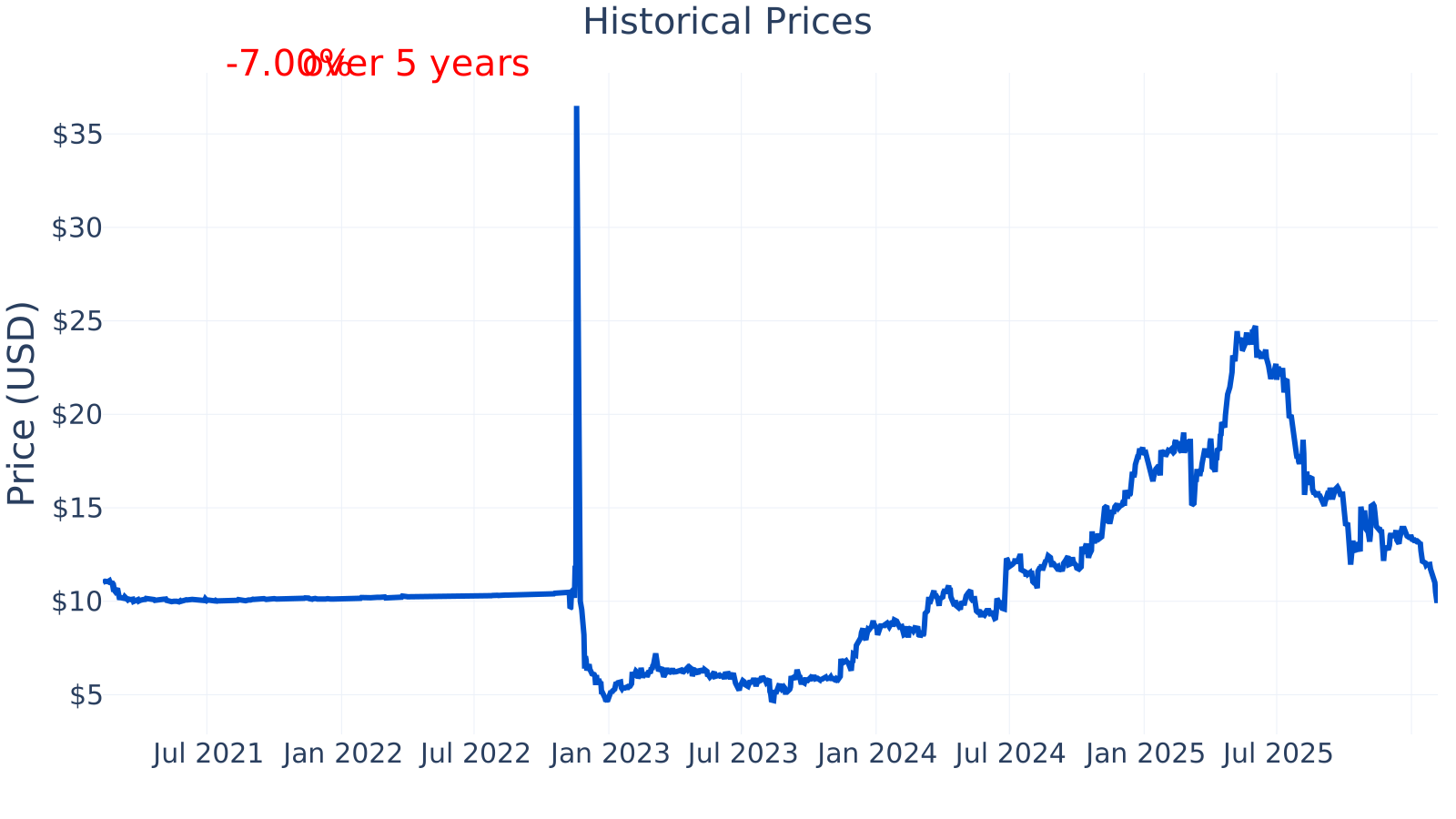
Grindr’s market capitalization is about $2.0B, and the stock’s beta of 0.23 indicates historically lower price movement versus the broader market (though beta can shift over time and may not capture company-specific events). The company shows ~29.6% year-over-year revenue growth versus an industry median of ~15.8%, while the profit margin is about -12.0% compared with an industry median near +6.0%. Leverage, as measured by debt-to-equity (~21.1%), is below the industry median (~25.2%). Free cash flow over the trailing twelve months is shown at about $140.0M.
Growth (Medium)
Grindr operates within mobile applications and online dating/social discovery—categories that have benefited over the last decade from widespread smartphone adoption, app-based subscriptions, and digital advertising. For long-term business growth, the key questions tend to be whether the company can (1) keep expanding its paying user base, (2) increase average revenue per user through feature upgrades and pricing, and (3) maintain engagement while controlling user acquisition and operating costs.
Revenue growth has been consistently positive across the periods shown, generally ranging from the mid-20% to mid-30% area recently (with the latest shown at ~29.6%). Relative to the stated industry median (~15.8%), that suggests Grindr has been expanding faster than many peers in the broader application software group—though “industry” here is wide and includes many business models beyond consumer apps.
Free cash flow has also increased over time in the values shown (from roughly $40.2M to $93.5M by 2025-03-31, with the latest table showing ~$140.0M TTM). For a subscription-and-ads app, sustained free cash flow can be an important support for long-term flexibility, because it can fund product development, marketing, and balance-sheet needs without relying as much on new financing.
Potential growth catalysts for a business like Grindr are usually tied to execution: improving premium feature adoption, refining advertising effectiveness, expanding internationally, and building user trust and safety features that help retention. The largest “catalyst” is often continued product-led monetization—finding ways to convert more active users to paid tiers while maintaining a healthy user experience for free users.
Risks (High)
This article is for informational purposes only and does not constitute financial advice. Some content is AI-generated. See Disclaimer