Stock Analysis · Green Brick Partners Inc (GRBK)
Overview
Green Brick Partners Inc (GRBK) is a U.S. homebuilder. In simple terms, it buys and develops land, builds single-family homes (often through subsidiary builder brands), and sells those homes to buyers. Like most homebuilders, its business is closely tied to housing demand, home affordability, and the availability/cost of mortgages.
Its revenue is primarily generated from homebuilding activities. Based on how the company describes its operations in its SEC filings, the main revenue drivers typically include:
- Home sales (homebuilding revenue) — selling newly built homes (generally the largest component)
- Land and lot sales — selling developed land/lots (usually smaller and more variable)
- Other / related activities — items such as title/closing-related services may exist depending on structure and reporting (when applicable)
The business model tends to benefit when the company can (1) control well-located land and lots, (2) build efficiently, and (3) maintain pricing discipline. It tends to face pressure when mortgage rates rise, buyer demand slows, or construction and labor costs increase faster than selling prices.
From 2021 to 2024, total revenue increased (about $1.40B to about $2.10B), and net income also increased (about $190M to about $382M). Over the same period, selling, general and administrative expenses rose in dollars as the company scaled, but profits grew as well, suggesting the company expanded while keeping overall profitability strong.
Key Figures
| Metric | Value | Industry ⓘ |
|---|---|---|
| Date | Feb 08, 2026 | |
| Context | ||
| Sector | Consumer Cyclical | |
| Industry | Residential Construction | |
| Market Cap ⓘ | $3.29B | |
| Beta ⓘ | 2.00 | |
| Fundamental | ||
| P/E Ratio ⓘ | 9.90 | 12.00 |
| Profit Margin ⓘ | 16.03% | 8.48% |
| Revenue Growth ⓘ | -4.70% | -4.90% |
| Debt to Equity ⓘ | 19.31% | 34.53% |
| PEG ⓘ | 0.76 | |
| Free Cash Flow ⓘ | $158.09M | |
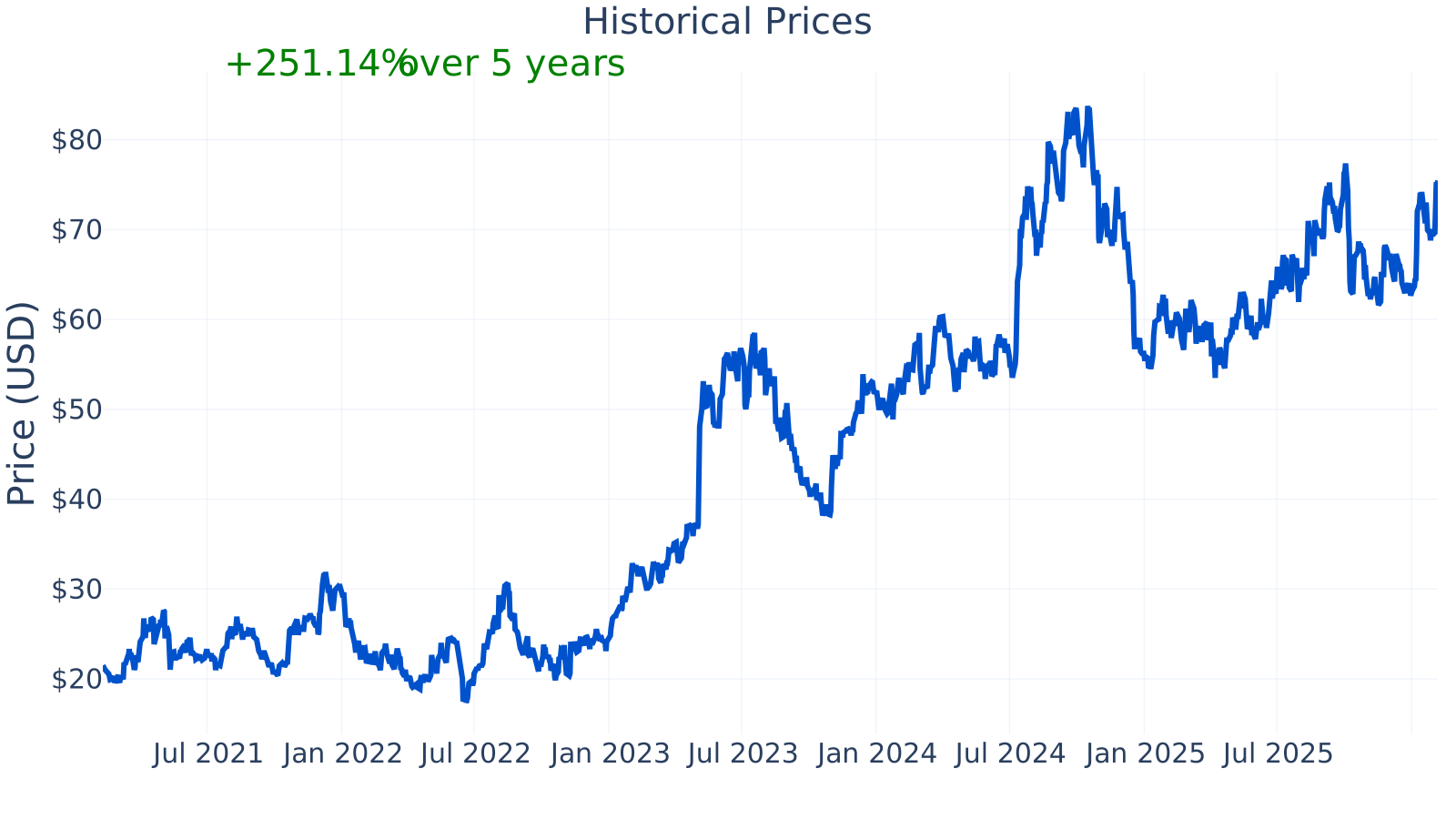
Green Brick Partners’ market capitalization is about $3.29B. The stock’s beta is about 2.0, which indicates the share price has historically moved more than the broader market (higher volatility). The company’s P/E ratio is about 9.9 versus an industry median near 12.0, while profit margin is about 16.0% versus an industry median near 8.5%. Revenue growth year-over-year is about -4.7% (industry median about -4.9%), highlighting that near-term growth can be uneven in homebuilding. Debt-to-equity is about 19% versus an industry median around 35%, indicating a comparatively lighter balance-sheet leverage. Trailing twelve-month free cash flow is about $158M, and the PEG ratio shown (about 0.76) links valuation to growth expectations, though it can be sensitive to how growth is measured in cyclical industries.
Growth (medium)
Residential construction is a long-term growth industry in the sense that housing demand is supported by population growth, household formation, and the need to replace or upgrade aging housing stock. At the same time, it is a highly cyclical industry: volumes can rise and fall significantly depending on mortgage rates, consumer confidence, employment, and local supply conditions.
Green Brick Partners’ strategy, as reflected in its filings, centers on being a builder with land and community development capabilities. In homebuilding, land is often the “inventory” that shapes future growth; companies that manage land positions well can be set up for multi-year community buildouts, while companies that misjudge land costs or locations can struggle when the cycle turns.
The year-over-year revenue growth pattern is volatile: it was very strong in parts of 2021–2022, turned negative in late 2022, recovered into 2024, and turned slightly negative again by 2025. That “stop-and-go” pattern is common in homebuilding and often reflects a mix of closings volume, pricing, and how quickly communities are delivering finished homes.
Free cash flow has also been uneven (positive in 2021, negative in 2022, strongly positive in 2023, and positive again afterward). For homebuilders, this can happen because cash is absorbed when the company buys/develops land and builds homes (inventory builds), and then released when homes close and cash comes in. The key long-term question is whether the business can produce solid cash generation across a full cycle while maintaining a prudent land pipeline.
Potential catalysts (in a factual, industry sense) generally include easing mortgage rates, improving affordability, or a stronger spring selling season, all of which can lift orders and closings. Company-specific catalysts often include opening new communities and expanding lot supply, though the benefits depend on local market conditions and execution.
Risks (high)
This article is for informational purposes only and does not constitute financial advice. Some content is AI-generated. See Disclaimer