Stock Analysis · Gray Television Inc (GTN-A)
Overview
Gray Television Inc. is a U.S. local media company best known for owning and operating broadcast television stations in many regional markets. Through these stations, Gray provides local news, weather, and community programming, while also airing content from major broadcast networks. The company also operates related local media and production capabilities that support advertising and content distribution.
In simple terms, Gray’s business is built around two main activities: (1) selling advertising tied to local audiences and (2) receiving payments from cable, satellite, and digital TV distributors that carry Gray’s stations (often called retransmission or distribution-related fees). A third component can include other station-related and production revenues.
Main revenue sources are typically concentrated in:
- Local and national advertising (including political advertising, which can be highly cyclical)
- Distribution-related fees from pay-TV providers and other partners carrying the stations
- Other revenues tied to station operations and related services
Across 2021–2024, total revenue shown below fluctuates meaningfully year to year (about $2.4B to $3.7B), reflecting the cyclical nature of advertising—especially in election years—along with changes in the broader advertising market.
One notable pattern over 2021–2024 is that interest expense rose materially (from about $205M in 2021 to about $485M in 2024), which can meaningfully affect net income even when operating profit is strong. Net income also swings widely across the period (including a loss in 2023), highlighting how results can vary with advertising cycles, non-cash items, and financing costs.
Key Figures
| Metric | Value | Industry ⓘ |
|---|---|---|
| Date | Feb 08, 2026 | |
| Context | ||
| Sector | Communication Services | |
| Industry | Broadcasting | |
| Market Cap ⓘ | $1.43B | |
| Beta ⓘ | 0.90 | |
| Fundamental | ||
| P/E Ratio ⓘ | 32.60 | |
| Profit Margin ⓘ | 2.81% | |
| Revenue Growth ⓘ | -21.20% | |
| Debt to Equity ⓘ | 228.81% | |
| PEG ⓘ | 0.21 | |
| Free Cash Flow ⓘ | $440.00M | |
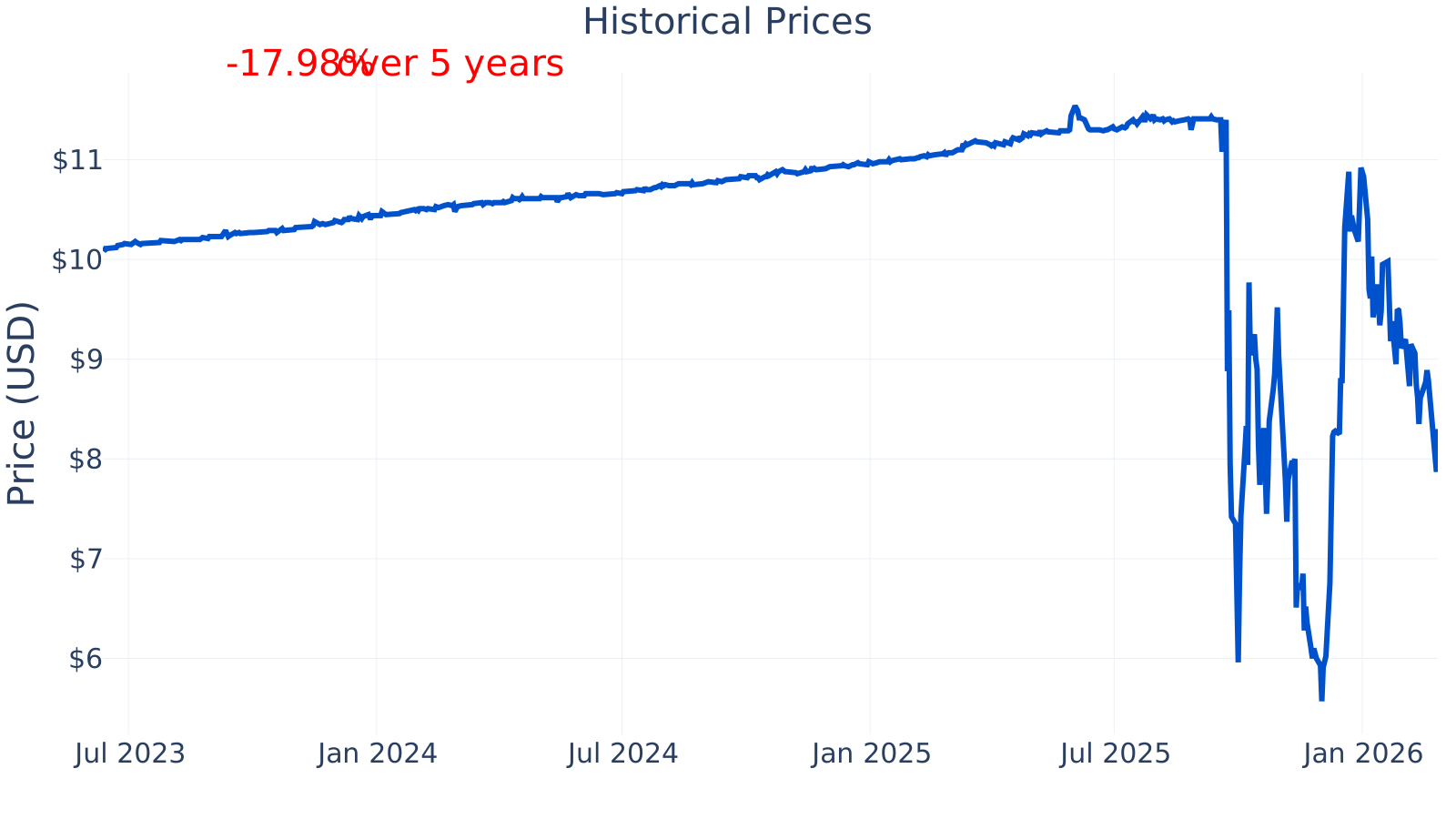
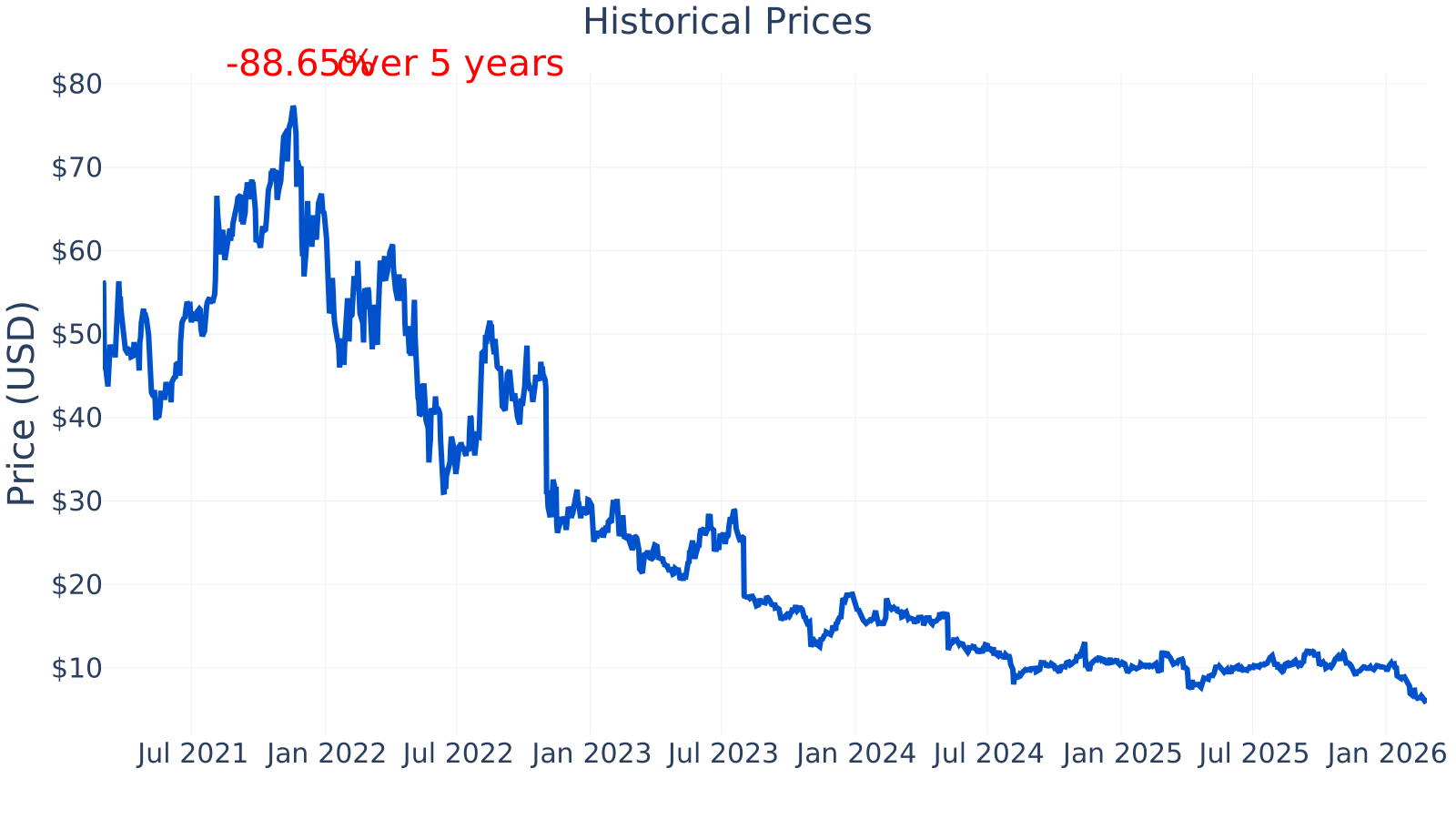
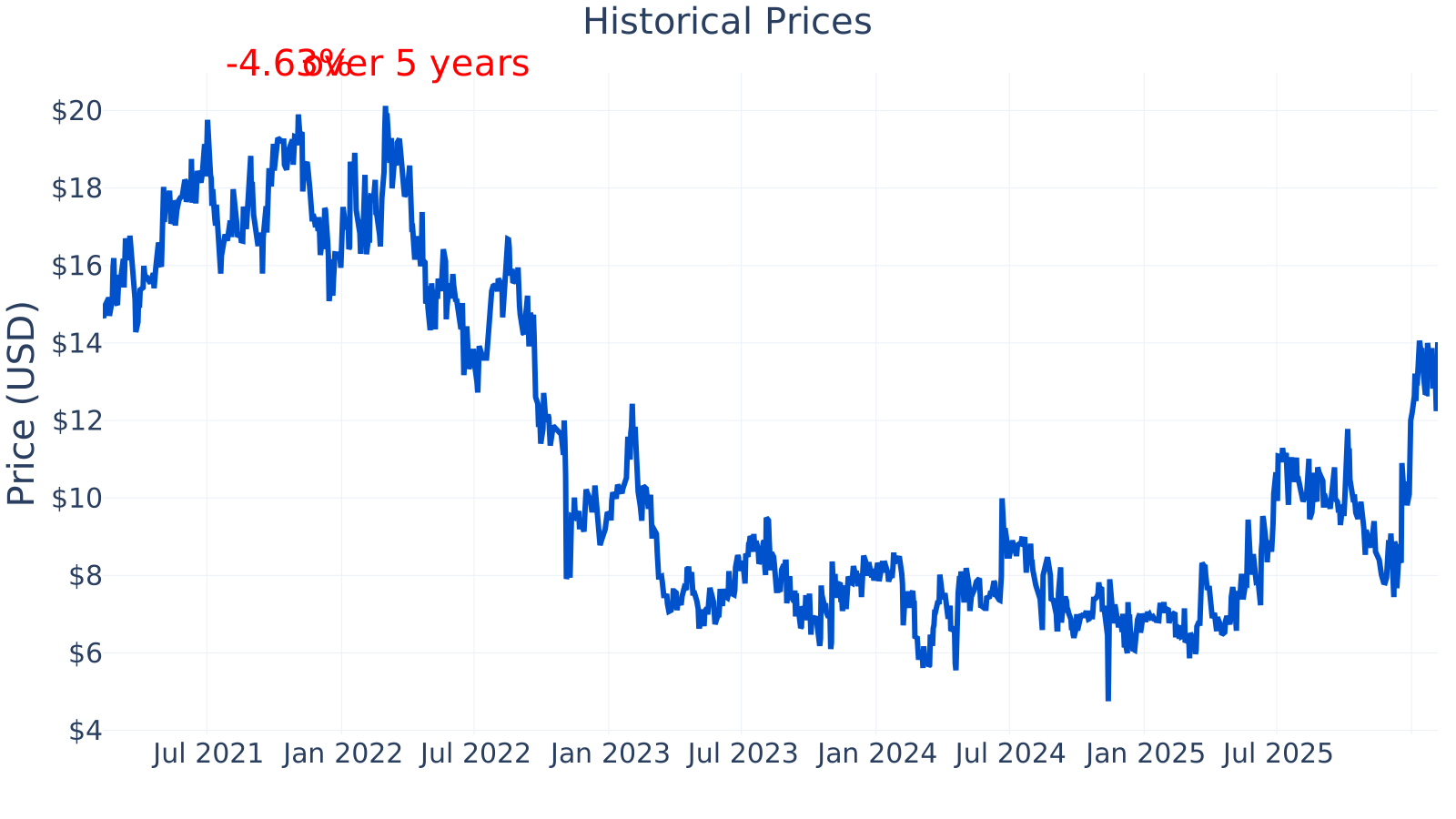
At the latest point shown, Gray Television’s market capitalization is about $1.43B, and the stock’s beta is ~0.90, which indicates price moves that have been somewhat less volatile than the broad market on average (though company-specific events can still drive large changes). The profit margin is ~2.81%, which is relatively thin and leaves less room for error if revenue weakens or costs rise. The year-over-year revenue growth is about -21.2% at the latest reading, consistent with a business that can swing based on the advertising cycle (including political advertising timing). Financial leverage is significant: debt-to-equity is ~229%. Free cash flow over the trailing twelve months is shown at about $440M, which is a key figure to monitor in a debt-heavy structure because cash generation influences flexibility.
Growth (Medium)
The local broadcasting industry is generally considered mature. Audience attention has continued to shift toward streaming and on-demand platforms over many years, which can pressure traditional TV advertising over time. That said, local TV can still matter for live events, local news, and political campaigns, and these categories can support periods of stronger demand.
The year-over-year revenue trend shown is highly cyclical: strong positive growth during parts of 2022, followed by declines through much of 2023, some recovery in late 2024, and then renewed declines in 2025 (with the latest value around -21%). For a long-term view, this means it can be hard to judge momentum from any single year because results may reflect the election calendar and the broader ad market rather than a steady underlying growth trajectory.
Free cash flow also varies significantly across the periods displayed (ranging from roughly $32M to $691M). For a broadcaster with meaningful debt, a central question for future growth and stability is whether the company can produce consistently strong cash flow across both strong and weak advertising environments, because that cash can be used for debt reduction, investment, or other corporate needs.
Potential catalysts (in a purely factual, business-cycle sense) often include political advertising cycles, shifts in local advertising conditions, and changes in distribution economics (for example, how pay-TV bundles evolve and how station content is compensated and distributed). Company filings also commonly emphasize initiatives to strengthen digital/local sales capabilities and operational efficiency, though the long-term impact depends on execution and broader industry conditions.
Risks (High)
This article is for informational purposes only and does not constitute financial advice. Some content is AI-generated. See Disclaimer