Stock Analysis · Graphic Packaging Holding Company (GPK)
Overview
Graphic Packaging Holding Company (GPK) is a packaging manufacturer focused on fiber-based packaging, especially paperboard cartons used for food, beverages, and other consumer products. In simple terms, it makes the boxes and containers that help consumer brands protect, ship, display, and sell products on store shelves (and increasingly in e-commerce).
The business tends to be tied to everyday consumer demand (food and household staples are typically steadier than discretionary products), but it is also influenced by input costs (like paper, energy, and freight) and by customers’ production volumes.
Revenue is mainly generated by selling packaging products and related services to consumer packaged goods companies. Public reporting commonly emphasizes product categories rather than a retail-style “subscription” or “usage” model.
Main revenue streams (from largest to smallest, based on how the company describes its operations in filings):
- Paperboard packaging (folding cartons for food, beverage, and consumer goods)
- Foodservice packaging (cups, trays, take-out and quick-service restaurant packaging)
- Related packaging services (design, innovation, and other packaging-related support tied to product sales)
The visual below summarizes how revenue typically flows through major cost lines and down to profit.
Across recent years, revenue peaked around 2022–2023 and then eased in 2024–2025, while costs remained the largest component. Net income also declined in the most recent year shown, which highlights how sensitive earnings can be to volume changes, pricing, and input-cost movements.
Key Figures
| Metric | Value | Industry ⓘ |
|---|---|---|
| Date | Feb 07, 2026 | |
| Context | ||
| Sector | Consumer Cyclical | |
| Industry | Packaging & Containers | |
| Market Cap ⓘ | $3.91B | |
| Beta ⓘ | 0.63 | |
| Fundamental | ||
| P/E Ratio ⓘ | 8.96 | 21.79 |
| Profit Margin ⓘ | 5.15% | 5.56% |
| Revenue Growth ⓘ | 0.40% | 6.00% |
| Debt to Equity ⓘ | 167.00% | 137.29% |
| PEG ⓘ | 1.13 | |
| Free Cash Flow ⓘ | -$81.00M | |
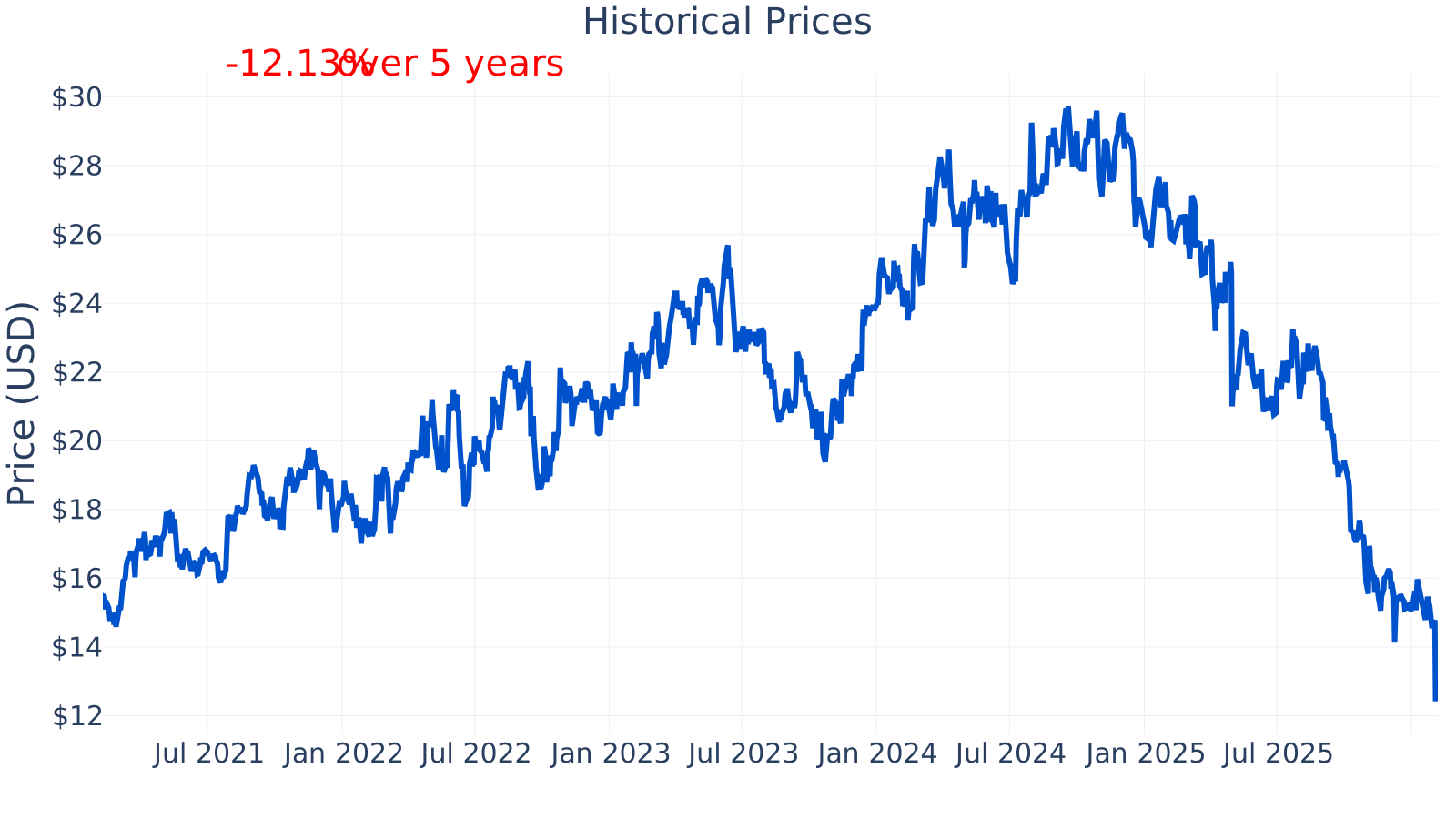
At the latest point shown, the company is about a $3.9B business by market capitalization and has a beta below 1 (about 0.63), which describes lower share-price volatility than the overall market in many periods (though it can still move meaningfully). The P/E ratio is about 9.0 versus an industry median around 21.8, while profit margin (about 5.15%) is close to the industry median (about 5.56%). Revenue growth is close to flat year-over-year (about 0.4%) versus an industry median around 6.0%. Debt-to-equity is higher than the industry median (about 167% vs. 137%), and trailing twelve-month free cash flow is slightly negative (about -$81M).
Growth (Medium)
Packaging is generally a mature industry: demand is supported by ongoing consumption of packaged goods and foodservice activity, but it often grows roughly in line with population and consumer spending rather than rapidly expanding like many technology segments. That said, paper-based packaging can benefit when brand owners shift away from certain plastic formats, and when retailers and consumer brands redesign packaging for sustainability goals.
For future growth, a key question is whether the company can combine:
- Stable volumes (especially in food and beverage categories)
- Effective pricing and mix (selling more value-added formats and designs)
- Operational efficiency (running mills and converting plants at high utilization and controlling costs)
The year-over-year revenue growth pattern shows a strong surge in 2022 (well above 20% in several quarters), followed by a period of negative growth through much of 2023–2025 before returning to slightly positive growth most recently (around 0.4%). This shape is consistent with a cycle where price/mix and demand were strong for a period and then normalized, making “growth” less about expansion and more about execution and market share.
Free cash flow (cash left after operating needs and capital spending) has been uneven. It was strongly positive around 2023, then weakened and turned negative again in the most recent period shown. For a capital-intensive manufacturer, free cash flow can swing due to large investments in mills and equipment, changes in working capital (inventory, receivables, payables), and profitability. Over long horizons, consistent free cash flow matters because it supports debt reduction, reinvestment, and shareholder returns.
Potential catalysts typically discussed for packaging companies like this (described at a high level) include improved demand in key end markets, efficiency projects at facilities, a return to more stable input costs, and customer wins that expand volumes in core categories.
Risks (Medium-High)
This article is for informational purposes only and does not constitute financial advice. Some content is AI-generated. See Disclaimer


