Stock Analysis · Godaddy Inc (GDDY)
Overview
GoDaddy Inc. is a technology company focused on helping individuals and small businesses establish and run an online presence. In plain terms, it sells the building blocks needed to “exist on the internet” (like a domain name), plus tools to create a website, manage email, improve security, and support online marketing and commerce. Its customer base is largely made up of small businesses, entrepreneurs, and “microbusiness” owners that may not have in-house IT teams.
In its SEC filings, GoDaddy organizes revenue into two main buckets:
- Domains (domain registration, renewals, aftermarket domains, and related services)
- Applications & Commerce (website building tools, hosting, email and productivity, security, online marketing, and commerce-related solutions)
Across these categories, a large share of revenue is typically recurring in nature (for example, annual domain renewals and subscription-style products), which can help smooth results compared with purely one-time sales.
Looking at the income flow over recent years, total revenue increased from about $3.82B (2021) to about $4.57B (2024). Operating income also improved meaningfully over the period (about $380M to about $924M), which suggests the business has been able to grow while keeping operating expenses from rising at the same pace.
Key Figures
| Metric | Value | Industry ⓘ |
|---|---|---|
| Date | Feb 16, 2026 | |
| Context | ||
| Sector | Technology | |
| Industry | Software - Infrastructure | |
| Market Cap ⓘ | $12.34B | |
| Beta ⓘ | 0.93 | |
| Fundamental | ||
| P/E Ratio ⓘ | 15.37 | 25.13 |
| Profit Margin ⓘ | 17.01% | 6.91% |
| Revenue Growth ⓘ | 10.30% | 15.25% |
| Debt to Equity ⓘ | 4217.21% | 19.82% |
| PEG ⓘ | 0.66 | |
| Free Cash Flow ⓘ | $1.54B | |
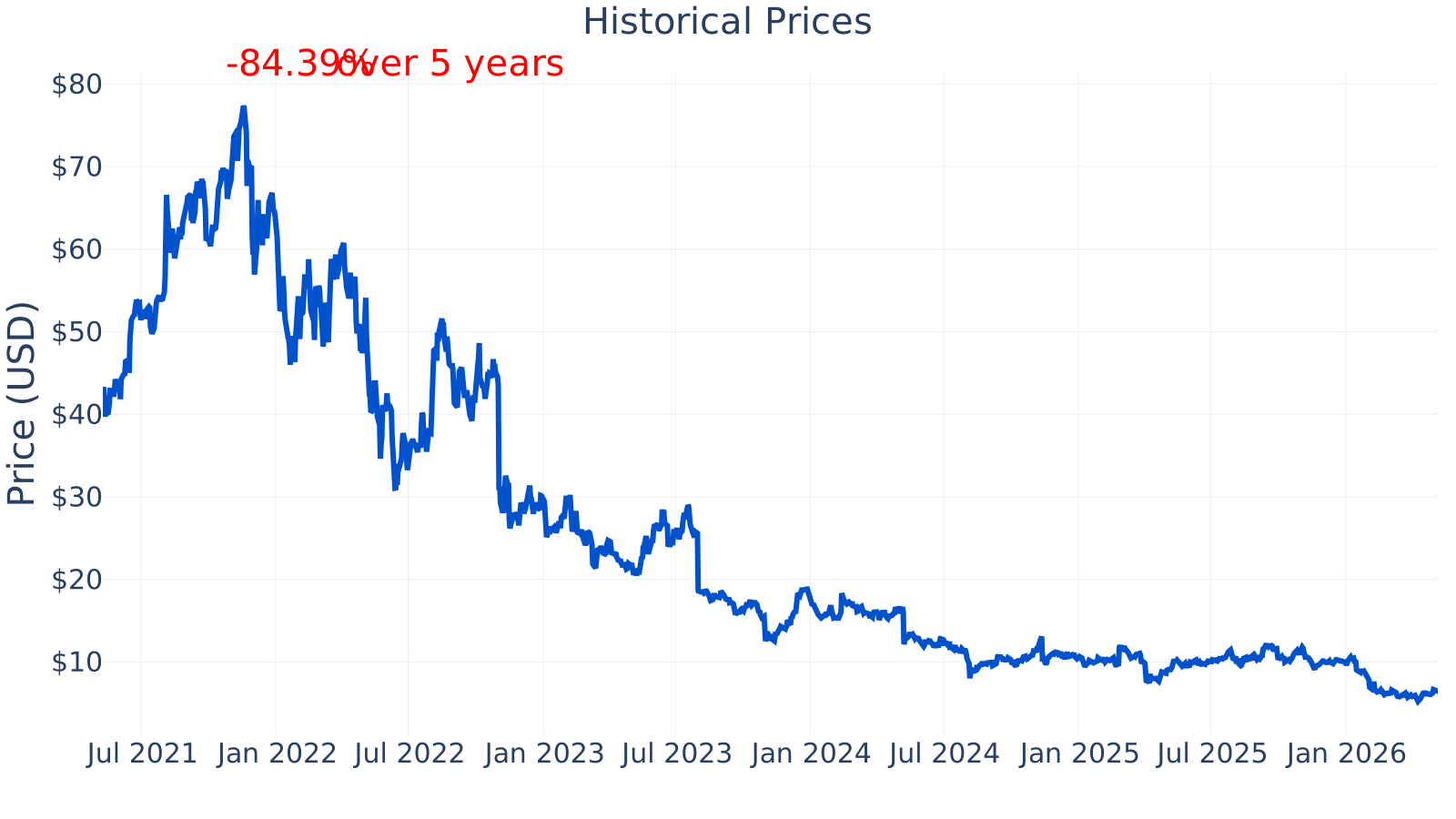
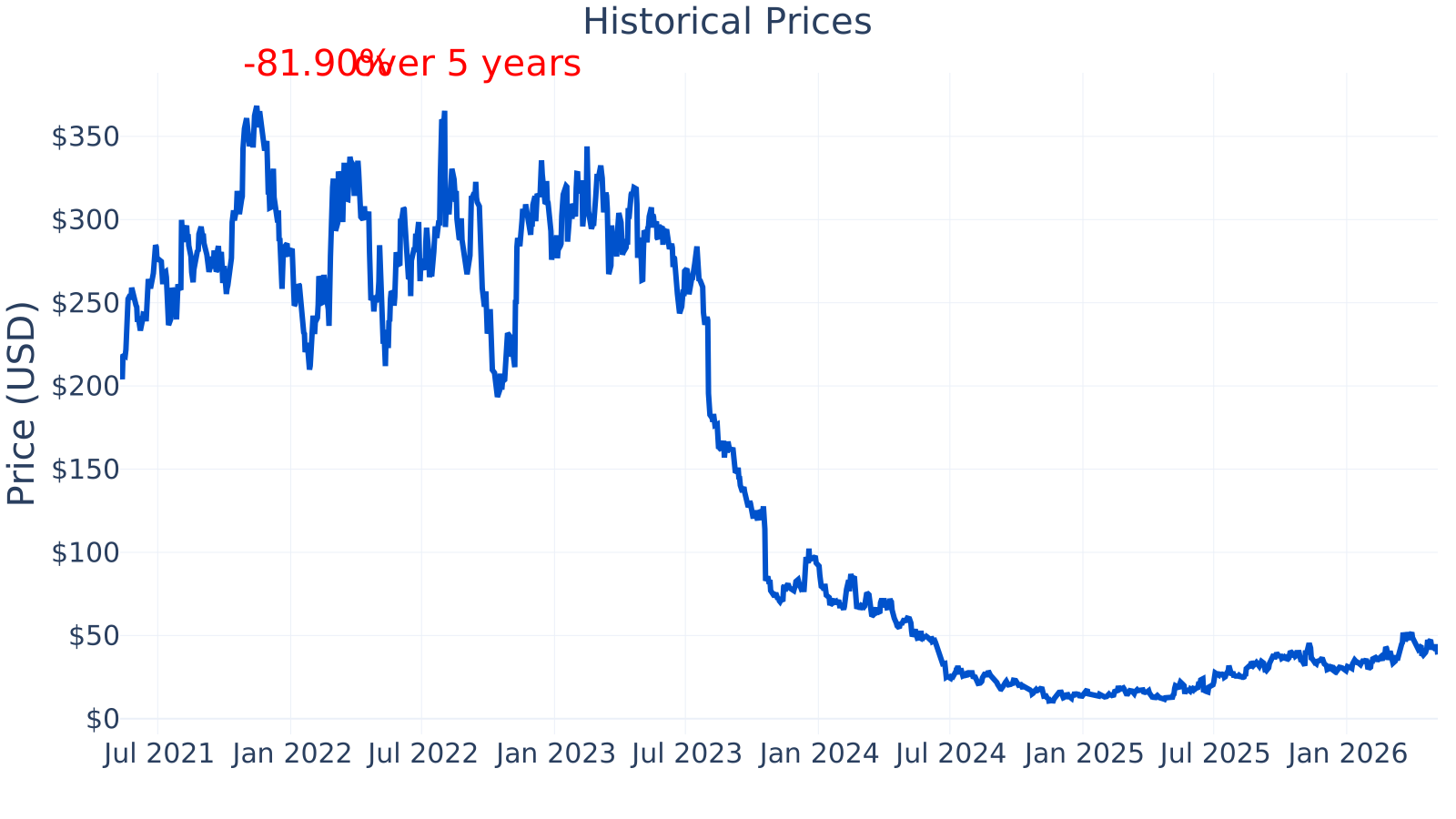
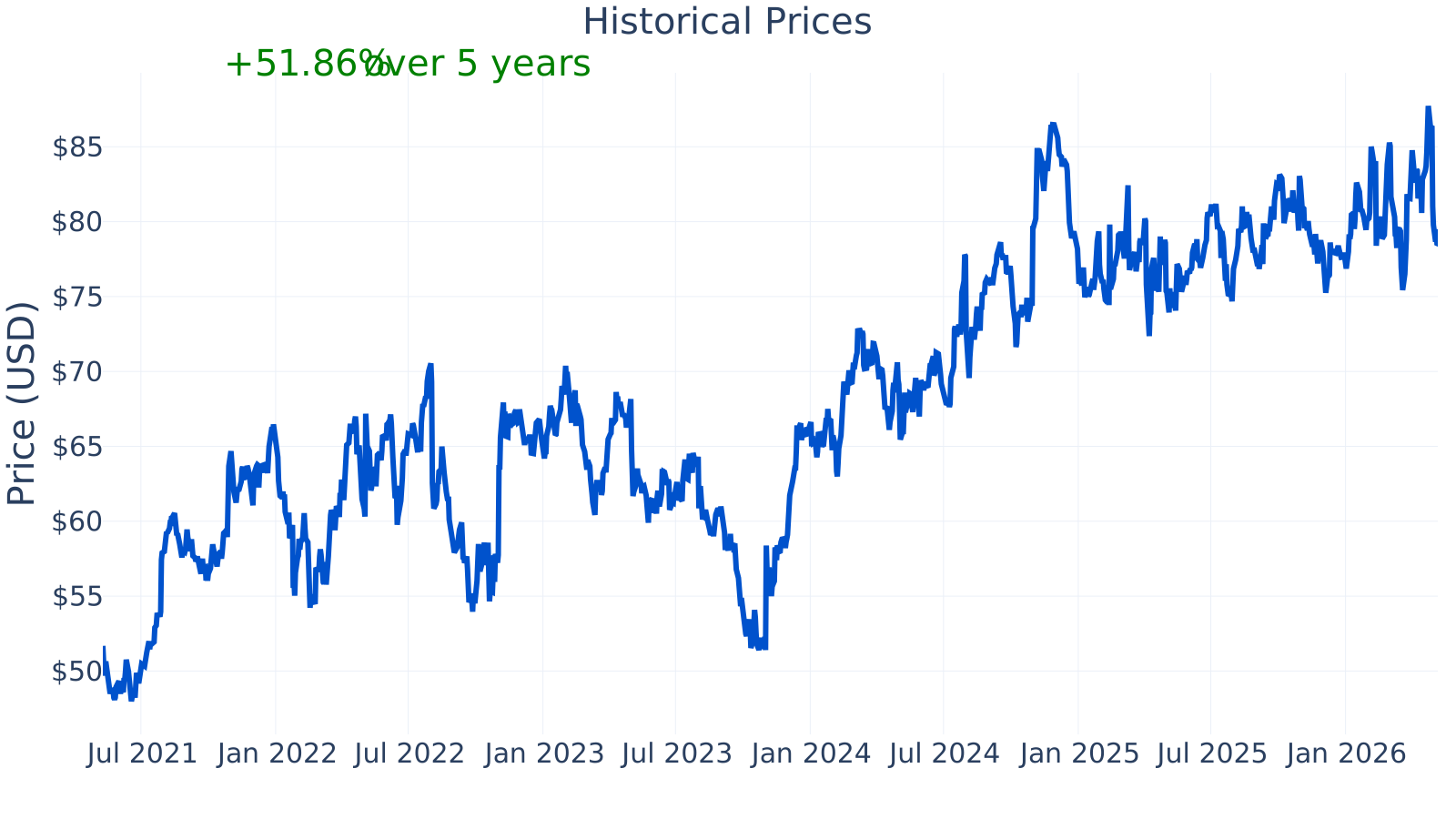
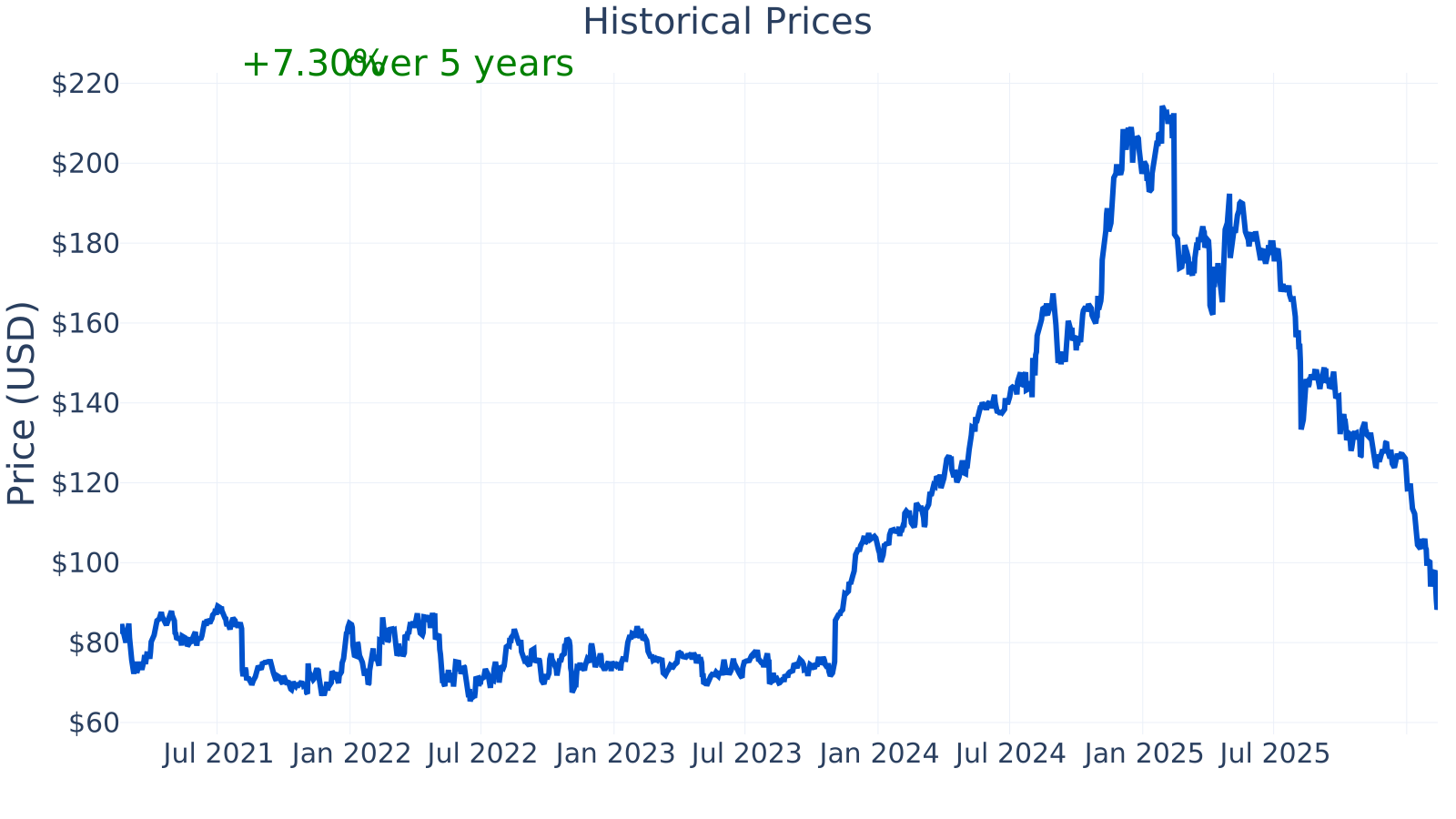
At the latest point shown, GoDaddy’s market capitalization is about $12.34B and its beta is about 0.93, which indicates the stock has historically moved somewhat similarly to the broader market. The company’s trailing P/E ratio is about 15.37, below the industry median of about 25.13. Profit margin is about 17.01% versus an industry median near 6.91%. Year-over-year revenue growth is about 10.30%, below the industry median near 15.25%. A notable point is leverage: debt-to-equity is shown at about 4,217% versus an industry median near 19.82%. Free cash flow (TTM) is about $1.54B.
Growth (Medium)
GoDaddy operates in the broad market for online presence and small-business digital tools. Long-term demand is supported by ongoing small-business formation, the continued shift of marketing and customer interactions online, and the need for secure, reliable web infrastructure. However, this is also a competitive space with many alternatives, and overall growth can be influenced by macro conditions (for example, small-business confidence and consumer spending).
A key element of GoDaddy’s strategy is to expand beyond domains into higher-value software and services that customers can subscribe to over time. This “bundle” approach can increase revenue per customer and reduce reliance on domain-only relationships. Another practical growth lever is retention: domains and related services often renew annually, so keeping customers and gradually adding products can matter as much as acquiring brand-new customers.
The year-over-year revenue growth trend shows a slowdown from mid-teens growth in 2021 to low single digits in parts of 2022–2023, followed by a re-acceleration into the high single digits and about 10.26% in the most recent point shown. This pattern suggests growth has been resilient but not uniform, with momentum improving more recently.
Free cash flow has increased from about $676M (TTM ended 2021-03-31) to about $1.37B (TTM ended 2025-03-31). For a business like GoDaddy, sustained free cash flow can be important because it provides flexibility for debt service, share repurchases, and ongoing product investment—without needing to raise additional capital.
Risks (High)
GoDaddy’s biggest risks tend to cluster around competition, customer behavior, and financial structure. The company serves many small customers, which can be beneficial for diversification, but demand can weaken when small businesses cut spending or delay launching new projects. Another risk is product commoditization: some services (domains, basic hosting, simple site tools) can be compared easily across providers, which may pressure pricing or increase marketing costs to win customers.
Competition is significant. GoDaddy competes with domain registrars and website/commerce platforms, as well as hosting providers and cloud ecosystems. In practice, customers may choose alternatives that combine storefronts, payments, marketing, and website creation into a single experience. GoDaddy’s competitive advantages are generally associated with brand recognition in domains, a large installed customer base, and the ability to cross-sell multiple services. Whether it is the “leader” depends on the exact product area: it is widely recognized in domains and small-business online presence, but faces strong players across adjacent categories.
A further risk is execution: expanding from domains into a broader suite of applications requires ongoing product quality improvements, customer support, security, and effective bundling without increasing churn (customer losses). Cybersecurity and service reliability are also critical—outages or incidents can harm reputation and raise costs.
The debt-to-equity ratio shown is extremely high (about 4,217%) versus an industry median near 19.87%. This metric can become unusually large when shareholder equity is very low or when debt is substantial relative to equity. Regardless of the accounting drivers, it signals that leverage and balance-sheet structure deserve close attention in the filings (for example, debt maturities, interest expense, and covenant terms).
Profit margin has improved substantially over time, reaching about 17.01% in the latest point shown, above the industry median (about 6.08%). It is worth noting that profit can be affected by items that do not repeat every year (such as tax-related or one-time accounting impacts), so looking at multi-year patterns and cash flow alongside earnings can help interpret durability.
Valuation
The P/E ratio shown for GoDaddy is currently about 15.37, below the industry median around 25.13. Historically in the chart, GoDaddy’s P/E moved from higher levels earlier in the period (often in the 30–60 range) down to the low-to-mid teens in 2024, then rising again into the 20s and 30s at points in 2025 before ending near the low 20s in the most recent datapoint shown on the series.
In plain terms, a lower P/E compared with peers can indicate the market expects slower growth, sees higher risk, or is less confident about the durability of profits. In GoDaddy’s case, the combination of moderate revenue growth, stronger profit margins than the median peer, and very high leverage metrics helps explain why valuation may not track the industry midpoint. Interpreting whether the price is “expensive” or “cheap” depends heavily on whether cash flow remains strong and whether leverage stays manageable relative to that cash flow over time.
Conclusion
GoDaddy is a well-known provider of domains and small-business online tools, with a business model that includes meaningful recurring revenue and a strategy oriented toward expanding into higher-value subscription services. The financial trends shown indicate improving operating performance and rising free cash flow over the last several years, alongside revenue growth that slowed and then re-accelerated to around 10% most recently.
The main trade-offs visible from the metrics are straightforward: profitability appears stronger than the typical peer in its industry group, but leverage (as reflected in debt-to-equity) stands out as a key area to monitor. Competitive pressure is also persistent in website creation, commerce tools, and hosting-related services, where switching options exist and larger platforms can bundle services aggressively.
Sources:
- SEC EDGAR — GoDaddy, Inc. Form 10-K (Annual Report)
- SEC EDGAR — GoDaddy, Inc. Form 10-Q (Quarterly Report)
- GoDaddy Investor Relations — SEC Filings
- Wikipedia — “GoDaddy” (company overview and history)
This article is for informational purposes only and does not constitute financial advice. Some content is AI-generated. See Disclaimer