Stock Analysis · Globalstar Inc (GSAT)
Overview
Globalstar Inc. is a satellite communications company. It operates a network of satellites and ground stations designed to provide connectivity where traditional cellular networks may be limited or unavailable. In practical terms, the business supports services such as satellite voice and data connections, tracking and monitoring solutions (often for remote assets), and certain capacity-related arrangements that allow partners to use parts of Globalstar’s network and spectrum resources.
From a business-model perspective, Globalstar mixes (1) recurring service revenue (customers paying for connectivity over time) with (2) revenue tied to equipment and solutions (devices and related items that enable customers to use the service), and (3) revenue from arrangements involving network capacity and spectrum-related uses. Because satellite networks require large up-front investment and ongoing maintenance, profitability can depend heavily on utilization (how much the network is used), pricing, and financing costs.
In its filings, Globalstar reports revenue by internal categories. The relative size of each category can shift over time depending on contract activity, product mix, and partner relationships.
Typical revenue categories discussed in company filings include:
- Service revenue (recurring connectivity and related service plans)
- Equipment revenue (devices and related hardware used with the service)
- Other revenue (which may include capacity and other arrangements depending on period and classification)
Over the last several years, total revenue increased meaningfully (from about $124.3M in 2021 to about $250.3M in 2024), while costs and operating expenses also remained substantial. Interest expense declined compared with earlier periods (roughly $43.5M in 2021 vs. about $13.6M in 2024), which can matter for a capital-intensive business, but net income remained negative in each year shown.
Key Figures
| Metric | Value | Industry ⓘ |
|---|---|---|
| Date | Feb 07, 2026 | |
| Context | ||
| Sector | Communication Services | |
| Industry | Telecom Services | |
| Market Cap ⓘ | $7.31B | |
| Beta ⓘ | 1.43 | |
| Fundamental | ||
| P/E Ratio ⓘ | N/A | 15.18 |
| Profit Margin ⓘ | -18.02% | 6.18% |
| Revenue Growth ⓘ | 2.10% | 2.10% |
| Debt to Equity ⓘ | 156.87% | 113.97% |
| PEG ⓘ | -0.75 | |
| Free Cash Flow ⓘ | $266.04M | |
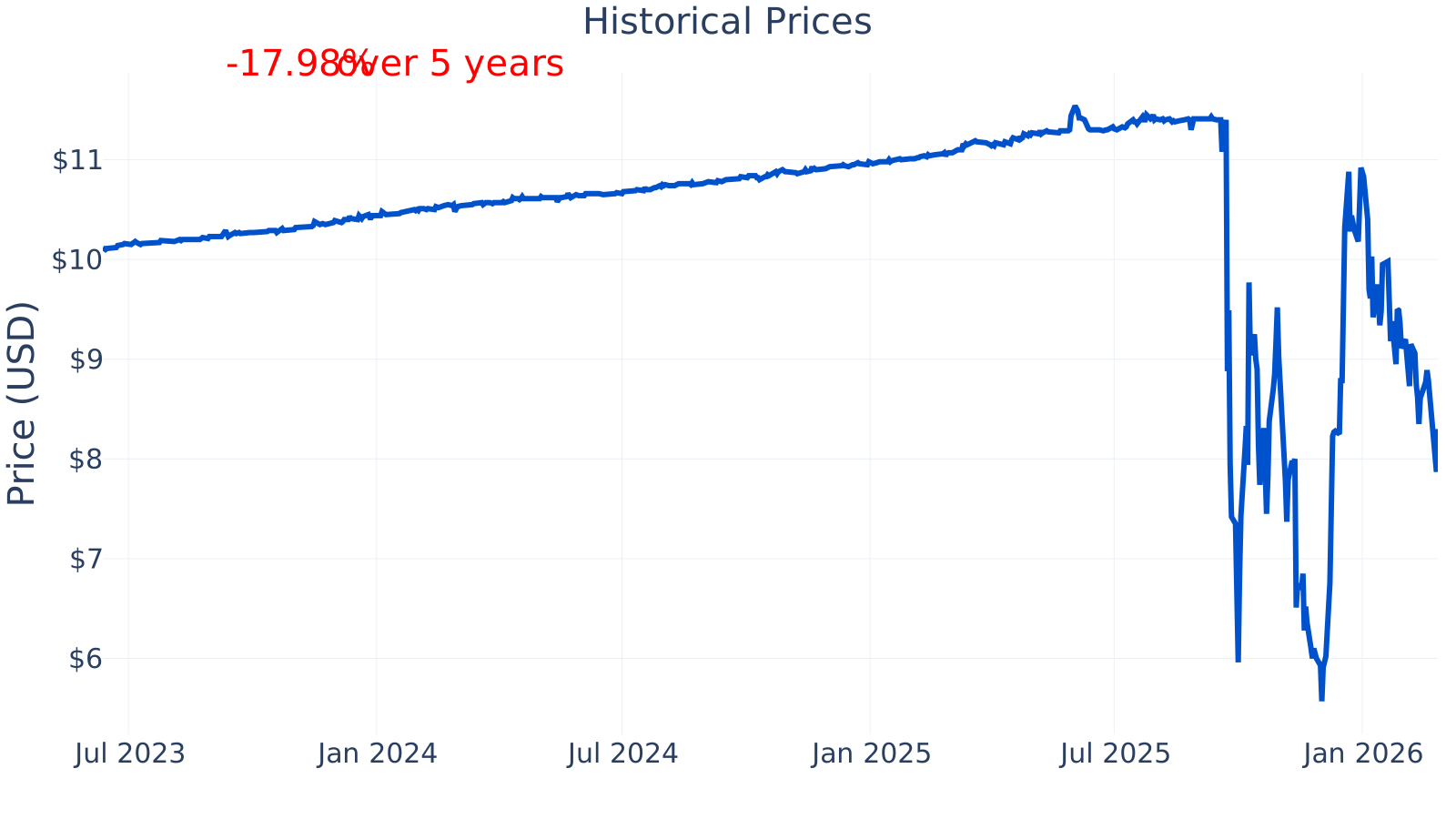
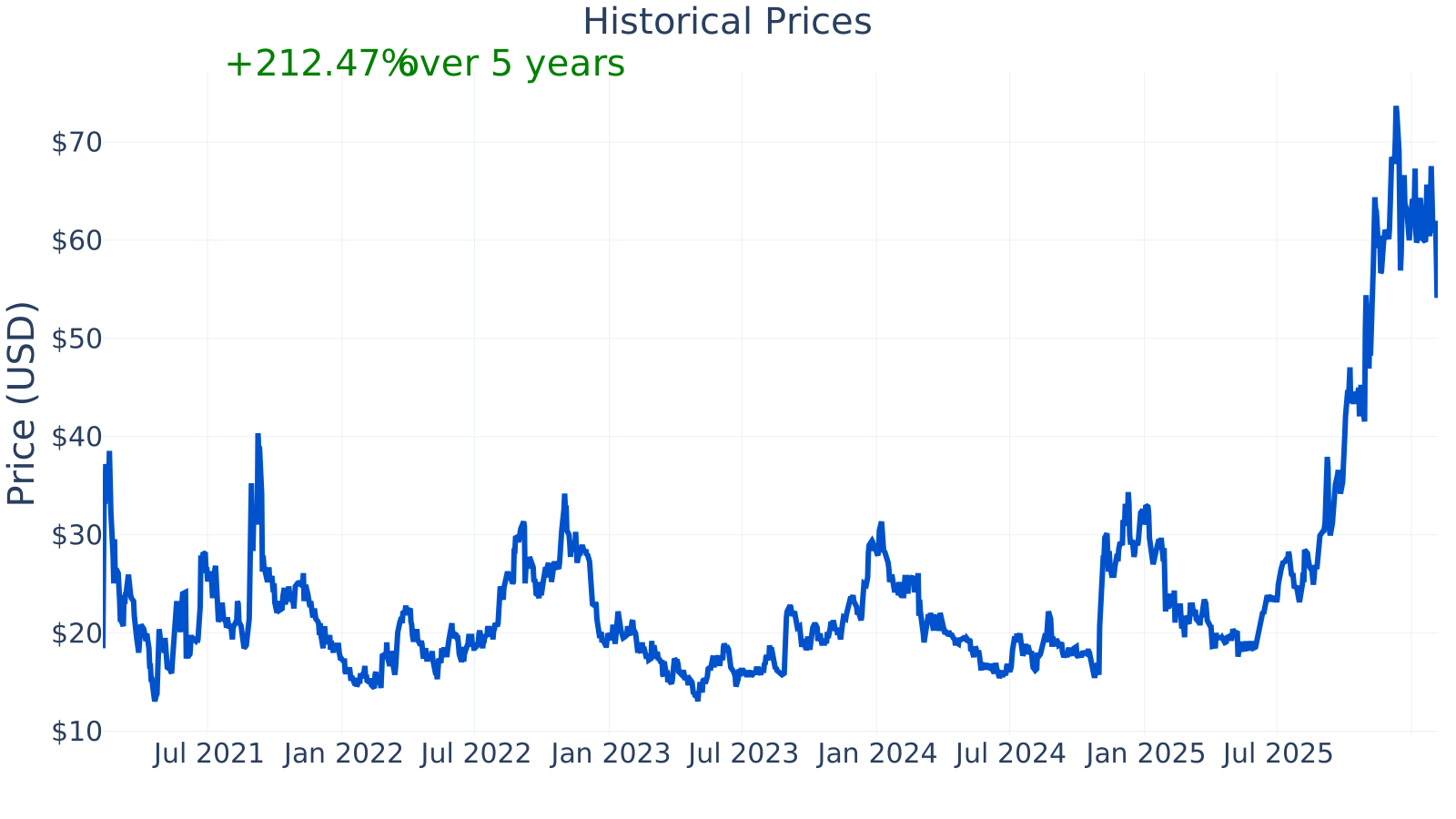
Globalstar’s market capitalization is about $7.3B. The stock’s beta (~1.43) indicates it has tended to move more than the overall market, which can translate into higher volatility. The company’s profit margin is negative (~-18.0%) versus an industry median around +6.2%, meaning that—recently—the business has not converted revenue into net profit at the level typical for many telecom services peers. Revenue growth year over year is about +2.1%, roughly in line with the industry median shown. Debt relative to equity is about 156.9%, above the industry median of roughly 114.0%, reflecting a more leveraged capital structure. Trailing twelve-month free cash flow is about $266.0M, which can be an important offset to accounting losses if it proves repeatable over time.
Growth (Medium)
Satellite-enabled connectivity is part of a broader long-term trend: demand for communications in remote areas, resilience/backup connectivity, and specialized industrial and government use cases. The overall communications sector also continues to evolve as devices and applications need coverage beyond traditional terrestrial networks. Within that context, Globalstar’s strategy centers on monetizing its satellite network and related spectrum assets through recurring services and partnerships, while controlling operating costs and funding long-lived infrastructure.
The year-over-year revenue growth pattern shown is uneven. It includes periods of very high growth (notably during 2022–2023) followed by a slowdown toward low single digits most recently (about +2.1% in the latest point shown). For long-horizon analysis, this mix suggests the company may be influenced by discrete contract timing and partner-related ramps, rather than steady, linear growth.
Free cash flow over the trailing twelve months is shown as positive (~$266.0M), after a period where it turned negative (around -$103.3M at one point shown). For a satellite operator, swings can happen due to capital spending cycles (for satellites, ground equipment, and upgrades) and working-capital timing. A key question for future growth is whether positive free cash flow can persist while also supporting the spending needed to keep the network competitive.
Risks (High)
This article is for informational purposes only and does not constitute financial advice. Some content is AI-generated. See Disclaimer