Stock Analysis · Gitlab Inc (GTLB)
Overview
GitLab Inc. is a software company that provides a “DevSecOps” platform—tools used by teams to plan, write, test, secure, and deploy software. In simple terms, GitLab aims to help organizations build and ship software faster, with fewer handoffs between separate tools. The platform is delivered primarily as software subscriptions, and it is commonly used by engineering teams and IT organizations across many industries.
GitLab’s business model is largely recurring: customers pay for ongoing access to paid tiers of the platform, typically under subscriptions that can scale with the number of users and the features enabled. Over time, GitLab has also expanded its product set into areas like security testing and software supply chain security, which are increasingly important as organizations modernize systems and manage cyber risk.
Main sources of revenue (largest to lowest, where disclosed):
- Subscription revenue (the primary driver in company filings; typically the large majority of revenue for SaaS companies like GitLab)
- Professional services and other (implementation, support, and related services; generally a smaller portion)
From a high level view of recent years, revenue has grown meaningfully (from about $253M in FY2022 to about $759M in FY2025), while operating expenses have also increased as the company invests in research and development and go-to-market activities.
Over FY2022 to FY2025, total revenue increased from about $253M to about $759M, while the company continued to spend heavily on operating expenses (notably research & development and selling/general/administrative). Net income moved closer to break-even by FY2025 (about -$6M), but operating income remained negative, reflecting ongoing investment to support growth.
Key Figures
| Metric | Value | Industry ⓘ |
|---|---|---|
| Date | Feb 08, 2026 | |
| Context | ||
| Sector | Technology | |
| Industry | Software - Infrastructure | |
| Market Cap ⓘ | $5.41B | |
| Beta ⓘ | 0.75 | |
| Fundamental | ||
| P/E Ratio ⓘ | N/A | 25.66 |
| Profit Margin ⓘ | -5.13% | 6.68% |
| Revenue Growth ⓘ | 24.60% | 15.20% |
| Debt to Equity ⓘ | N/A | 19.82% |
| PEG ⓘ | N/A | |
| Free Cash Flow ⓘ | $242.31M | |
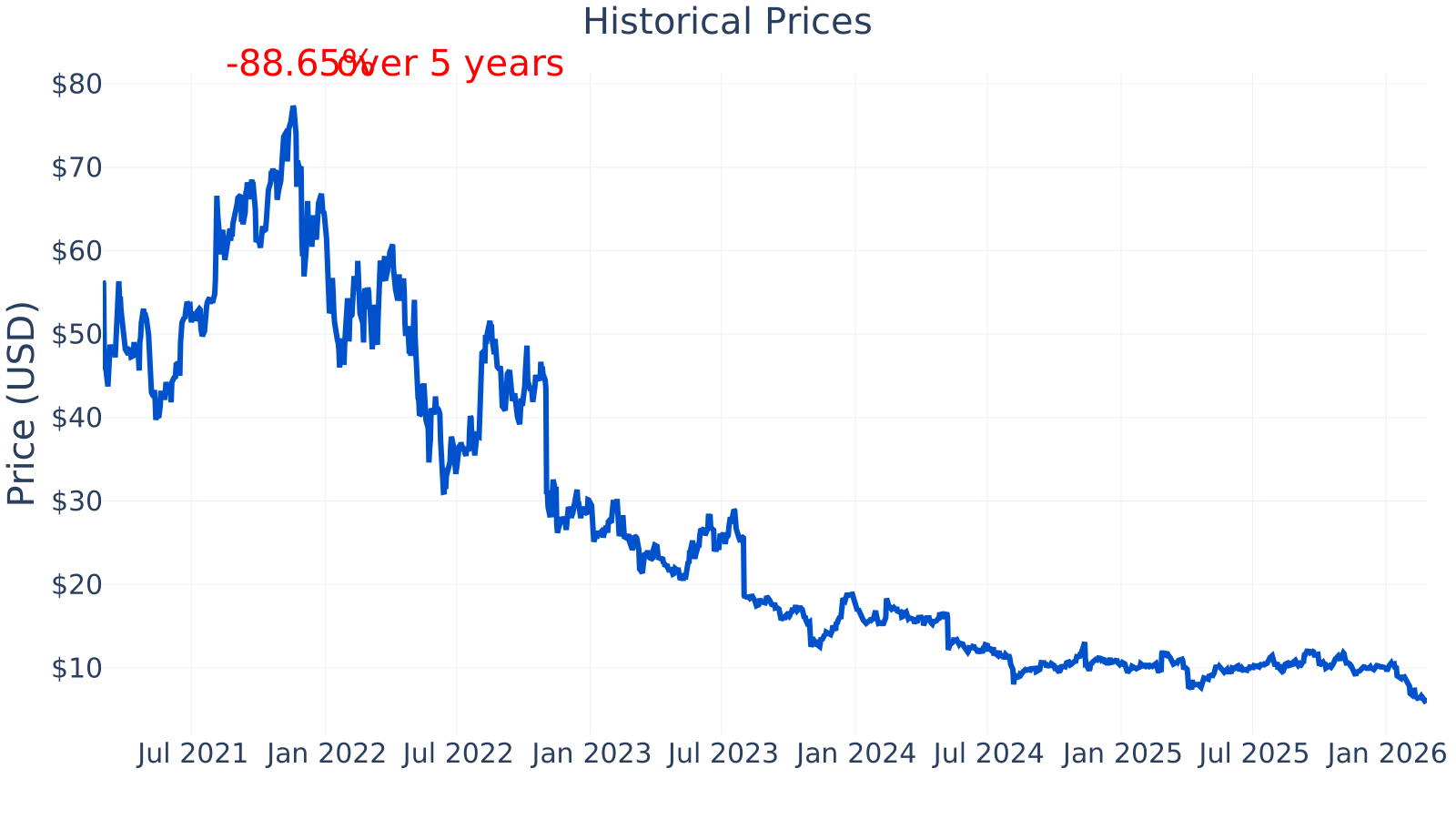
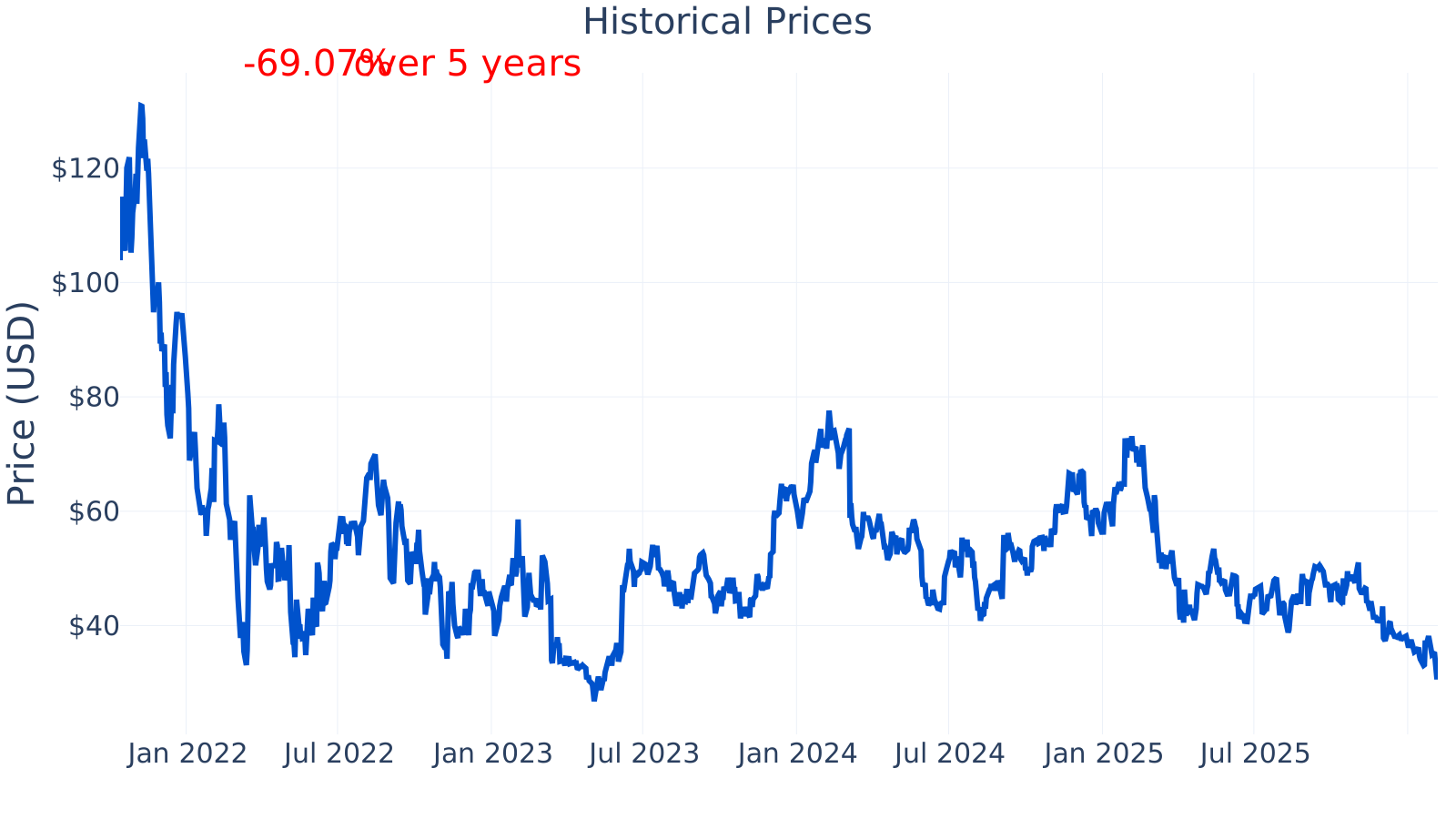
GitLab’s market capitalization is about $5.41B, and the stock’s beta of about 0.75 indicates it has historically been less volatile than the overall U.S. equity market. Profitability remains a key topic: the latest profit margin shown is about -5.13%, below the industry median of about 6.68%. Growth has been stronger than the industry median, with year-over-year revenue growth around 24.6% versus an industry median near 15.2%. Free cash flow over the trailing twelve months is shown at about $242M, which—if sustained—can improve financial flexibility even while accounting profitability is still near break-even.
Growth (Medium)
GitLab operates in the software development tools market, which has long-term tailwinds driven by continued digitization, cloud migration, and the need for faster software release cycles. In many organizations, software is not just an IT function—it directly supports products, customer experience, analytics, and operations. That structural shift tends to support ongoing demand for tools that make development teams more efficient and help manage security and compliance.
GitLab’s strategy centers on offering a single platform that covers more steps of the software lifecycle (planning through deployment and security). If customers consolidate tools, a broader platform can benefit from larger contract sizes and deeper adoption within organizations. A second long-term driver is security: as software supply chains become more complex, organizations increasingly require built-in controls and visibility, which can support demand for integrated security features.
Revenue growth has slowed from very high levels earlier in the company’s public history (above 50%–70% year-over-year in FY2022) to the mid-20% range more recently (about 24.6%). That pattern can be consistent with a business scaling to a larger revenue base, but it also raises the importance of execution—maintaining strong growth becomes harder as the company gets bigger.
Free cash flow has been uneven over time, shifting from negative values in earlier periods to positive in FY2024, then negative again in FY2025 in the series shown. The latest metric table indicates a positive trailing twelve-month free cash flow figure, which suggests the cash profile can improve meaningfully when operating trends and working capital move favorably. For long-term fundamentals, the durability of cash generation across economic cycles is often more important than any single year.
Risks (High)
This article is for informational purposes only and does not constitute financial advice. Some content is AI-generated. See Disclaimer