Stock Analysis · Gentherm Inc (THRM)
Overview
Gentherm Incorporated (THRM) is an automotive supplier focused on technologies that manage temperature and comfort inside vehicles. In simple terms, it makes systems that can warm or cool areas such as seats, and it also develops other thermal solutions that help automakers improve comfort and, in some cases, energy efficiency. The company sells primarily to automotive manufacturers and their supply chains, meaning its business is closely tied to global vehicle production volumes and model launches.
Based on the company’s descriptions in its SEC filings, revenue is largely tied to automotive-focused product lines. Public filings typically break the business into major product/technology groupings (for example, climate comfort systems and other thermal solutions), but the exact up-to-date percentage split by line item is not provided in the information shown here. In plain-language terms, the largest revenue drivers are generally:
- Automotive climate and comfort systems (products used in vehicle interiors such as heated/cooled seating solutions)
- Other automotive thermal solutions (thermal management products and related electronics used for additional applications)
The company’s income profile has shown meaningful swings over time: revenue has grown over the last several years, but profitability has varied significantly from year to year.
From 2021 to 2025, total revenue rose from about $1.05B to about $1.50B, while net income fluctuated materially (from about $93M in 2021 to about $18M in 2025). Over the same period, spending on research and development remained a notable operating cost (roughly $75M–$126M per year in the years shown), which is consistent with a supplier that needs to win new vehicle programs and refresh products over time.
Key Figures
| Metric | Value | Industry ⓘ |
|---|---|---|
| Date | Feb 23, 2026 | |
| Context | ||
| Sector | Consumer Cyclical | |
| Industry | Auto Parts | |
| Market Cap ⓘ | $1.04B | |
| Beta ⓘ | 1.32 | |
| Fundamental | ||
| P/E Ratio ⓘ | 34.45 | 24.32 |
| Profit Margin ⓘ | 1.22% | 3.40% |
| Revenue Growth ⓘ | 8.50% | 5.00% |
| Debt to Equity ⓘ | 40.94% | 71.77% |
| PEG ⓘ | 0.71 | |
| Free Cash Flow ⓘ | $61.12M | |
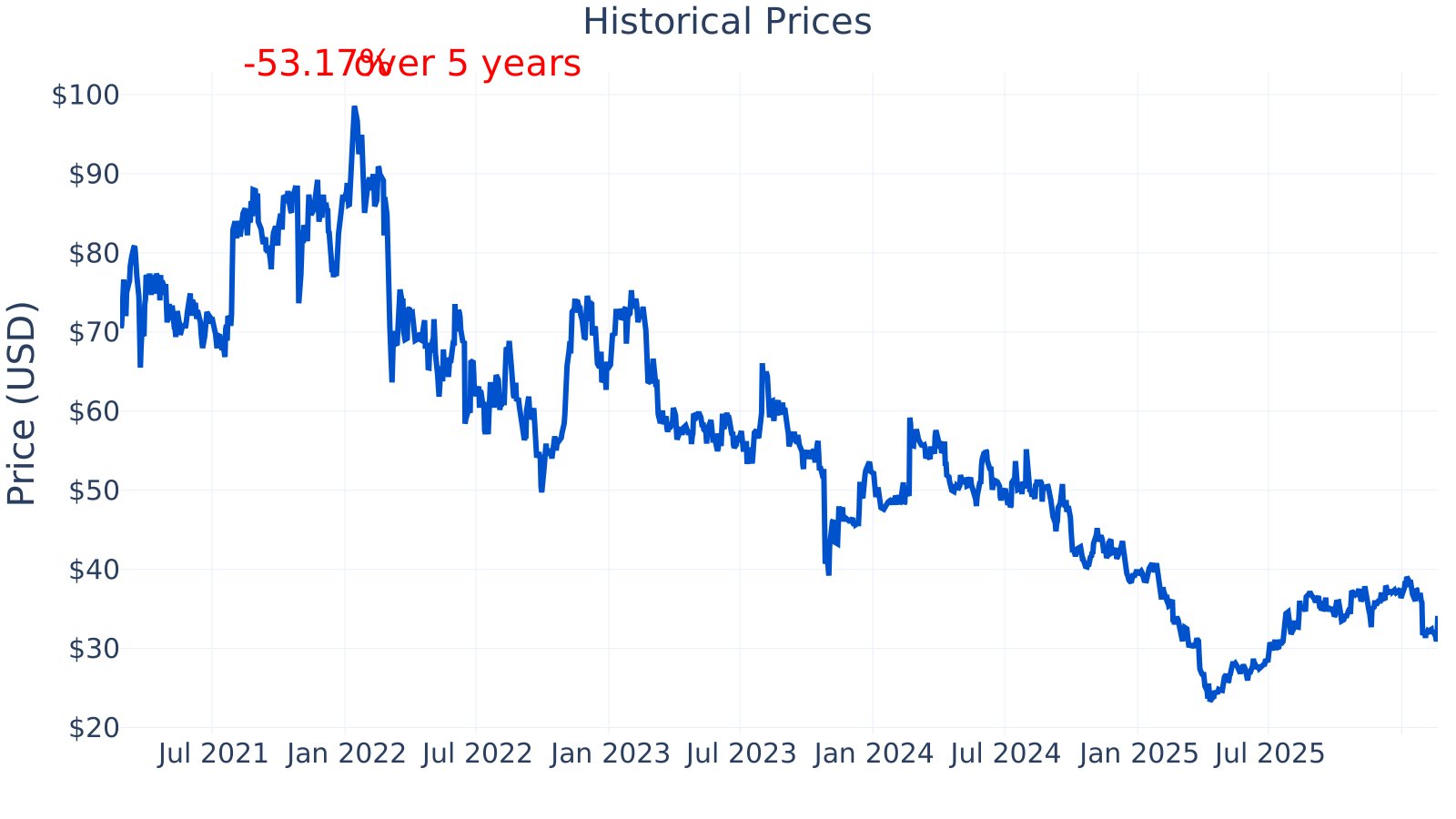
Gentherm’s market capitalization is about $1.04B, which puts it in the small-cap range. The stock’s beta of ~1.32 suggests it has tended to move more than the broader market, which can matter for people who prefer steadier price behavior.
On valuation, the latest P/E ratio is ~34.5, higher than the industry median (~24.3). Profitability appears lower than the typical peer in its industry group, with a latest profit margin of ~1.22% versus an industry median of ~3.4%. Growth is stronger than the peer median on the latest year-over-year measure: ~8.5% revenue growth versus an industry median of ~5%.
Balance-sheet leverage looks lower than many peers: debt-to-equity ~41% compared with an industry median ~72%. The company also generated positive free cash flow over the trailing twelve months, about $61.1M (though cash generation has varied in recent years).
Growth (Medium)
Gentherm operates in the automotive supplier ecosystem, where long-term growth is typically driven by (1) overall vehicle production trends, (2) the mix of features consumers and automakers choose to include (more content per vehicle), and (3) technology shifts that change how heat is managed in vehicles. Comfort features have been a multi-year trend in many vehicle categories, and suppliers that win “programs” (placements on specific vehicle models) can benefit for the life of that model cycle.
The year-over-year revenue growth shown is uneven, with periods of strong increases (notably in parts of 2022 and 2023) and softer or negative comparisons in several quarters of 2024 and parts of 2025, before ending 2025 at roughly ~9.6% year-over-year growth. This pattern is consistent with an industry where volumes, customer production schedules, and program timing can cause noticeable short-term swings.
Free cash flow has also been variable: it was about $97.0M (TTM) in 2021, around $60.6M in 2022, close to break-even in 2023, and then positive again (about $40.4M in 2024 and $29.1M in early 2025, with the latest shown at $61.1M). For long-term business health, sustained positive free cash flow can matter because it provides flexibility to invest, manage debt, and handle downturns in vehicle production.
Potential catalysts for growth in this type of business are typically tied to winning new vehicle programs, expanding content per vehicle (more features or higher-value systems per car), and execution improvements that turn revenue into more stable profits. However, whether those catalysts translate into results depends heavily on customer launches, product costs, and operating discipline.
Risks (High)
This article is for informational purposes only and does not constitute financial advice. Some content is AI-generated. See Disclaimer


