Stock Analysis · Genuine Parts Co (GPC)
Overview
Genuine Parts Company (GPC) is a distributor of replacement parts and related products. In simple terms, it sits between manufacturers and the people who need parts—professional repair shops, retailers, and industrial customers. The company is best known through its NAPA Auto Parts brand in the United States, but it also operates internationally and has an industrial parts distribution business.
Its revenue is primarily driven by steady, repeat purchasing: vehicles need maintenance and repairs over time, and industrial operations require ongoing replacement parts to keep equipment running. This demand tends to be more “everyday necessity” than trend-driven, but it can still be affected by the economy (for example, fewer miles driven can reduce wear-and-tear).
Main revenue sources are reported by operating segments in company filings. Based on segment reporting (auto parts and industrial parts), the business is typically concentrated in automotive distribution, with the remainder coming from industrial distribution. Exact percentages can shift year to year depending on acquisitions and market conditions.
Over the 2021–2024 period shown, total revenue increased from about $18.9B (2021) to about $23.5B (2024). However, profitability did not move in the same direction: operating income and net income were noticeably lower in 2024 than in 2022–2023, suggesting higher operating costs, mix changes, or other pressures that reduced earnings despite higher sales.
Key Figures
| Metric | Value | Industry ⓘ |
|---|---|---|
| Date | Feb 07, 2026 | |
| Context | ||
| Sector | Consumer Cyclical | |
| Industry | Auto Parts | |
| Market Cap ⓘ | $20.66B | |
| Beta ⓘ | 0.73 | |
| Fundamental | ||
| P/E Ratio ⓘ | 25.56 | 25.56 |
| Profit Margin ⓘ | 3.36% | 3.38% |
| Revenue Growth ⓘ | 4.90% | 4.95% |
| Debt to Equity ⓘ | 133.67% | 66.87% |
| PEG ⓘ | 1.66 | |
| Free Cash Flow ⓘ | $133.52M | |
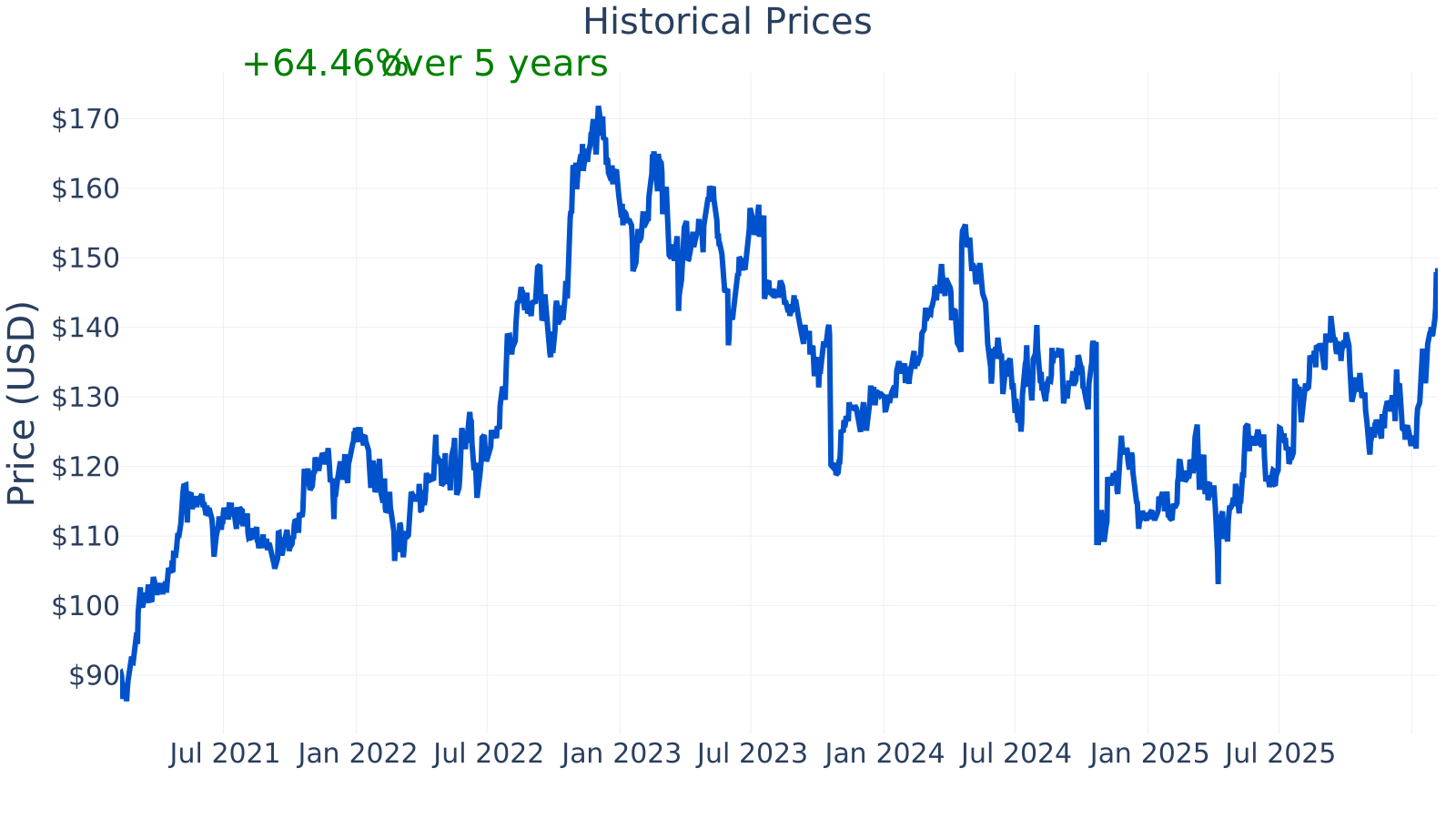
GPC’s market capitalization is about $20.7B, and the stock’s beta of 0.73 indicates it has historically moved less than the overall market. The P/E ratio is about 25.6, which is in line with the industry median shown. Profit margin is about 3.36%, also close to the industry median, which highlights how this is generally a high-volume, lower-margin distribution model.
Year-over-year revenue growth is about 4.9% (roughly in line with the industry median). Free cash flow (TTM) is shown at about $134M, which is a figure to watch closely because cash generation is an important support for dividends, debt repayment, and reinvestment in a distribution business.
Debt-to-equity is about 133.7%, which is materially higher than the industry median shown (about 66.9%). This suggests GPC is operating with more balance-sheet leverage than many peers in the same comparison set.
Growth (Medium)
GPC operates in the replacement (“aftermarket”) auto parts industry and industrial distribution. These areas are generally supported by long-term demand drivers: an aging vehicle fleet tends to require more maintenance, and industrial customers need ongoing parts to keep operations running. That said, the industry is not typically a fast-growth category; it often behaves more like a steady, service-and-availability business where execution, pricing discipline, and logistics matter.
The revenue growth pattern shown suggests a slowdown from very strong growth rates earlier in the period (notably in 2021–2022) toward low single-digit growth more recently, with an uptick to roughly the mid-single digits in the latest quarter shown (about 4.86% year over year). This profile is consistent with a mature distribution business where growth can come from a mix of pricing, volumes, market share gains, and acquisitions.
Free cash flow appears to have declined substantially versus earlier years (from over $2.0B in 2021 to about $321M in 2025 based on the points shown, and about $134M on a trailing twelve-month basis in the table). For a distributor, shifts in inventory and receivables (working capital) can temporarily absorb cash, so this is often a metric that needs to be reviewed across multiple periods alongside management discussion in filings to understand whether the change is temporary (for example, inventory builds) or structural (for example, lower profitability).
Potential catalysts for future performance in this type of business often include operational improvements (distribution efficiency, better inventory management), price/cost management, integration of acquisitions, and continued development of professional customer relationships (repair shops and industrial accounts). The company’s scale and network can matter because fast availability is a key part of customer value in parts distribution.
Risks (Medium)
This article is for informational purposes only and does not constitute financial advice. Some content is AI-generated. See Disclaimer