Stock Analysis · Gartner Inc (IT)
Overview
Gartner, Inc. is a research and advisory company focused on helping organizations make decisions about technology and business priorities. Its work often supports executives and teams responsible for areas like IT strategy, cybersecurity, data and analytics, software selection, and broader management topics. The company sells access to its research, expert guidance, and events that bring together technology buyers and sellers.
Based on its public filings, Gartner’s business is commonly described through a few main activities:
- Research: subscription-based access to Gartner’s written research and analyst insights.
- Conferences: paid attendance and sponsorship revenue tied to in-person and digital events.
- Consulting: project-based advisory services, including work delivered through its consulting operations.
In many years, Research is the largest source of revenue, with Conferences and Consulting smaller by comparison (exact percentages vary by year and are detailed in annual reports).
Business model in simple terms: a large part of Gartner’s revenue is tied to recurring subscriptions (especially in Research), while Conferences and Consulting are more activity-driven and can be more sensitive to the economic cycle.
Across the years shown, total revenue rises from about $4.7B (2021) to about $6.5B (2025). Operating income increases through 2024 but is lower in 2025 in the figures shown, and net income also drops notably in 2025 versus 2024—signaling that profitability can vary even when revenue trends upward.
Key Figures
| Metric | Value | Industry ⓘ |
|---|---|---|
| Date | Feb 07, 2026 | |
| Context | ||
| Sector | Technology | |
| Industry | Information Technology Services | |
| Market Cap ⓘ | $11.84B | |
| Beta ⓘ | 1.04 | |
| Fundamental | ||
| P/E Ratio ⓘ | 16.10 | 21.13 |
| Profit Margin ⓘ | 13.71% | 4.91% |
| Revenue Growth ⓘ | 2.20% | 6.15% |
| Debt to Equity ⓘ | 512.09% | 54.49% |
| PEG ⓘ | 0.78 | |
| Free Cash Flow ⓘ | $1.22B | |
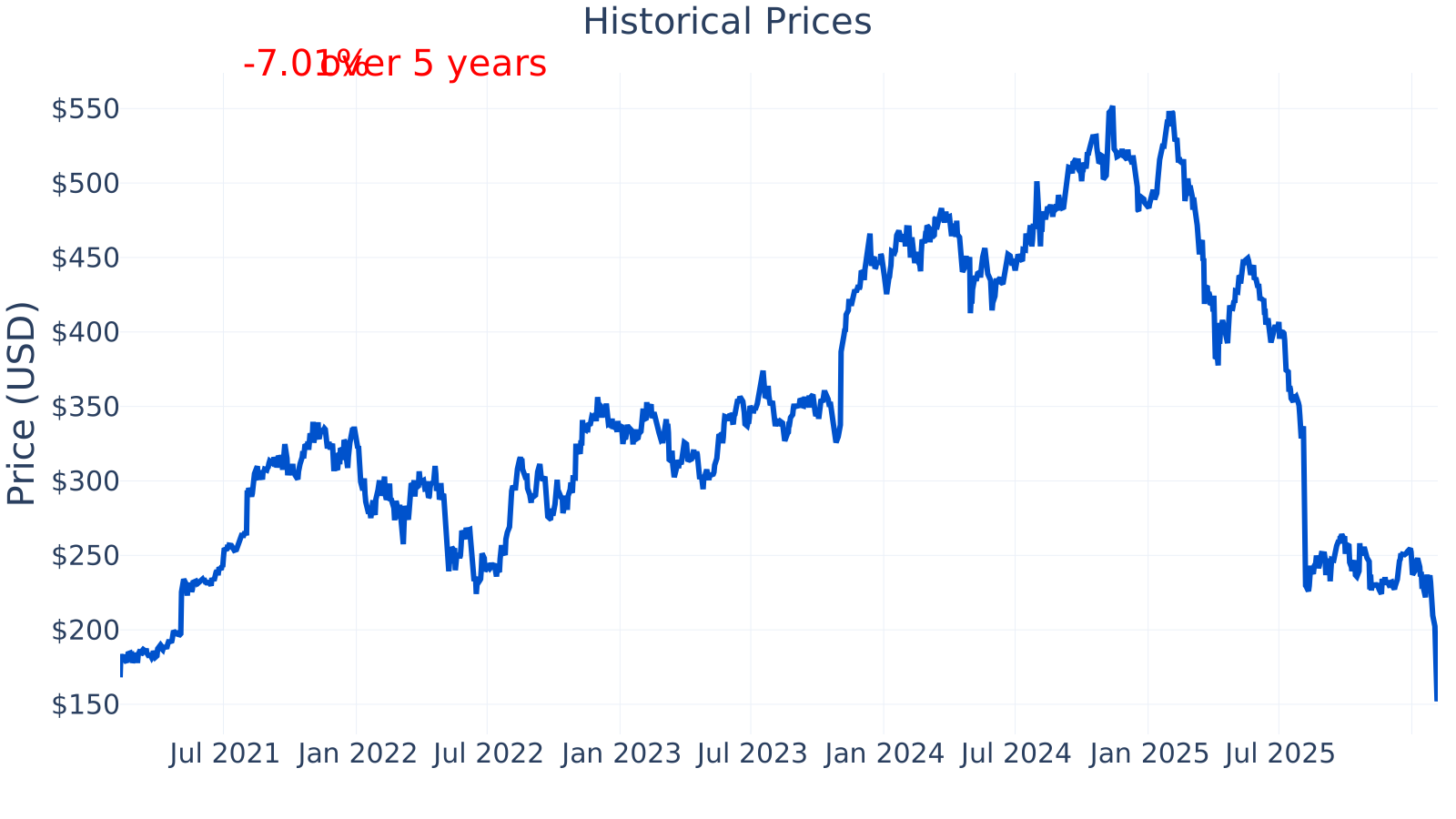
At the latest point shown, Gartner’s market capitalization is about $11.8B and its beta is about 1.04, which is close to the overall market’s typical volatility. The company’s P/E ratio is ~16.1, below the industry median (~21.1) in the same comparison set. Profitability stands out: profit margin is ~13.7% versus an industry median near 4.9%. On the other hand, year-over-year revenue growth is ~2.2%, below the industry median (~6.2%). A key balance-sheet item is leverage: debt-to-equity is ~512%, far above the industry median (~54%). Free cash flow over the trailing twelve months is about $1.22B.
Growth (medium)
Gartner operates in the broader market for technology research, advisory services, and decision-support tools. Demand in this area is supported by long-term forces such as ongoing cloud adoption, cybersecurity needs, software modernization, data/AI programs, and the general complexity of enterprise technology purchasing. These trends tend to keep a steady need for independent research and guidance, especially for large organizations that must manage risk and vendor choices.
Strategically, Gartner’s model is designed to benefit from repeat usage: subscription research can renew annually, and clients often expand usage across teams over time if they find the content valuable. Conferences can also reinforce the brand and create additional commercial opportunities, although they may fluctuate more with travel budgets and corporate spending cycles.
The year-over-year revenue growth trend shown is positive but has decelerated compared with earlier periods. It moves from high single digits/teens in 2021–2022 toward low single digits by 2025. This pattern suggests Gartner may be in a more mature growth phase, where future expansion could depend more on share gains, pricing, new products, and cross-selling rather than broad, rapid market expansion.
Free cash flow over the trailing twelve months is consistently substantial in the periods shown, ranging from roughly $0.93B (2021) to about $1.50B (2025). For a subscription-oriented business, strong cash generation can matter because it provides flexibility to reinvest in content and analysts, fund acquisitions, or return capital—while also helping manage periods of slower growth.
Risks (high)
A key risk area is economic sensitivity. While research subscriptions may be stickier than project work, enterprise spending reviews can lead to slower renewals, smaller contract expansions, or delays in consulting projects. Conference attendance and sponsorships can also be affected by budget tightening or shifts in event preferences.
Another important risk is competition. Gartner competes for executive attention and budget against a mix of advisory firms, IT service providers, and other research organizations. Major global professional services firms (and large IT consultancies) can overlap with parts of Gartner’s work, particularly on advisory and consulting-style engagements. The competitive pressure is not only about price; it can also be about credibility, analyst quality, brand recognition, and the practical usefulness of guidance.
Gartner’s competitive advantages are often associated with brand, scale of research coverage, analyst network, and long client relationships. In many enterprise technology procurement workflows, Gartner’s research and frameworks are widely referenced. Even so, maintaining leadership typically requires ongoing investment in research quality and relevance as technology changes quickly.
Leverage stands out in the comparison. The latest debt-to-equity ratio shown is about 512% versus an industry median near 54%. The historical series also shows significant variation over time. High leverage can amplify outcomes: it may improve equity returns during stable periods, but it can also reduce flexibility during downturns and increases the importance of consistent cash flow and access to financing.
Profit margin has generally been above the industry median across the period shown, with several quarters near the high teens and peaks around ~20%. The latest value displayed (~11.2%) is still above the industry median (~4.9%) but reflects a notable decline from the higher points. This kind of movement can come from changes in spending, pricing dynamics, mix (Research vs. Conferences/Consulting), or other operating factors described in filings.
Valuation
One simple way to discuss valuation is the price-to-earnings (P/E) ratio, which compares the stock price to earnings. A higher P/E can imply the market expects higher growth or durability; a lower P/E can imply lower expected growth or higher uncertainty (or simply reflect a different point in the cycle).
Over the timeframe shown, Gartner’s P/E ratio fluctuates widely—often above the industry median in 2021–2024, then dropping into the teens in 2025 before rebounding to around ~20 by late 2025. The latest snapshot in the table shows a P/E of about 16.1, below the industry median (~21.1) for the peer set used here. Interpreting this alongside fundamentals: Gartner shows strong margins versus peers, but also slower recent revenue growth and higher leverage, which can weigh on how the market prices the company compared with the broader industry.
Conclusion
Gartner is a well-known provider of research and advisory services with a business model that often includes recurring subscription revenue, complemented by conferences and consulting. The information shown points to a company with strong cash generation and above-peer profitability in many periods, alongside slowing revenue growth as the most recent years progress.
The main trade-offs visible in the fundamentals are: (1) a profitable, cash-generative model that can be resilient over time, versus (2) meaningful exposure to corporate spending cycles and (3) a leverage profile that is higher than the industry median and therefore raises the importance of steady cash flows. From a valuation lens, the current P/E snapshot is below the industry median in the comparison provided, which aligns with a picture of strong margins but slower growth and higher balance-sheet risk.
Sources:
- U.S. SEC EDGAR — Gartner, Inc. Form 10-K (Annual Report)
- U.S. SEC EDGAR — Gartner, Inc. Form 10-Q (Quarterly Report)
- Gartner, Inc. Investor Relations — Annual Report materials and SEC filings
- Wikipedia — “Gartner” (company overview and history)
This article is for informational purposes only and does not constitute financial advice. Some content is AI-generated. See Disclaimer