Stock Analysis · Garrett Motion Inc (GTX)
Overview
Garrett Motion Inc designs and manufactures technology that helps vehicle engines manage air intake and emissions, with a core focus on turbochargers. In simple terms, its products help internal-combustion engines deliver more power with better fuel efficiency and lower emissions, and the company also develops related systems such as electric boosting and software controls used in modern powertrains.
Garrett primarily sells to automakers and other vehicle manufacturers (often called “original equipment” customers) and also participates in the replacement market through parts and services used to maintain vehicles already on the road. Because the company’s main products are tied to how many vehicles get produced and what types of engines those vehicles use, demand tends to move with global auto production cycles and regulatory trends around emissions.
Public filings typically describe revenue by business lines and/or by customer type and geography, but exact percentages can change year to year and depend on the company’s reporting format at the time. At a high level, the main sources of revenue are:
- Turbochargers and related boosting technologies sold to vehicle manufacturers (core business)
- Aftermarket / replacement parts and services linked to the installed base of vehicles
- Newer electrification-related offerings (such as electric boosting and supporting electronics/software), which are generally positioned as an emerging growth area
From the recent multi-year profit-and-cost profile shown above, revenue has moved within a relatively narrow range across 2021–2024, while operating income and net income have also remained positive. One notable element is that interest expense is meaningful versus net income, which highlights the importance of financing costs in the overall earnings picture.
Key Figures
| Metric | Value | Industry ⓘ |
|---|---|---|
| Date | Feb 08, 2026 | |
| Context | ||
| Sector | Consumer Cyclical | |
| Industry | Auto Parts | |
| Market Cap ⓘ | $3.87B | |
| Beta ⓘ | 0.32 | |
| Fundamental | ||
| P/E Ratio ⓘ | 12.31 | 25.56 |
| Profit Margin ⓘ | 9.22% | 3.38% |
| Revenue Growth ⓘ | 9.20% | 4.95% |
| Debt to Equity ⓘ | -186.96% | 66.87% |
| PEG ⓘ | N/A | |
| Free Cash Flow ⓘ | $372.00M | |
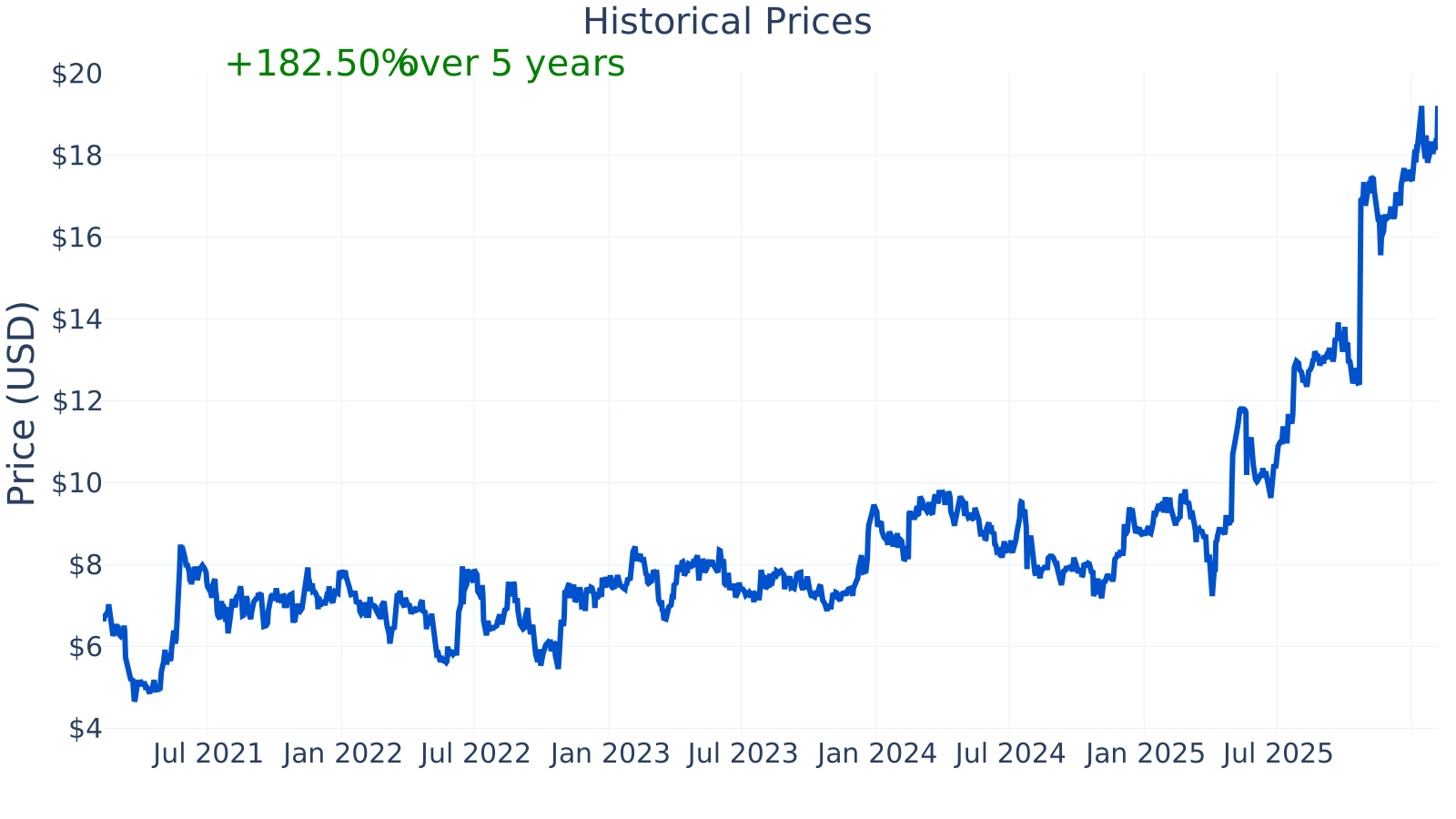
Garrett Motion’s market capitalization is about $3.87B, and the stock’s reported beta is ~0.32, which (in plain language) suggests the share price has historically moved less than the overall market.
On valuation, the current P/E ratio is ~12.3 versus an industry median near ~25.6 (Auto Parts peer set). On profitability, the company shows a profit margin of ~9.22% versus an industry median ~3.38%. Recent top-line momentum is also above the peer median, with year-over-year revenue growth of ~9.2% versus an industry median ~4.95%. Trailing twelve-month free cash flow is about $372M.
The debt-to-equity metric is negative, which usually happens when accounting equity is negative (rather than implying “negative debt”). This can make leverage comparisons less intuitive, so it is generally more useful to read this alongside balance-sheet discussion in SEC filings (debt amounts, maturities, covenants, and liquidity).
Growth (Medium)
The auto parts and powertrain components industry is mature overall, but it is still influenced by several forces that can create growth pockets. Tighter emissions standards can support demand for more efficient engine technologies, and hybrid powertrains can continue to use turbocharging as a tool to deliver performance with smaller engines. At the same time, the long-term shift toward battery-electric vehicles can reduce the addressable market for some traditional engine components over time, which makes the pace and direction of electrification a central industry variable.
Garrett’s strategy, as described in its public materials and filings, has generally combined (1) defending and improving its core turbocharging business and (2) investing in adjacent technologies (including electric boosting and controls) that may be relevant as powertrains evolve. Whether this translates into durable growth depends on adoption rates, customer program wins, and execution on cost and product roadmaps.
Recent quarterly year-over-year revenue growth has been volatile: strong growth in parts of 2021, weakness through much of 2022, a more positive 2023, and several negative quarters in 2024 before improving to about +9.2% in the latest point shown. This pattern is consistent with a business exposed to cyclical end markets and changing production schedules, rather than a smooth, steadily compounding revenue profile.
Free cash flow has improved significantly compared with earlier negative periods, turning positive by 2023 and remaining positive in the periods shown (roughly $295M–$350M in recent years and about $372M on a trailing twelve-month basis). For long-term business durability, sustained positive free cash flow matters because it can support reinvestment, debt management, and resilience during weaker auto cycles.
Risks (High)
This article is for informational purposes only and does not constitute financial advice. Some content is AI-generated. See Disclaimer


