Stock Analysis · G-III Apparel Group Ltd (GIII)
Overview
G-III Apparel Group Ltd is a clothing company that designs, sources, and markets apparel and accessories. In simple terms, it helps bring products from concept to store shelves by managing design and product development, working with manufacturers, and selling through wholesale channels (to retailers) and directly to consumers (mainly through its own brands and websites). The business is best known for operating a mix of owned brands and licensed brands, which helps it reach different customer segments and price points.
Its revenue generally comes from a few main “buckets,” centered on selling apparel and accessories either to retail partners or directly to shoppers. Based on how the company describes its operations in SEC filings, the main sources of revenue can be summarized as:
- Wholesale sales (selling to department stores, off-price retailers, and other retail partners)
- Retail / direct-to-consumer sales (selling through company-operated stores and e-commerce for owned brands)
- Licensing and other revenue (when applicable, tied to brand arrangements and related activities)
The company’s results are also influenced by how much consumers spend on discretionary items (like fashion) and how well G-III manages inventory, sourcing costs, and promotions across retail channels.
Over the last several fiscal years shown, total revenue has been in the roughly $2.8–$3.2 billion range, while profitability has fluctuated meaningfully. A notable dip appears around the fiscal year ending 2023 (negative net income), followed by a return to positive net income in fiscal 2024 and fiscal 2025. Selling, general, and administrative costs are a large recurring expense line, which is typical for apparel companies that must fund design, brand support, logistics, and operating infrastructure.
Key Figures
| Metric | Value | Industry ⓘ |
|---|---|---|
| Date | Feb 08, 2026 | |
| Context | ||
| Sector | Consumer Cyclical | |
| Industry | Apparel Manufacturing | |
| Market Cap ⓘ | $1.29B | |
| Beta ⓘ | 1.31 | |
| Fundamental | ||
| P/E Ratio ⓘ | 9.36 | 22.80 |
| Profit Margin ⓘ | 4.90% | 4.94% |
| Revenue Growth ⓘ | -9.00% | 1.60% |
| Debt to Equity ⓘ | 15.96% | 109.04% |
| PEG ⓘ | 0.98 | |
| Free Cash Flow ⓘ | $367.65M | |
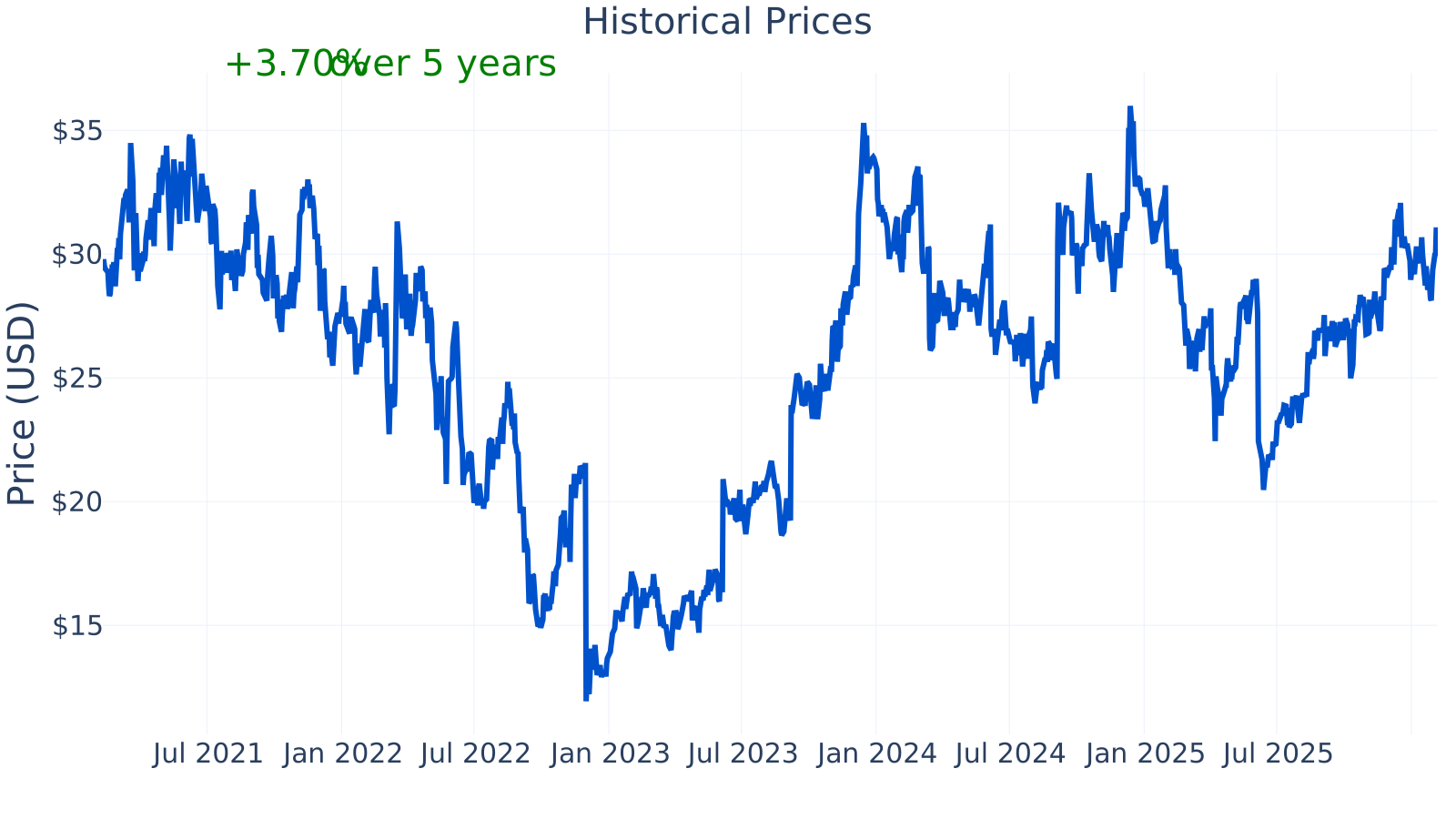
At the latest point shown, G-III has a market capitalization of about $1.29 billion and a beta of ~1.31, which suggests the stock has tended to move more than the broader market. The company’s P/E ratio is ~9.36 versus an industry median of ~22.80, while its profit margin is ~4.9%, close to the industry median (~4.94%). The latest year-over-year revenue growth is about -9% versus an industry median of about +1.6%. Leverage appears relatively modest with debt-to-equity of ~16% versus an industry median of ~109%. Trailing twelve-month free cash flow is about $368 million, and the PEG ratio is ~0.98 (a measure that relates valuation to growth expectations).
Growth (Medium)
G-III operates in the apparel space, which tends to be a mature, highly competitive industry rather than a structurally high-growth one. Long-term growth often depends less on overall industry expansion and more on brand strength, market share gains, product relevance, and operational execution (inventory discipline, sourcing efficiency, and controlling markdowns).
The year-over-year revenue pattern shown is uneven, with strong growth in parts of 2021–2022, followed by periods of decline and low growth more recently. The latest point shown is a mid-to-high single-digit decline (about -7.3%), which can signal pressure from softer demand, brand/channel resets, or more cautious ordering by wholesale partners. In apparel, these swings are common because retailers adjust orders quickly based on sell-through and inventory levels.
Free cash flow has also been volatile, moving from positive to negative and back to strongly positive in the period shown. The most recent trailing twelve-month figure is about $368 million, following about $275 million previously, while fiscal 2023 shows a negative period (about -$126 million). For a business like G-III, cash flow can change quickly depending on working capital needs—especially inventory builds and reductions—which may not move in the same direction as accounting profits in any single year.
From a strategy perspective, the company’s mix of owned and licensed brands can support future growth if it keeps product assortments relevant and maintains strong retail partnerships. Potential catalysts in this type of business typically include: improved demand trends at key retail customers, successful product launches within major brands, better inventory positioning (reducing markdown risk), and margin improvement from sourcing and logistics efficiency.
Risks (High)
This article is for informational purposes only and does not constitute financial advice. Some content is AI-generated. See Disclaimer