Stock Analysis · Fortive Corp (FTV)
Overview
Fortive Corp (FTV) is a diversified company that builds and sells professional-grade tools, instruments, and software used by businesses to measure, inspect, track, and improve how work gets done. Its products are typically used in environments where accuracy, safety, and uptime matter—such as manufacturing plants, healthcare settings, and industrial maintenance.
In its SEC filings, Fortive describes its approach as improving operating performance through continuous-improvement practices (often referred to as the “Fortive Business System”) and adding capabilities through acquisitions and portfolio changes. In practice, this means Fortive tends to focus on specialized “mission-critical” products and workflows where customers care about reliability and service over the long run.
Fortive reports revenue primarily through two operating segments (based on company filings). Exact percentages vary by year and are best read directly from the most recent 10-K/10-Q segment footnotes:
- Intelligent Operating Solutions (IOS) (largest segment in recent filings): workflow and asset lifecycle software, sensing/monitoring, and productivity solutions used in industrial and enterprise environments.
- Precision Technologies (PT): test and measurement tools, specialty instrumentation, and related solutions used across industrial applications.
Across the business, revenue generally comes from a mix of product sales (instruments, tools, systems) and recurring sources such as software subscriptions, services, and aftermarket support (the recurring share depends on the specific business lines and is discussed in filings).
From 2021 to 2024, total revenue increased (about $5.25B to $6.23B), while operating income also rose (about $0.78B to $1.12B). The 2025 figures shown reflect a sharp drop in revenue and profit versus prior years, which is a major point to reconcile with the company’s most recent filings (for example: portfolio changes, discontinued operations, or other reporting impacts).
Key Figures
| Metric | Value | Industry ⓘ |
|---|---|---|
| Date | Feb 07, 2026 | |
| Context | ||
| Sector | Technology | |
| Industry | Scientific & Technical Instruments | |
| Market Cap ⓘ | $19.09B | |
| Beta ⓘ | 1.03 | |
| Fundamental | ||
| P/E Ratio ⓘ | 37.81 | 45.31 |
| Profit Margin ⓘ | 13.93% | 12.33% |
| Revenue Growth ⓘ | -30.70% | 7.45% |
| Debt to Equity ⓘ | 49.68% | 49.68% |
| PEG ⓘ | 1.29 | |
| Free Cash Flow ⓘ | $978.10M | |
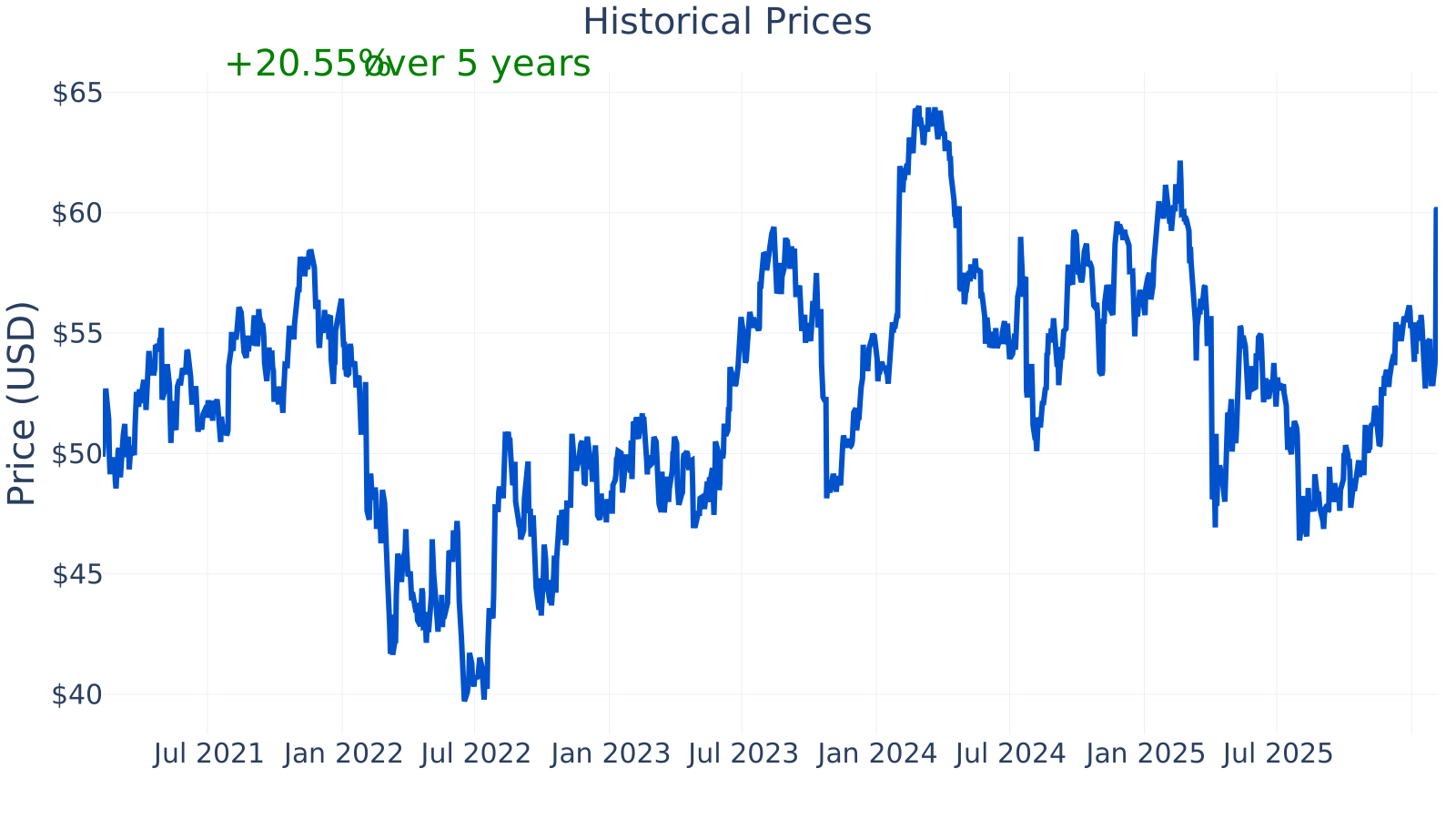
Fortive’s market capitalization is about $19.1B, and its beta of ~1.03 suggests the stock has tended to move roughly in line with the overall market. The latest P/E ratio is ~37.8 versus an industry median of ~45.3, while the profit margin is ~13.9% versus an industry median of ~12.3%. The latest year-over-year revenue growth is -30.7% compared with an industry median of +7.45%, making recent top-line performance (or reporting effects) stand out. Debt-to-equity is about 49.7%, in line with the industry median shown.
Growth (Medium)
Fortive operates in areas that can benefit from long-running themes: automation, digitization of industrial workflows, tighter quality requirements, predictive maintenance, and the increasing need for compliance and traceability. Many of Fortive’s offerings are positioned as productivity or risk-reduction tools, which can remain relevant across economic cycles—although customer spending can still slow when industrial activity weakens.
A key part of Fortive’s growth strategy (as described in filings) is to keep building higher-value, more software- and service-enabled businesses, supported by continuous improvement and selective acquisitions. Over time, this type of mix can raise the share of recurring revenue and support steadier cash generation, but it also depends on execution (integration, product roadmap, and maintaining customer trust).
The revenue growth pattern shifts from positive, mid-single-digit growth in 2023–2024 to negative in 2025, with a steep decline late in 2025. Because this change is unusually large compared with the industry median, it is important to interpret it in the context of the company’s most recent SEC reporting (for example, whether the company changed what is included in continuing operations, completed divestitures, or saw an end-market downturn).
Free cash flow over the last several years has generally been substantial (roughly $1.0B–$1.4B on the periods shown), with the latest trailing figure around $978M. For many long-term shareholders, free cash flow matters because it can be used for reinvestment, acquisitions, debt reduction, or returning capital—though the best use depends on management decisions and market conditions.
Risks (Medium)
This article is for informational purposes only and does not constitute financial advice. Some content is AI-generated. See Disclaimer


