Stock Analysis · FormFactor Inc (FORM)
Overview
FormFactor Inc. designs and manufactures specialized hardware used in semiconductor testing. In simple terms, its products help chipmakers and chip designers check whether chips work correctly and measure their performance during development and manufacturing. This testing step is important because modern chips are extremely complex, and small issues can cause major performance or reliability problems.
The company’s offerings are commonly described as:
- Probe cards used to electrically connect test systems to semiconductor wafers for wafer-level testing.
- Analytical probes and probe stations used in labs to characterize devices (measure behavior and performance) during research, development, and failure analysis.
- Related accessories and services that support installation, maintenance, and ongoing usage.
FormFactor reports revenue by product lines in its official filings, but the exact mix can shift over time with the semiconductor cycle and customer project timing. In general, probe cards have historically been the largest revenue contributor, with analytical systems and related products forming the remainder (exact percentages depend on the period and are disclosed in company filings).
Across the years shown, total revenue has fluctuated but remained in the same general range (roughly mid-$600M to high-$700M). Operating expenses have been fairly steady in absolute dollars, while profitability has moved up and down with revenue and gross profit changes—typical for companies tied to semiconductor capital spending and product cycles.
Key Figures
| Metric | Value | Industry ⓘ |
|---|---|---|
| Date | Feb 16, 2026 | |
| Context | ||
| Sector | Technology | |
| Industry | Semiconductor Equipment & Materials | |
| Market Cap ⓘ | $7.50B | |
| Beta ⓘ | 1.10 | |
| Fundamental | ||
| P/E Ratio ⓘ | 140.19 | 48.26 |
| Profit Margin ⓘ | 6.93% | 8.62% |
| Revenue Growth ⓘ | 13.60% | 12.90% |
| Debt to Equity ⓘ | 4.33% | 20.73% |
| PEG ⓘ | 0.71 | |
| Free Cash Flow ⓘ | $11.74M | |
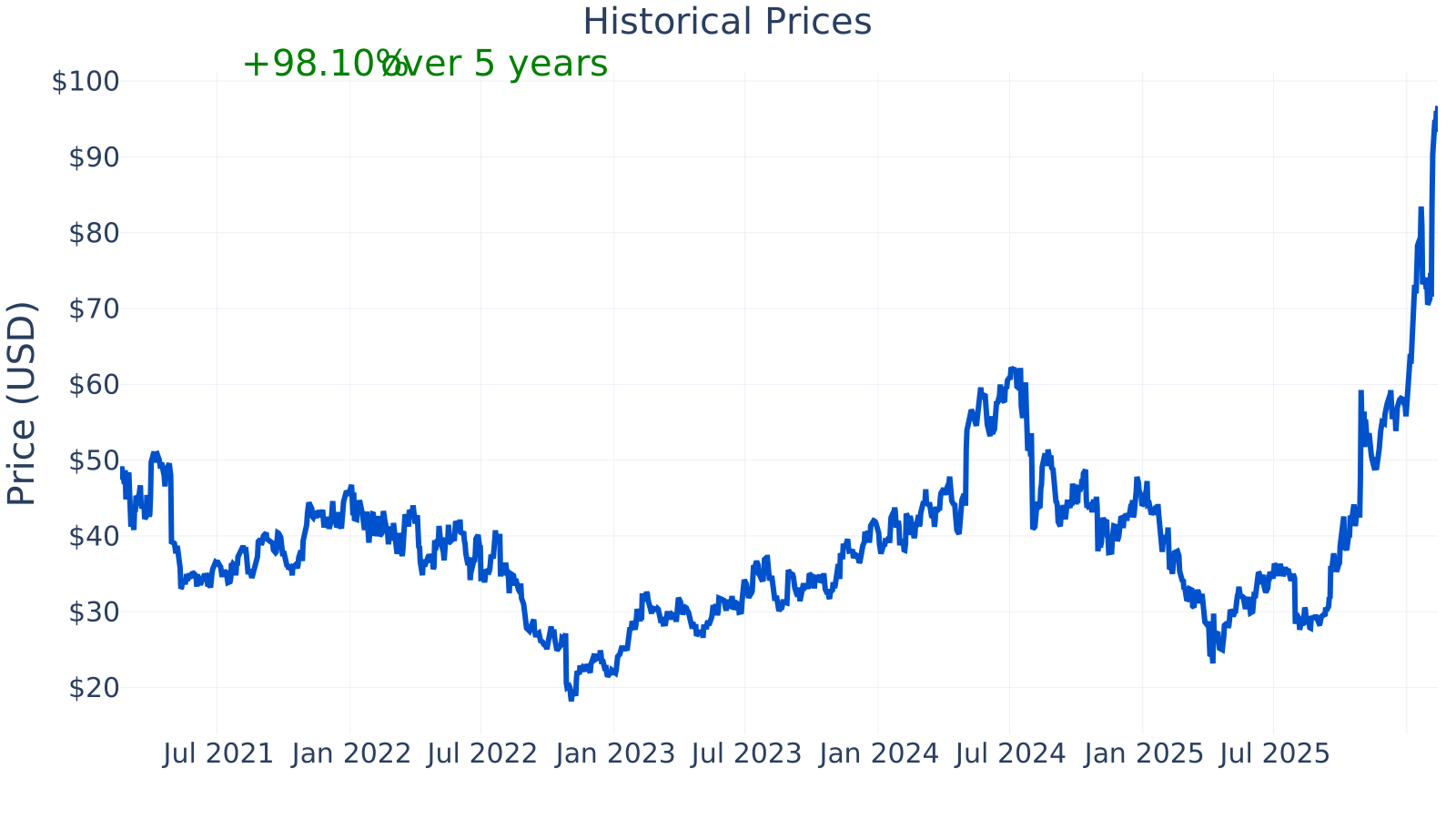
FormFactor’s market capitalization is about $7.5B. The stock’s beta of ~1.10 suggests price moves have been somewhat more volatile than the broader market. The latest P/E ratio (~140) is well above the industry median (~48), while the profit margin (~6.9%) is below the industry median (~8.6%). Revenue growth in the most recent year-over-year view is about 13.6%, slightly above the industry median (~12.9%). Balance-sheet leverage appears conservative: debt-to-equity is ~4.3% versus an industry median around 20.7%. Trailing twelve-month free cash flow is about $11.7M, which is positive but relatively modest for the company’s size.
Growth (Medium)
FormFactor operates in the semiconductor equipment and materials ecosystem, which is supported by long-term drivers such as continued growth in computing needs, rising chip complexity, and the increasing importance of advanced packaging and leading-edge process technologies. As chips become more difficult to design and manufacture, testing and measurement typically become more critical—supporting ongoing demand for sophisticated probing and lab characterization tools.
Potential catalysts are closely linked to semiconductor investment cycles and technology transitions. When customers ramp new chip designs (for example, moving to more advanced nodes, new memory generations, or more complex packaging approaches), testing requirements can rise, which may increase demand for higher-performance probe cards and related solutions. The company also invests in research and development, which can matter in a market where performance, precision, and time-to-market are key differentiators.
The year-over-year revenue growth pattern shows meaningful cyclicality: there were periods of negative growth around 2022–2023, followed by a rebound through parts of 2024, and mixed results again in 2025 before ending the year with a positive growth rate (about 13.6%). This unevenness is consistent with an industry where customer spending can shift quickly based on end-demand, inventory digestion, and the timing of new technology ramps.
Free cash flow over the trailing twelve-month periods shown declined from 2021 into 2023, then improved into 2024–2025. Even with improvement, the most recent trailing figure remains comparatively low versus earlier periods, highlighting that cash generation can vary substantially with profitability, working capital needs, and investment levels.
Risks (High)
This article is for informational purposes only and does not constitute financial advice. Some content is AI-generated. See Disclaimer