Stock Analysis · Ford Motor Company (F)
Overview
Ford Motor Company is a global vehicle and mobility company best known for designing, manufacturing, and selling trucks, SUVs, vans, and cars under the Ford brand, along with luxury vehicles under the Lincoln brand. In addition to selling vehicles through dealers and commercial channels, Ford also provides financing and leasing—supporting retail customers and dealerships—through its financial services activities. For long-term shareholders, this mix matters because it ties Ford’s results both to vehicle demand (a cyclical business) and to credit conditions (interest rates and loan performance).
In its SEC filings, Ford generally describes its business through automotive operations (including vehicles and related parts/services) and financial services. Based on that structure, the main revenue drivers can be summarized as:
- Vehicle sales (wholesale and retail-related) across Ford and Lincoln nameplates (typically the largest contributor)
- Parts and service (after-sales maintenance, replacement parts, and related activities)
- Financial services such as retail financing and leasing, dealer financing, and related fees/interest income
Across recent years, Ford’s total revenue has risen from about $136.3B (2021) to about $187.3B (2025), showing that the company has expanded its top line over time, even as profitability has been uneven.
Over 2021–2025, revenue increased materially, but net income swung from positive to negative in some years. That pattern highlights how sensitive results can be to pricing, costs, restructuring items, and other one-time or non-operational factors—important context for anyone evaluating Ford as a long-term business rather than focusing on a single year.
Key Figures
| Metric | Value | Industry ⓘ |
|---|---|---|
| Date | May 08, 2026 | |
| Context | ||
| Sector | Consumer Cyclical | |
| Industry | Auto Manufacturers | |
| Market Cap ⓘ | $48.53B | |
| Beta ⓘ | 1.66 | |
| Fundamental | ||
| P/E Ratio ⓘ | 11.79 | 23.35 |
| Profit Margin ⓘ | -3.22% | -1.49% |
| Revenue Growth ⓘ | 6.40% | 11.40% |
| Debt to Equity ⓘ | 419.53% | 108.09% |
| PEG ⓘ | 8.48 | |
| Free Cash Flow ⓘ | $11.92B | |
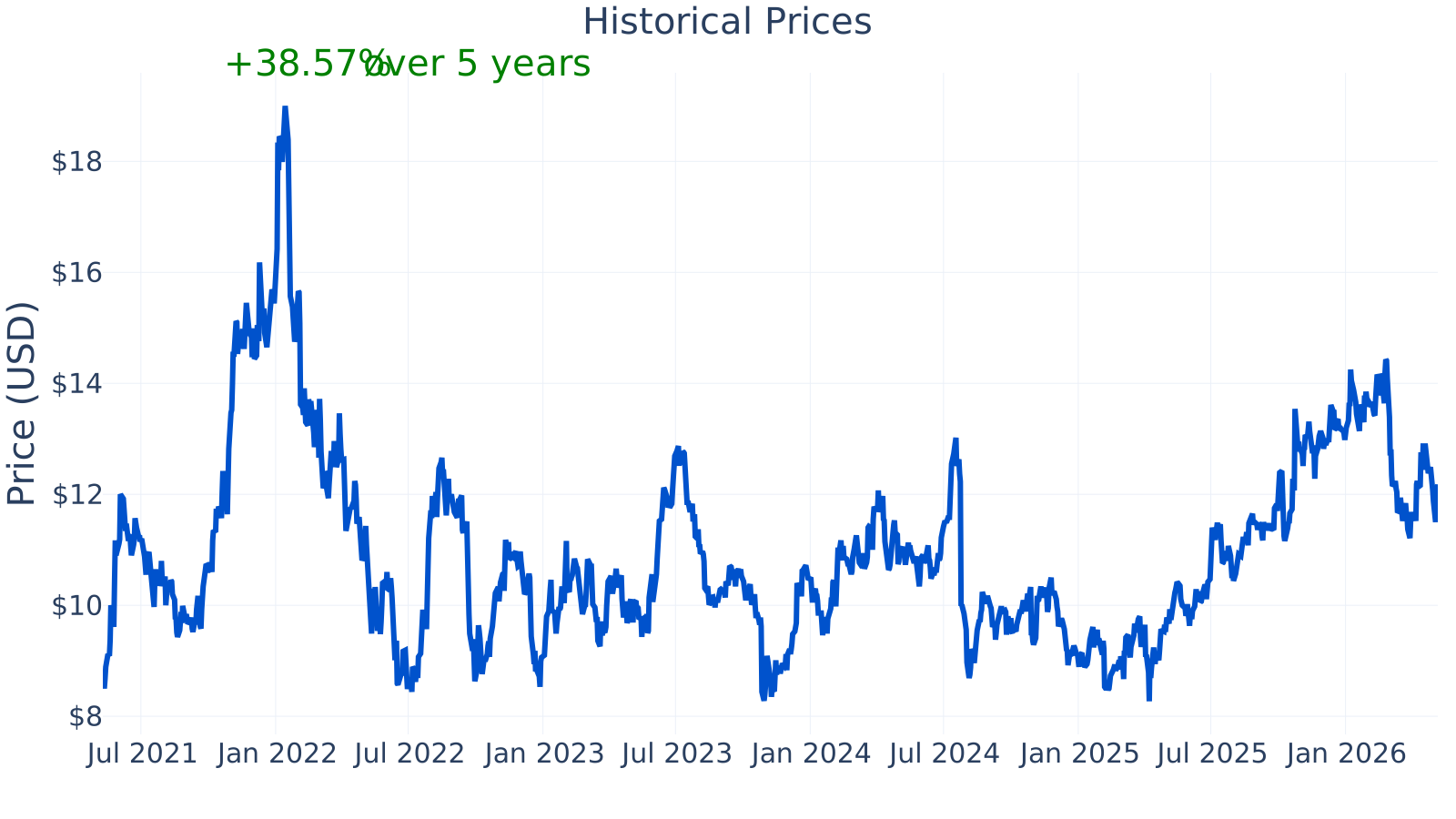
Ford’s market capitalization is about $48.5B, and its beta of about 1.66 indicates the stock has tended to move more than the overall market. The latest P/E ratio is ~11.8 versus an industry median near 23.4, while the latest profit margin is about -3.2% (industry median about -1.5%). Year-over-year revenue growth is about 6.4% (industry median about 11.4%). Debt-to-equity is about 419%, above the industry median near 108%. Trailing twelve-month free cash flow is about $11.9B.
Growth (Medium)
Ford operates in the global automotive industry, which is large and essential but typically grows slowly over the long run and tends to be cyclical (demand often rises and falls with the economy). A major multi-year shift underway is electrification and software-enabled features, alongside continued demand for profitable trucks and commercial vehicles. Ford has communicated in its filings that it is investing in new technologies and vehicle programs while also working to improve efficiency and quality—elements that can support longer-term competitiveness if executed well.
Revenue growth has been positive in many quarters, but it has not been steady. In the most recent period shown, year-over-year revenue growth is roughly in the mid-single digits, which is consistent with a mature, competitive industry where pricing, production levels, and model cycles can drive short-term swings.
Free cash flow has increased meaningfully from 2022 to the most recent trailing twelve-month period (about $11.9B). For a manufacturing business, sustained free cash flow can be an important signal of operational progress because it reflects cash left after running the business and investing in it. That said, auto cash generation can be volatile due to inventory changes, capital spending cycles, and shifts in demand.
Risks (High)
Ford’s risks are closely tied to the structure of the auto business. Vehicle demand is sensitive to interest rates, consumer confidence, employment, and fuel/energy prices. The company also faces execution risk from large product programs (new platforms, new powertrains, software) where delays, recalls, quality issues, or cost overruns can materially affect results. In addition, input costs (materials, logistics) and labor costs can move quickly, while vehicle pricing can become pressured if industry competition intensifies.
Ford’s debt-to-equity ratio is elevated (about 419%) versus an industry median near 108%. Part of this is influenced by how automakers with financing arms use debt funding to support lending and leasing activities, but the headline level still signals meaningful leverage and sensitivity to credit markets. In tighter credit conditions, borrowing costs can rise and credit losses can increase, which may pressure financial results.
Profitability has also fluctuated. The latest profit margin shown is about -3.2%, and the chart shows periods of positive margins followed by declines into negative territory more recently. This variability is common in autos, but it reduces predictability and makes long-term outcomes more dependent on management execution, product mix, and cost discipline.
On competitive positioning, Ford is a well-known incumbent with scale, manufacturing footprint, established distribution, and strong brand recognition—particularly in trucks and commercial vehicles where brand loyalty can be a real advantage. However, it is not operating in a winner-take-all market. Competition is intense across:
- Traditional global automakers with similar scale and product breadth
- EV-focused manufacturers that compete on technology, charging experience, and software
- Newer entrants and regional champions in certain markets that may compete aggressively on price
In practice, Ford’s competitive advantages tend to be strongest where it has durable product strength (notably in certain truck/commercial segments) and where it can spread development and manufacturing costs over high volume. Its competitive challenges tend to be most visible where rapid technology shifts and price competition compress margins.
Valuation
Ford’s current P/E ratio (about 11.8) is below the industry median shown (about 23.4). A lower P/E can reflect lower expected growth, higher cyclicality, higher uncertainty about future profits, or a mix of these factors. The chart also shows Ford’s P/E has moved widely over time, which is typical when earnings and investor expectations change quickly in cyclical industries.
Whether the current valuation is “high” or “low” in a business sense depends on how one weighs (1) the company’s ability to generate durable profits across economic cycles, (2) the stability of margins and cash generation, and (3) balance-sheet and financing-related risks. The recent negative profit margin and elevated leverage are pieces of context that can help explain why the market may apply a more conservative earnings multiple than the broader industry median.
Conclusion
Ford is a large, established automaker with meaningful scale and brand presence, and it combines vehicle operations with financing activities that can support sales but also add sensitivity to credit conditions. The company has grown revenue over the last several years and recently generated strong trailing free cash flow, while profitability has been uneven and has dipped negative in the latest period shown.
From a long-term perspective, the main positives in the facts reviewed are Ford’s ability to produce sizable revenue, its improved recent cash generation, and the strategic relevance of ongoing industry shifts (electrification and software) that can reward effective execution. The main constraints are the cyclical nature of auto demand, the variability in margins, and an elevated debt-to-equity profile. The stock’s valuation metrics (such as a lower P/E than the industry median) should be interpreted alongside these fundamentals rather than in isolation.
Sources:
- SEC EDGAR — Ford Motor Company Form 10-K (Annual Report)
- SEC EDGAR — Ford Motor Company Form 10-Q (Quarterly Report)
- Ford Investor Relations — Annual Reports & SEC Filings
- Wikipedia — “Ford Motor Company” (general background)
This article is for informational purposes only and does not constitute financial advice. Some content is AI-generated. See Disclaimer