Stock Analysis · Ford Motor Company (F)
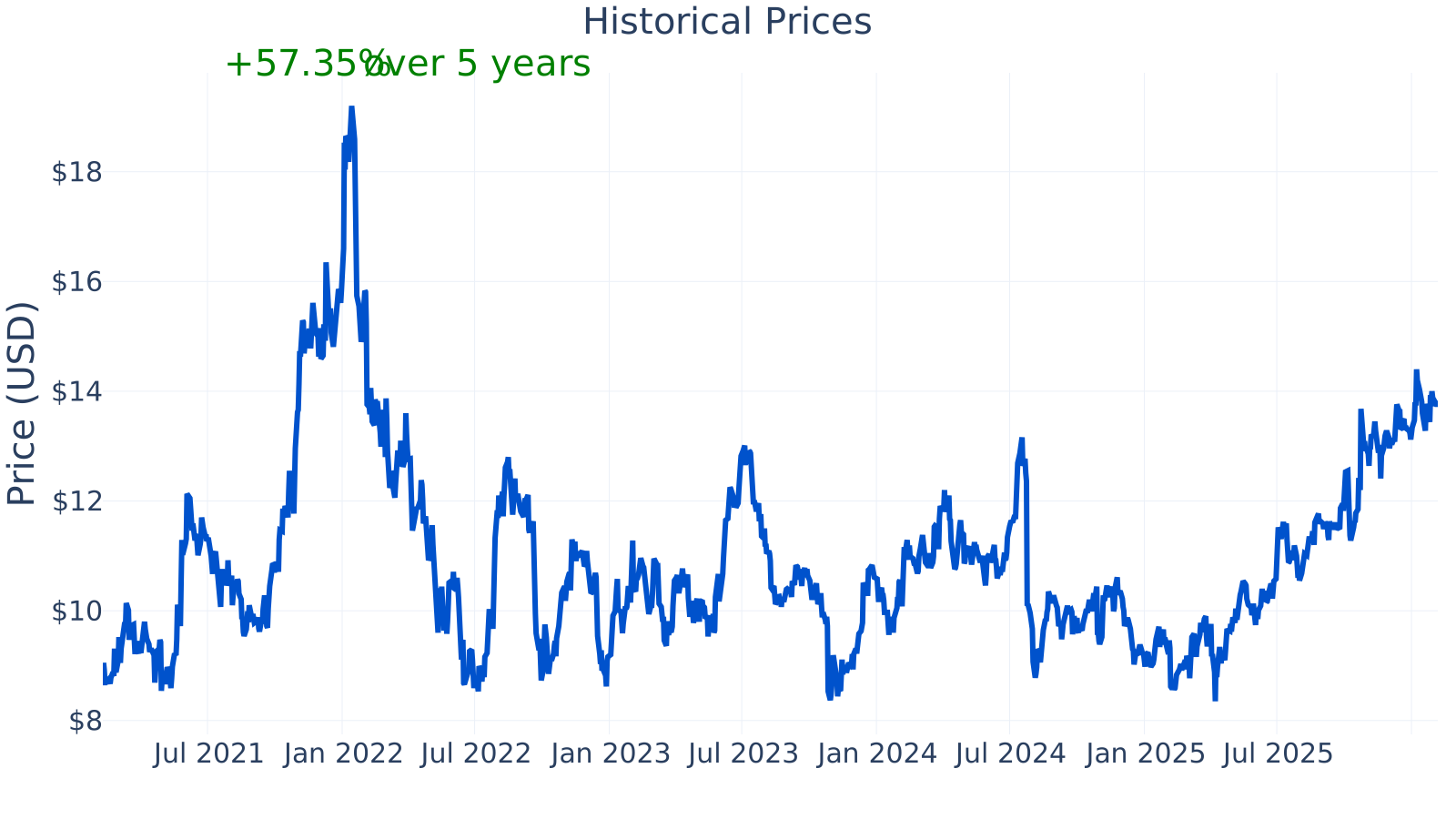
Overview
Ford Motor Company designs, manufactures, and sells cars, trucks, and SUVs under the Ford brand and luxury vehicles under the Lincoln brand. In addition to selling vehicles and parts, Ford also operates a large financing arm that helps customers and dealers fund vehicle purchases and inventory. This financing activity is a meaningful part of Ford’s overall business model because it can support vehicle sales, but it also introduces balance-sheet and credit-cycle exposure that is different from manufacturing.
In its reporting, Ford groups its activities into major segments that reflect how it runs the business. The company’s revenue is primarily tied to vehicle sales and related services, with financing playing an important supporting role.
Main sources of revenue (largest to smallest, based on how Ford describes its business in filings):
- Automotive operations (vehicles, parts, accessories, and related services)
- Financial services (vehicle and dealer financing, leasing, and related items)
- Other / eliminations (smaller items and accounting eliminations between segments)
The company’s scale is visible in its recent annual revenue, which rose from about $136.3B (2021) to about $185.0B (2024), while costs and operating expenses moved in ways that made profitability uneven from year to year (including a loss in 2022, followed by positive net income in 2023 and 2024).
Across the years shown, total revenue increased materially (about $136.3B in 2021 to about $185.0B in 2024). Over the same period, research and development spending stayed at a consistently high level (roughly $7.6B–$8.2B), highlighting ongoing investment needs in a capital-intensive industry.
Key Figures
| Metric | Value | Industry ⓘ |
|---|---|---|
| Date | Feb 07, 2026 | |
| Context | ||
| Sector | Consumer Cyclical | |
| Industry | Auto Manufacturers | |
| Market Cap ⓘ | $54.99B | |
| Beta ⓘ | 1.67 | |
| Fundamental | ||
| P/E Ratio ⓘ | 11.79 | 21.50 |
| Profit Margin ⓘ | 2.48% | 1.46% |
| Revenue Growth ⓘ | 9.40% | 9.40% |
| Debt to Equity ⓘ | 346.64% | 87.12% |
| PEG ⓘ | 10.74 | |
| Free Cash Flow ⓘ | $11.90B | |
Ford’s latest snapshot shows a market capitalization of about $55.0B and a beta of ~1.67, which is a sign the stock has tended to move more than the broader market. Profit margin is about 2.48% versus an industry median near 1.46%, while year-over-year revenue growth is about 9.4%, in line with the industry median. The debt-to-equity ratio is about 346.6%, substantially above the industry median near 87.1%, reflecting the importance of financing activities and leverage in Ford’s overall structure.
Growth (Medium)
Ford operates in the global auto industry, which is large and mature, with demand that tends to track consumer income, interest rates, and broader economic conditions. Longer-term change in the industry is being driven by electrification, software-enabled features, connected services, and evolving manufacturing supply chains. These trends can expand opportunity, but they also require heavy investment and can pressure margins during transitions.
A key question for Ford’s growth path is execution: converting investment (including engineering and product development) into vehicles and services that customers adopt profitably at scale. For long-term fundamentals, consistent revenue growth and sustained free cash flow matter because they help fund product cycles, factory upgrades, and new technologies without over-relying on external funding.
Year-over-year revenue growth has been uneven over time, including periods of decline (for example, negative growth in early 2025) and periods of stronger expansion. The most recent value shown is about 9.4%, roughly in line with the industry median, which suggests Ford’s top-line momentum has not clearly separated from the broader peer group.
Trailing twelve-month free cash flow has fluctuated significantly, ranging from about $23.9B (2021) down to about $4.0B (2022), then rising to about $9.3B (2025) in the series shown. This variability is common in the auto industry due to working-capital swings, investment cycles, and changes in production volumes, but it also means long-term outcomes can depend heavily on cycle timing and capital discipline.
Risks (High)
This article is for informational purposes only and does not constitute financial advice. Some content is AI-generated. See Disclaimer


