Stock Analysis · Five Below Inc (FIVE)
Overview
Five Below, Inc. is a U.S. specialty value retailer focused on selling trend-right, low-priced products aimed primarily at teens, pre-teens, and value-conscious shoppers. Its stores are designed around a “fun” treasure-hunt experience, with a large portion of the assortment priced at $1–$5 and an additional set of higher-priced items (often referred to by the company as an expanded value offering) that can go above $5.
The company generates revenue mainly by selling merchandise through its physical stores and, to a smaller extent, through e-commerce. In its filings, Five Below describes its assortment by major product categories rather than by separate business lines, so exact revenue percentages by category are typically not presented as a standard breakdown. A simple way to think about the main revenue drivers is:
- In-store merchandise sales (the core of the business)
- E-commerce merchandise sales (smaller than stores, supports omnichannel shopping)
From an operating perspective, the company’s business model depends on sourcing low-cost items, turning inventory quickly, and spreading fixed costs (distribution, store labor, occupancy) over a growing store base.
Over the last several fiscal years shown, revenue increased steadily (from about $2.85B to about $3.88B), but a larger operating expense base has weighed on operating income and net income in the most recent year displayed. This highlights how important cost control and efficient store operations are to the model.
Key Figures
| Metric | Value | Industry ⓘ |
|---|---|---|
| Date | Feb 07, 2026 | |
| Context | ||
| Sector | Consumer Cyclical | |
| Industry | Specialty Retail | |
| Market Cap ⓘ | $11.18B | |
| Beta ⓘ | 1.13 | |
| Fundamental | ||
| P/E Ratio ⓘ | 36.38 | 23.78 |
| Profit Margin ⓘ | 6.96% | 6.27% |
| Revenue Growth ⓘ | 23.10% | 5.20% |
| Debt to Equity ⓘ | 103.28% | 103.28% |
| PEG ⓘ | 1.35 | |
| Free Cash Flow ⓘ | $322.97M | |
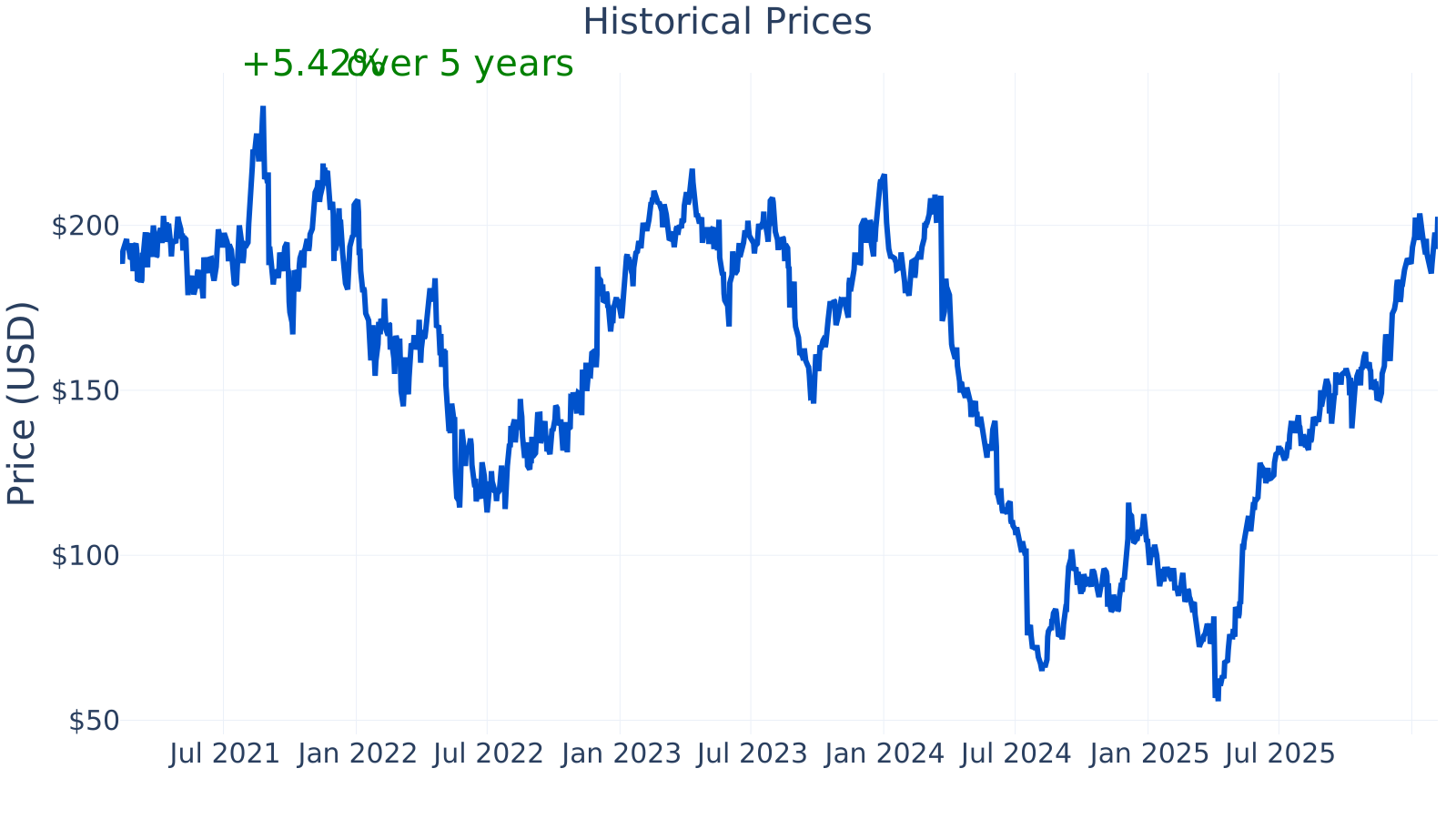
Five Below’s market capitalization is about $11.2B, and its beta of ~1.13 suggests the stock has tended to move somewhat more than the broader market. The company’s profit margin is ~7.0%, slightly above the industry median (~6.3%). Recent year-over-year revenue growth is ~23.1%, notably higher than the industry median (~5.2%), though retail growth can be uneven from quarter to quarter. Leverage, measured here as debt-to-equity of ~103%, is around the industry median in this dataset. Trailing twelve-month free cash flow is ~$323M. The P/E ratio is ~36.4, above the industry median (~23.8), meaning the market is pricing the company at a higher multiple than many specialty retail peers.
Growth (Medium)
Five Below operates in discount and value-focused retail—an area that can benefit when consumers become more price-sensitive. Demand in this space is still tied to consumer spending and confidence, but the value proposition can remain relevant across economic cycles because shoppers may “trade down” to cheaper stores when budgets tighten.
The company’s growth strategy has historically centered on opening new stores, increasing sales productivity in existing locations, and expanding its product assortment (including items priced above $5). For long-term growth, the key question is whether new stores can maintain healthy returns and whether the assortment expansion can increase basket size without eroding the brand’s low-price identity.
The year-over-year revenue growth trend shown is positive overall but not smooth: after much slower growth in parts of 2022, growth re-accelerated and most recently reached the low-20% range. For a retailer, that kind of pace typically reflects a combination of new stores and improving sales levels, but it can also be influenced by price/mix changes and promotional intensity.
Free cash flow has been positive in each period shown, rising into 2024 and then declining in 2025 (about $165M to about $107M for the fiscal year ending 2025-01-31, with ~$323M shown for the latest trailing period in the table). In retail, free cash flow can swing due to inventory timing, distribution investments, and the pace of store openings, so consistency and the reasons behind changes matter.
Risks (High)
This article is for informational purposes only and does not constitute financial advice. Some content is AI-generated. See Disclaimer