Stock Analysis · Fiserv Inc (FISV)
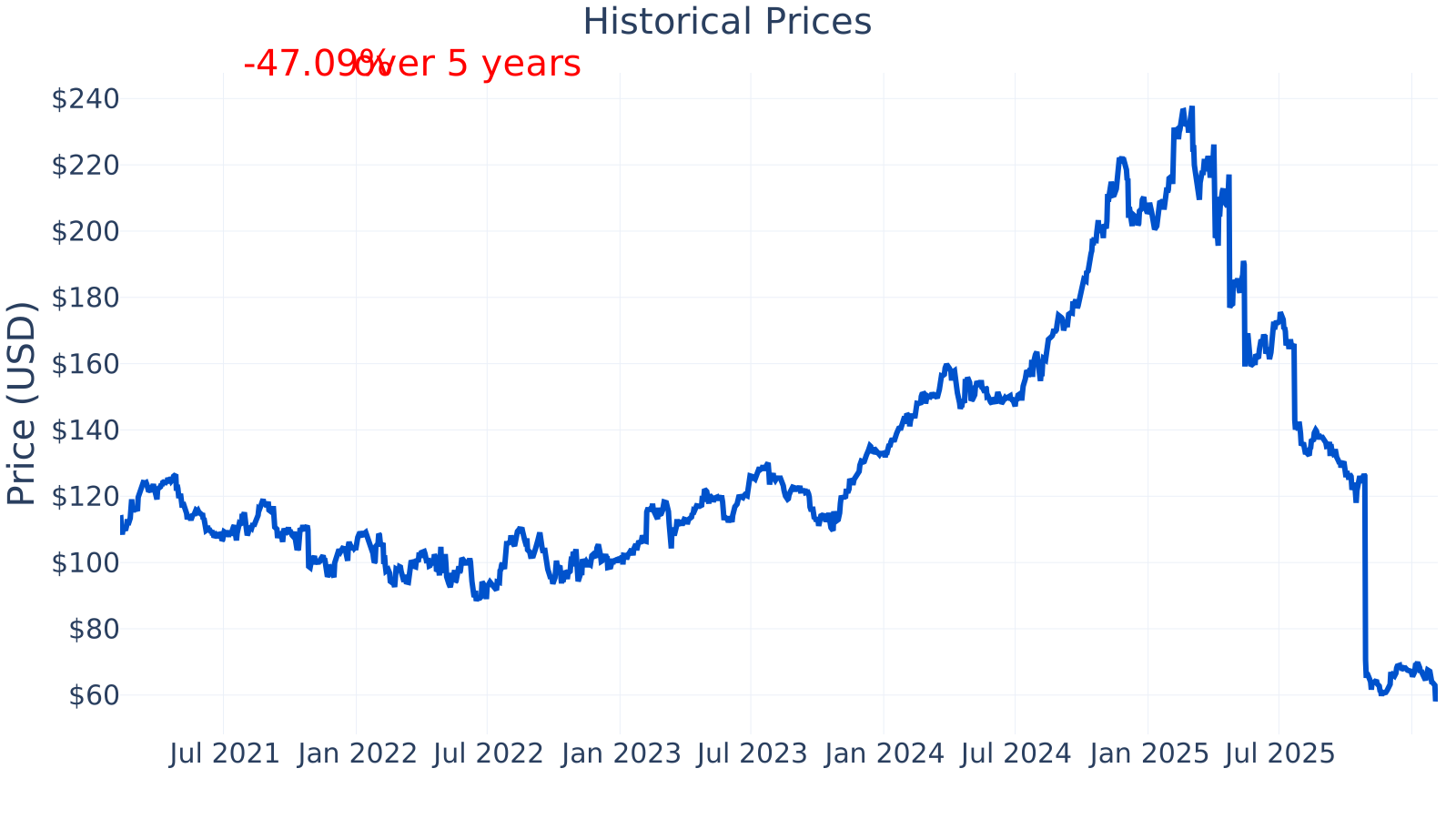
Overview
Fiserv Inc. is a global payments and financial technology company. In simple terms, it provides the “pipes and software” that help money move between consumers, merchants, banks, and other financial institutions. Its products include card and digital payment processing, tools that help merchants accept payments in-store and online, and core account processing and digital banking software for banks and credit unions.
Fiserv’s revenue is largely driven by long-running client relationships and high transaction volumes. The business model is typically a mix of recurring fees (for software and platforms) and transaction-based fees (when payments are processed), which tends to benefit from the steady shift from cash and checks toward electronic payments.
Based on the company’s segment reporting (as described in its annual filings), the main sources of revenue are generally grouped as:
- Merchant Acceptance (services and technology that help merchants accept and manage payments)
- Financial Technology (core processing, digital banking, and related services for financial institutions)
- Payments and Network (payment processing and network services that connect financial institutions, merchants, and consumers)
The income structure over recent years shows expanding revenue and gross profit, alongside meaningful ongoing operating costs and interest expense—typical for a large scale platform business with debt on the balance sheet.
Total revenue increased from about $16.2B (2021) to about $20.5B (2024). Over the same period, gross profit rose (about $8.1B to $12.4B), while interest expense increased as well (about $696M to $1.24B), which is important context when looking at risk and valuation.
Key Figures
| Metric | Value | Industry ⓘ |
|---|---|---|
| Date | Feb 07, 2026 | |
| Context | ||
| Sector | Technology | |
| Industry | Software | |
| Market Cap ⓘ | $33.07B | |
| Beta ⓘ | N/A | |
| Fundamental | ||
| P/E Ratio ⓘ | 9.40 | |
| Profit Margin ⓘ | N/A | |
| Revenue Growth ⓘ | N/A | |
| Debt to Equity ⓘ | 120.21% | |
| PEG ⓘ | 0.52 | |
| Free Cash Flow ⓘ | $4.62B | |
Fiserv’s equity value is shown at roughly $33.1B. The table also highlights a P/E ratio of ~9.4 and free cash flow (TTM) of ~$4.62B. The debt-to-equity ratio of ~120% indicates the company uses a meaningful amount of leverage. The profit margin and revenue growth fields displayed as 0.0 in the table appear inconsistent with the multi-quarter trends shown later in the margin and growth charts, so those two specific table entries should be treated cautiously and cross-checked against the charts and the company’s filings.
Growth (Medium)
Fiserv operates in digital payments and banking technology—areas supported by long-term trends such as the continued movement away from cash, growth in e-commerce, and banks upgrading core systems and digital experiences. These trends can provide a structural tailwind, but growth rates can still fluctuate with consumer spending, merchant activity, and pricing pressure in payments.
A key feature of this type of business is operating leverage: once a platform is built, additional payment volume and additional software users can improve profitability, although results also depend on competition and the cost to maintain and secure systems.
Year-over-year revenue growth was mostly in the mid-to-high single digits for an extended period (roughly 6%–10% in many quarters), with a notable slowdown in the most recent point shown (around ~1%). That kind of deceleration can happen due to tougher comparisons, slower spending, changes in mix, or other business factors; it is also a reminder that even “steady” payment businesses are not immune to cyclical effects.
Free cash flow (trailing twelve months) rose from roughly $3.3B (2021) to about $5.0B (2025) (with some variability in between). Consistently positive free cash flow can matter for long-term flexibility because it can be used for debt repayment, share repurchases, reinvestment in products, or acquisitions.
Risks (Medium-High)
This article is for informational purposes only and does not constitute financial advice. Some content is AI-generated. See Disclaimer