Stock Analysis · First Watch Restaurant Group Inc (FWRG)
Overview
First Watch Restaurant Group Inc. is a U.S. restaurant company focused on breakfast, brunch, and lunch. Its concept is built around daytime-only operating hours and a menu centered on made-to-order meals, juices, coffee, and brunch-style beverages. The company operates restaurants under the “First Watch” brand and continues to expand primarily by opening new company-owned locations, with a smaller contribution from franchised restaurants.
Revenue primarily comes from restaurant-level sales (food and beverage) at company-owned locations, with additional revenue from franchise-related streams. Based on typical disclosure in company filings, the main sources are generally:
- Company-owned restaurant sales (the large majority of revenue)
- Franchise-related revenue (such as royalties and fees; a smaller portion)
The income mix below provides a simple view of how revenue turns into profit after the largest cost categories (food & labor costs inside “cost of revenue,” operating expenses, and interest expense).
Across the years shown, total revenue increased from about $601M (2021) to about $1.016B (2024), while net income remained comparatively small (for example, about $18.9M in 2024). This pattern is common for expanding restaurant chains where new openings and higher operating costs can limit bottom-line profit even as sales rise.
Key Figures
| Metric | Value | Industry ⓘ |
|---|---|---|
| Date | Feb 08, 2026 | |
| Context | ||
| Sector | Consumer Cyclical | |
| Industry | Restaurants | |
| Market Cap ⓘ | $1.07B | |
| Beta ⓘ | 0.89 | |
| Fundamental | ||
| P/E Ratio ⓘ | 219.25 | 29.16 |
| Profit Margin ⓘ | 0.43% | 7.98% |
| Revenue Growth ⓘ | 25.60% | 6.90% |
| Debt to Equity ⓘ | 161.85% | 69.29% |
| PEG ⓘ | N/A | |
| Free Cash Flow ⓘ | -$31.18M | |
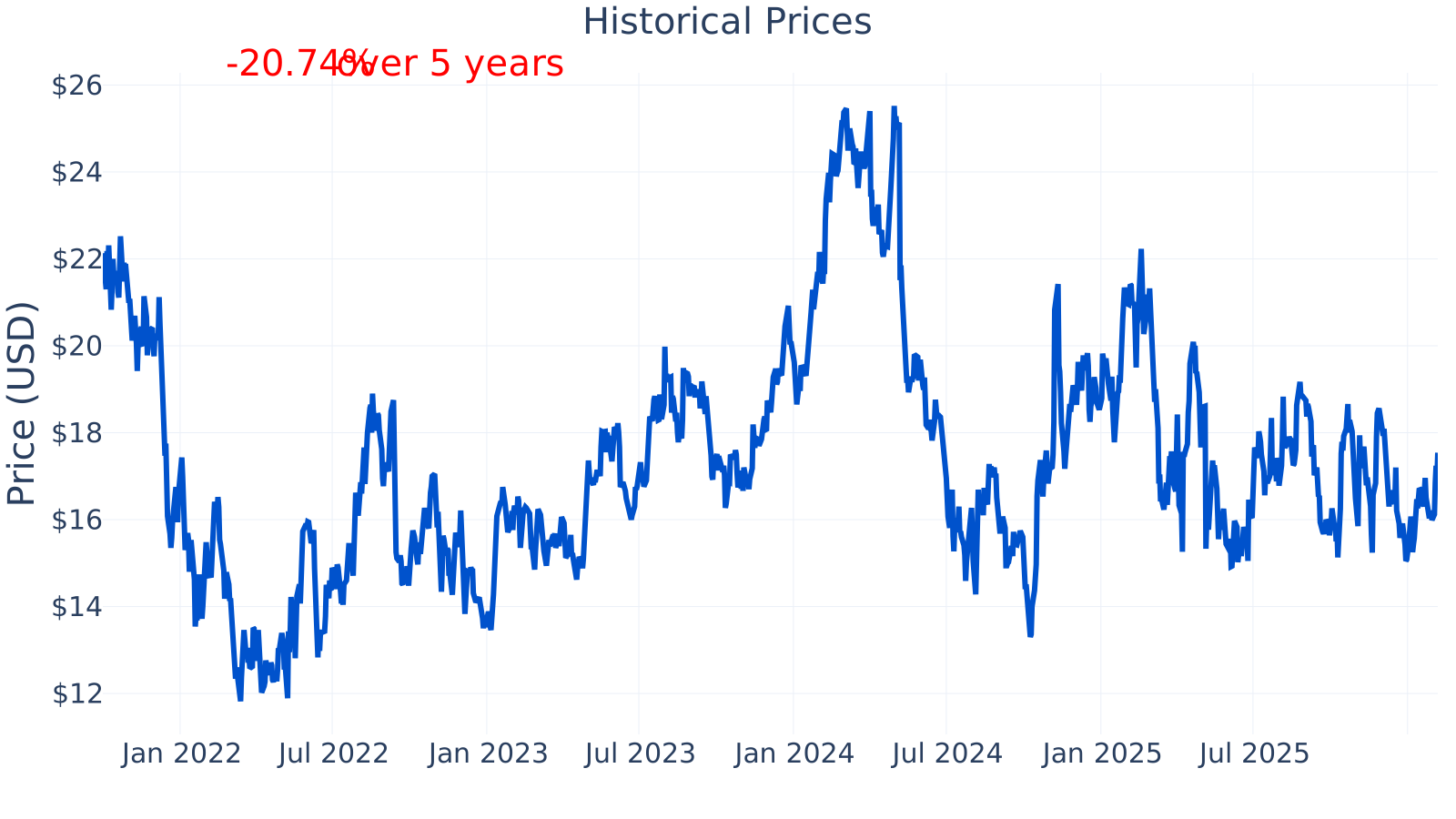
At the latest point shown, First Watch has a market capitalization of about $1.07B and a beta of ~0.89 (a measure of how much the stock has tended to move versus the broader market). The company’s profit margin is ~0.43%, which is below the restaurant industry median shown (~7.98%). On growth, its latest year-over-year revenue growth is ~25.6%, above the industry median (~6.9%). Leverage is elevated with debt-to-equity of ~162% versus the industry median shown (~69%). Free cash flow over the trailing twelve months is negative (about -$31.2M), which can happen when a company is investing heavily in new restaurant openings and related build-out costs. The current P/E ratio is ~219 versus an industry median around 29, reflecting relatively low earnings compared with the stock’s price.
Growth (Medium)
The U.S. restaurant industry is mature overall, but “daytime dining” brands can still grow by taking market share, expanding into underpenetrated regions, and increasing sales per restaurant through menu innovation and marketing. First Watch’s daytime-only model can be a strategic differentiator because it concentrates staffing, purchasing, and operations into breakfast-and-lunch hours rather than running a full-day schedule.
A core growth driver for restaurant chains is typically unit growth (opening new locations) combined with same-restaurant sales (existing restaurants generating more revenue). The revenue growth trend below shows that First Watch has continued to post positive year-over-year revenue expansion, with growth rates varying over time as comparisons get harder and conditions (traffic, pricing, costs) change.
In the most recent quarter shown, revenue growth is about 25.6%, which stands out versus the industry median provided (~6.9%). Sustaining that gap over long periods generally depends on continued successful openings, strong customer demand, and the ability to manage restaurant labor and food costs.
For long-term business compounding, cash generation matters because it funds expansion and reduces reliance on borrowing. The free cash flow trend below shows a move from positive levels earlier in the period to negative in the latest trailing period shown.
This shift can be consistent with an expansion phase (new restaurant build-outs require upfront cash), but it also means execution risk increases: if new restaurants ramp more slowly than expected, negative free cash flow can persist longer and pressure the balance sheet.
Risks (High)
This article is for informational purposes only and does not constitute financial advice. Some content is AI-generated. See Disclaimer


