Stock Analysis · Fidelity National Information Services Inc (FIS)
Overview
Fidelity National Information Services Inc. (FIS) provides technology and services that help financial institutions and businesses move money, process transactions, and run core banking operations. In plain terms, it sells the “behind-the-scenes” software and processing that makes card payments, bank accounts, and many everyday financial activities work reliably at scale. Its customers commonly include banks, credit unions, and large enterprises that need secure, regulated, always-on systems.
FIS describes its activities through operating segments that revolve around payments, banking platforms, and related technology-enabled services. Revenue is largely recurring and contract-based (for example, processing and platform fees), often tied to transaction volumes and long-term client relationships.
Main revenue streams are typically presented by operating segment in company filings (for example, Banking Solutions and Capital Market Solutions), but precise segment percentages are not provided here. In general terms, FIS revenue tends to come from:
- Processing and platform fees tied to transaction volumes (payments and banking activity)
- Software / platform subscriptions and recurring technology fees (core banking and related platforms)
- Professional services and implementation (installations, integrations, upgrades)
- Other technology-enabled services supporting financial operations
At a high level, recent years show a step-down in total revenue from 2021 to 2022, then stabilization and gradual improvement through 2024. Operating income improved over time, while net income has been more volatile (more on this in the “Risks” section).
The business mix shown above highlights that FIS operates with significant costs to deliver services and meaningful operating expenses. Revenue declined from 2021 to 2022 and then recovered modestly into 2024, while operating income increased from 2021 through 2024. Net income, however, swung sharply negative in 2022–2023 before turning positive in 2024, which suggests material one-time or non-operating impacts in those years (often items such as impairments, restructuring, or other special charges disclosed in filings).
Key Figures
| Metric | Value | Industry ⓘ |
|---|---|---|
| Date | Feb 23, 2026 | |
| Context | ||
| Sector | Technology | |
| Industry | Information Technology Services | |
| Market Cap ⓘ | $25.66B | |
| Beta ⓘ | 0.90 | |
| Fundamental | ||
| P/E Ratio ⓘ | 153.53 | 19.56 |
| Profit Margin ⓘ | 1.46% | 4.91% |
| Revenue Growth ⓘ | 5.70% | 5.70% |
| Debt to Equity ⓘ | 94.29% | 78.25% |
| PEG ⓘ | 0.54 | |
| Free Cash Flow ⓘ | $2.00B | |
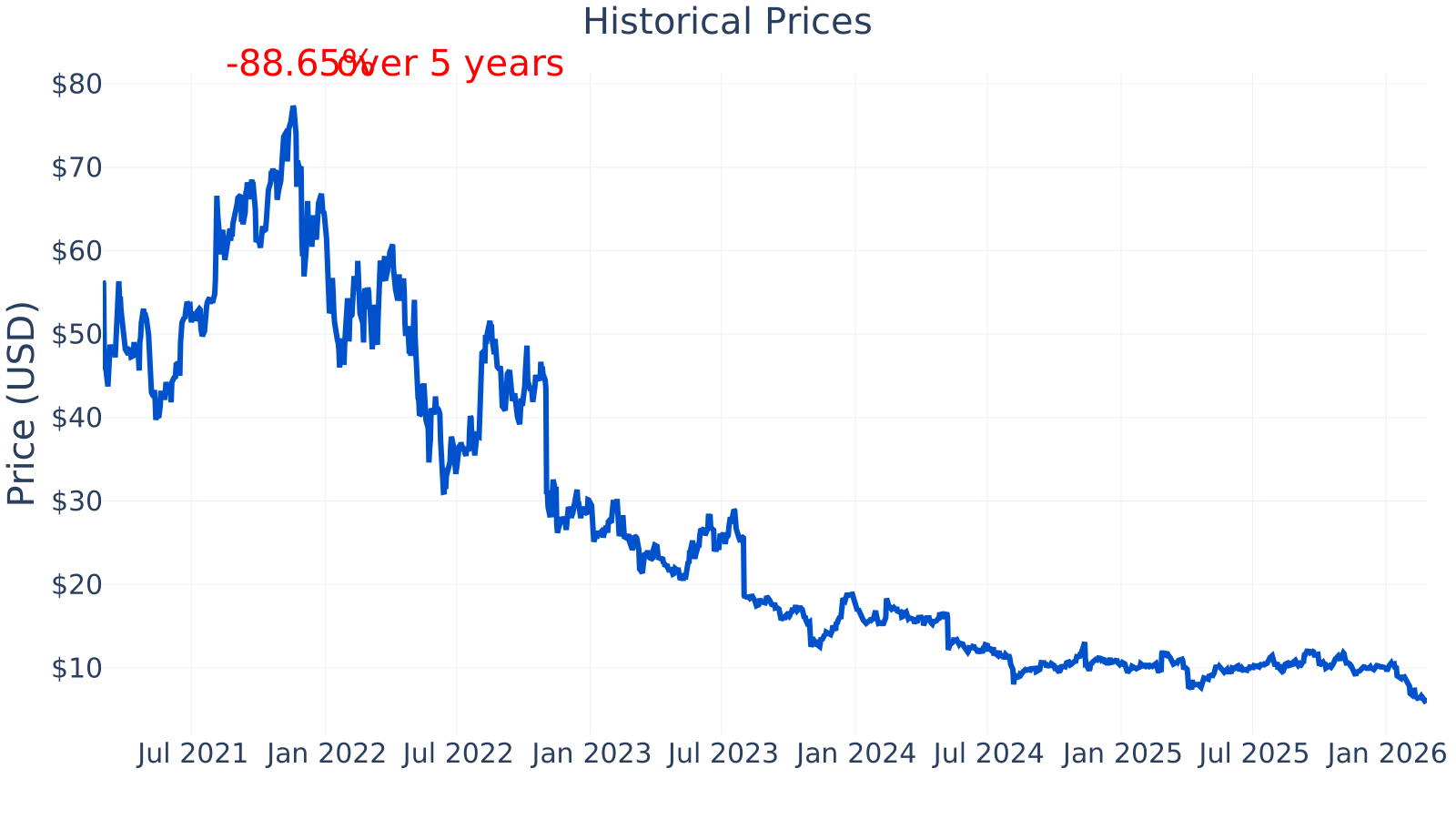
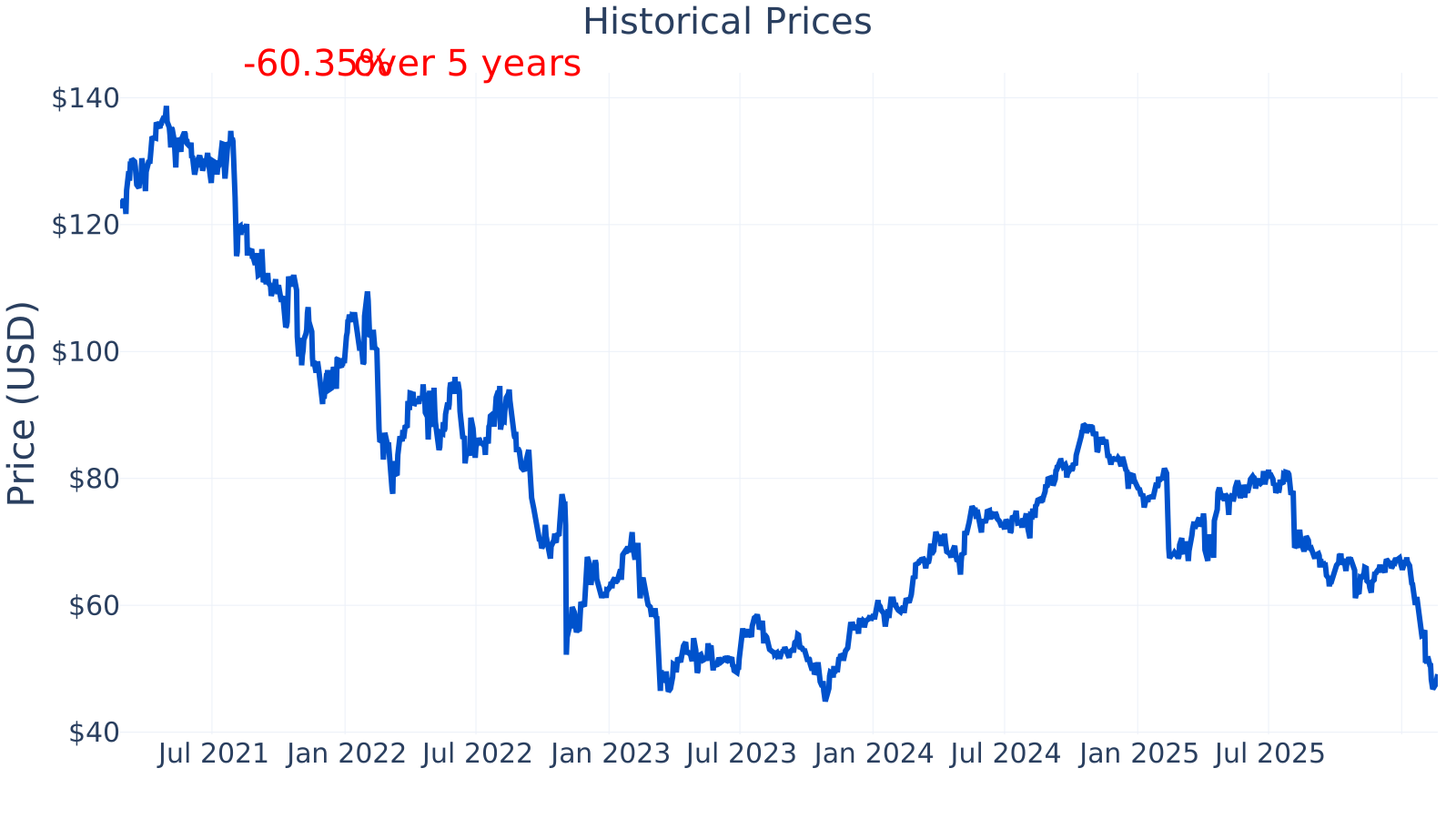
FIS has a market capitalization of about $25.7B and a beta of ~0.9, which indicates its share price has historically moved somewhat less than the overall market on average (though any single period can differ). The latest P/E ratio is ~153.5 versus an industry median near 19.6, which is a large gap and often happens when recent earnings are unusually low relative to the share price. Profit margin is about 1.46% versus an industry median around 4.91%. Year-over-year revenue growth is about 5.7%, in line with the industry median shown. Debt-to-equity is about 94%, above the industry median near 78%. Trailing twelve-month free cash flow is about $2.0B.
Growth (Medium)
FIS operates in financial technology and payment infrastructure—areas supported by long-term trends such as the shift from cash to digital payments, continued growth in electronic commerce, and banks modernizing legacy systems. These drivers generally favor vendors that can deliver high reliability, compliance, and security at scale. That said, parts of this market are mature, and growth rates can be influenced by transaction volumes, pricing pressure, client consolidation, and competition.
Revenue growth has been uneven across the period shown. After solid positive growth in 2021 and early 2022, the series shows large declines in late 2022 and into mid-2023, followed by a return to modest growth through 2024 and an uptick in the most recent point shown. For long-term analysis, this pattern suggests the company has gone through a major transition or reset and then returned to steadier expansion, rather than delivering a smooth, consistent growth profile.
Free cash flow has been positive across the years shown, with a very large spike around 2024 and then a return closer to prior levels by 2025. For a company like FIS, durable free cash flow is important because it can support debt service, reinvestment in products, and potential shareholder returns. The spike-and-normalization pattern suggests there may have been unusual working-capital movements or one-time items during that period; the underlying sustainability is best assessed by reviewing management’s cash flow discussion in filings (for example, what drove operating cash flow and capital spending in that year).
Potential catalysts for future results typically include winning and expanding multi-year processing contracts, improving product competitiveness in banking platforms, and operational execution (for example, cost discipline and simplification). The company’s filings and investor materials are the best place to track how it prioritizes platform investment, client retention, and margin improvement over time.
Risks (High)
This article is for informational purposes only and does not constitute financial advice. Some content is AI-generated. See Disclaimer