Stock Analysis · Extreme Networks Inc (EXTR)
Overview
Extreme Networks, Inc. is a networking company that sells the equipment and software used to connect computers, phones, Wi‑Fi access points, and other devices inside organizations. In practical terms, it helps enterprises, schools, hospitals, retailers, and public venues build and manage their networks, with tools designed to improve reliability, security, and visibility (for example, understanding what is connected and how it is performing).
The company’s business is generally centered on two broad revenue streams that work together: selling networking hardware (such as Ethernet switching and wireless products) and selling software/subscriptions and services that help customers manage, secure, and support those networks over time. In filings, companies in this segment typically emphasize a mix of product revenue and recurring revenue (software subscriptions, cloud management, support, and professional services), because recurring components can help smooth results across economic cycles.
Main sources of revenue are commonly described in filings along these lines:
- Products (networking hardware such as switching and wireless)
- Subscriptions and support (software subscriptions, maintenance/support contracts)
- Professional services (implementation and other services)
The simplified profit “bridge” below shows how revenue translates into costs and earnings over time, and highlights that operating expenses (including research and development and sales/administration) are a meaningful part of the cost structure.
Across the periods shown, revenue rose from about $1.01B (FY ended June 2021) to about $1.31B (FY ended June 2023), then moved down to about $1.12B (FY ended June 2024) and about $1.14B (FY ended June 2025). Profitability has also been uneven, with a profitable year in FY 2023 and losses in FY 2024 and near break-even results in FY 2025 on a net income basis.
Key Figures
| Metric | Value | Industry ⓘ |
|---|---|---|
| Date | Feb 08, 2026 | |
| Context | ||
| Sector | Technology | |
| Industry | Communication Equipment | |
| Market Cap ⓘ | $2.05B | |
| Beta ⓘ | 1.67 | |
| Fundamental | ||
| P/E Ratio ⓘ | 254.00 | 39.43 |
| Profit Margin ⓘ | 0.75% | 4.65% |
| Revenue Growth ⓘ | 13.80% | 14.10% |
| Debt to Equity ⓘ | 221.16% | 59.08% |
| PEG ⓘ | 0.77 | |
| Free Cash Flow ⓘ | $135.66M | |
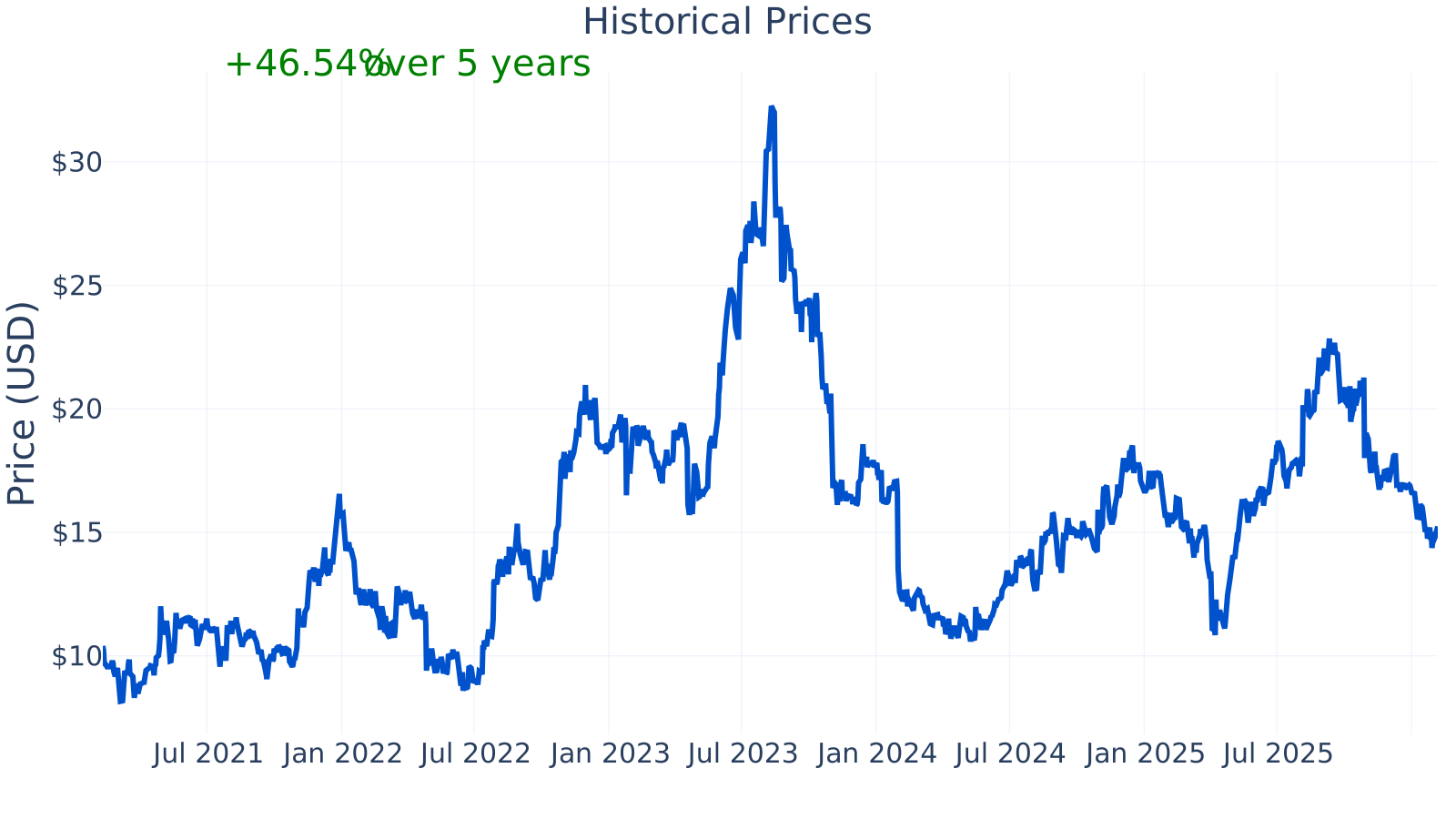
Extreme Networks’ market capitalization is about $2.05B, and the stock’s beta (1.666) suggests it has tended to move more than the broader market. The latest P/E ratio is 254, far above the industry median (~39.4), which often happens when earnings are temporarily depressed (a small denominator can make the ratio look very large). Latest profit margin is ~0.75% versus an industry median around 4.65%, while year-over-year revenue growth is ~13.8%, roughly in line with the industry median (~14.1%). The company’s debt-to-equity is ~221% versus an industry median near 59%, indicating higher financial leverage than many peers. Trailing twelve-month free cash flow is about $135.7M, which is an important support for business flexibility even when accounting earnings fluctuate.
Growth (Medium)
Extreme Networks operates in enterprise networking, a segment supported by long-term needs: ongoing Wi‑Fi upgrades, higher bandwidth demand, greater security requirements, and modernization of campus networks (networks inside organizations and across multiple sites). This is not a “one-time” market—equipment refresh cycles and software/subscription adoption can provide repeat demand, although spending can be delayed during cautious IT budgets.
The company’s strategy, as typically described in public filings and investor materials, is to compete by combining networking hardware with software management and support services. For long-term growth, the most important element is usually the ability to increase recurring components (subscriptions/support) and expand within existing customers over time, rather than relying only on new hardware rollouts.
The revenue growth pattern has been volatile. After strong growth in several quarters through 2023, the company experienced multiple quarters of negative year-over-year revenue change across 2024, followed by a rebound in 2025 (ending the period shown at about 13.8% year-over-year). For long-term context, this suggests results may depend heavily on the timing of customer purchases and broader IT spending cycles.
Free cash flow has also varied. It rose to about $219.7M (TTM ending March 2023), then declined to about $101.9M (TTM ending March 2024) and about $63.0M (TTM ending March 2025). That drop can matter because cash flow funds debt service, product development, and flexibility during weaker demand periods. Still, the latest snapshot in the key figures shows free cash flow at about $135.7M on a trailing basis, indicating improvement versus the March 2025 point shown in the chart.
Risks (High)
This article is for informational purposes only and does not constitute financial advice. Some content is AI-generated. See Disclaimer