Stock Analysis · Evertec Inc (EVTC)
Overview
Evertec, Inc. (EVTC) is a payment and financial technology company focused primarily on Latin America and the Caribbean. In simple terms, it helps banks, merchants, and governments move money electronically. That includes processing card transactions at stores and online, operating networks and systems that connect financial institutions, and providing software and services that support payment acceptance and digital banking-type activities.
Its business model is built around recurring transaction volumes (more card payments and electronic transfers typically mean more revenue) and longer-term service relationships with financial institutions and merchants. Because payments are a “behind-the-scenes” utility for commerce, the company’s results tend to be influenced by consumer spending levels, tourism flows in some markets, and the pace at which cash payments shift to electronic methods.
Main revenue sources are typically organized by operating segments (exact mix can shift year to year based on volumes and acquisitions). In the company’s reporting, revenue generally comes from:
- Merchant acquiring / payment processing (processing card and electronic payments for merchants)
- Payment services for financial institutions (issuer processing, network and transaction services for banks and credit unions)
- Business solutions (technology platforms, services, and other value-added solutions supporting commerce and financial services)
Across 2021–2024, total revenue increased from about $590M to about $845M. Over the same period, operating expenses also rose, and interest expense increased notably by 2024, which is important context for understanding profitability and leverage later in the article.
Key Figures
| Metric | Value | Industry ⓘ |
|---|---|---|
| Date | Feb 08, 2026 | |
| Context | ||
| Sector | Technology | |
| Industry | Software - Infrastructure | |
| Market Cap ⓘ | $1.73B | |
| Beta ⓘ | 0.84 | |
| Fundamental | ||
| P/E Ratio ⓘ | 11.96 | 25.67 |
| Profit Margin ⓘ | 16.17% | 6.91% |
| Revenue Growth ⓘ | 7.90% | 15.20% |
| Debt to Equity ⓘ | 164.43% | 19.82% |
| PEG ⓘ | 2.14 | |
| Free Cash Flow ⓘ | $145.64M | |
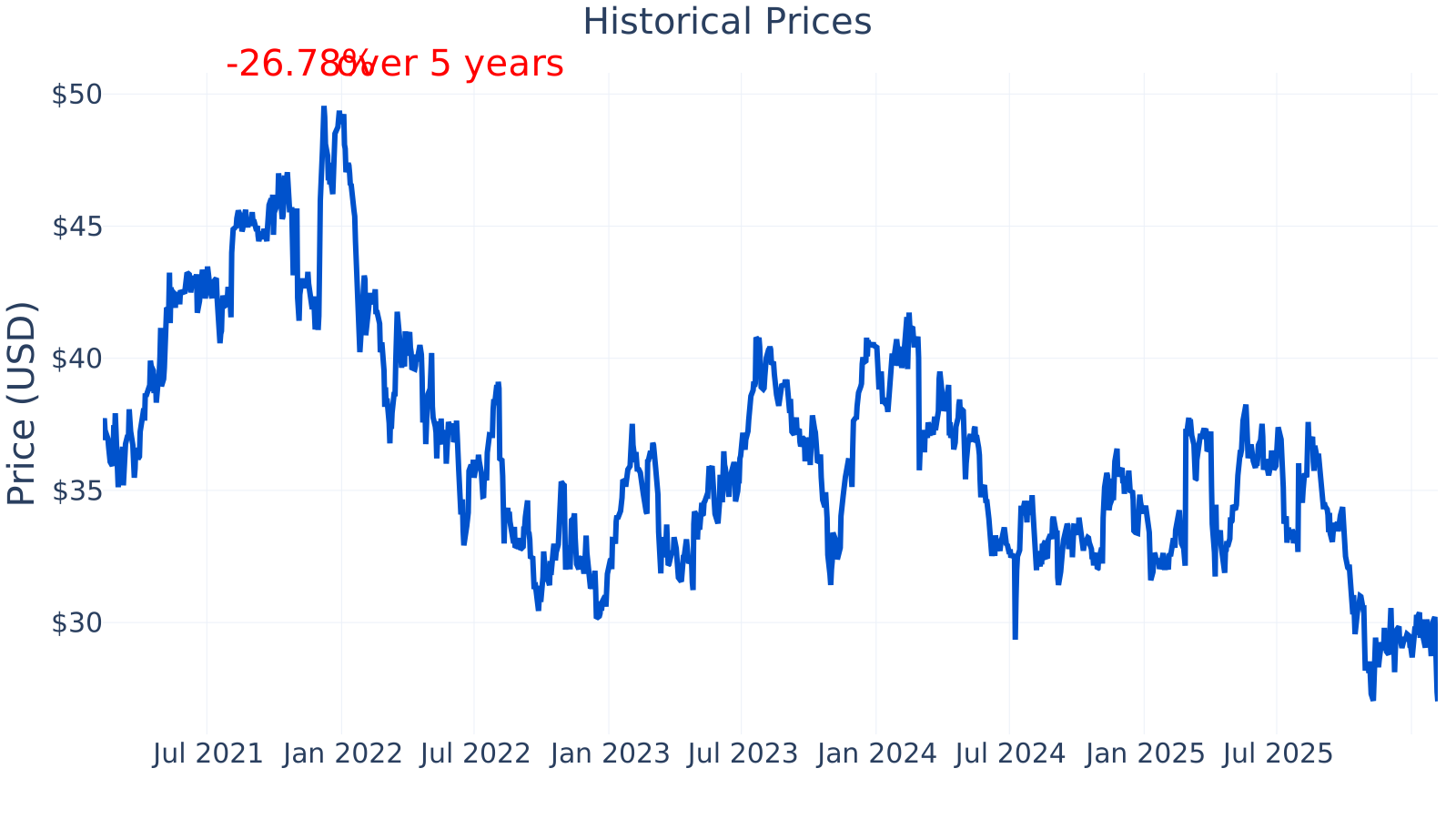
Evertec’s market capitalization is about $1.73B and its beta is about 0.85, which describes how the stock has tended to move versus the broader market historically (below 1.0 suggests somewhat lower volatility than the market on average, though this can change).
Profit margin is about 16.17%, which is higher than the industry median shown (about 6.91%). Year-over-year revenue growth is about 7.9%, below the industry median shown (about 15.2%). Debt-to-equity is about 164%, which is far above the industry median shown (about 19.8%). Free cash flow over the trailing twelve months is about $145.6M.
Growth (medium)
Evertec operates in electronic payments and related financial infrastructure—an area supported by long-term trends such as increasing card usage, growth in e-commerce, and broader digitization of financial services. These trends can support steady volume growth over time, but actual results can vary based on economic conditions in the regions where Evertec operates and on competitive pricing dynamics in payment processing.
A key question for long-term growth is whether Evertec can both (1) keep expanding payment volumes and (2) maintain pricing and margins while continuing to invest in its platforms. Another factor is execution: integrating any acquisitions, launching new solutions, and deepening relationships with banks and merchants can all matter as much as the broader industry tailwinds.
Revenue growth has been positive in most quarters shown, with especially strong year-over-year growth through much of 2024 before moderating to ~7.9% in the most recent point shown. This pattern can indicate that comparisons became tougher after a stronger period, and it highlights that growth has not been a straight line.
Free cash flow (cash generated after operating needs and capital spending) has fluctuated in recent years: roughly $146.7M (2021), $211.6M (2022), $146.8M (2023), $116.9M (2024), and $168.2M (2025 point shown). For a payments and processing business, sustained free cash flow can be important because it supports reinvestment, debt service, and flexibility during weaker economic periods.
Risks (medium-high)
This article is for informational purposes only and does not constitute financial advice. Some content is AI-generated. See Disclaimer