Stock Analysis · EverCommerce Inc (EVCM)
Overview
EverCommerce Inc is a software company that provides tools designed to help service-based small and mid-sized businesses run day-to-day operations. Its products are typically used for activities such as getting new customers (marketing and online listings), scheduling appointments, managing customer relationships, sending invoices, and collecting payments. The business model is largely recurring: customers pay ongoing subscription fees and, in many cases, additional usage-based fees tied to payment processing or messaging.
EverCommerce reports revenue in two broad streams that are common for this type of software business:
- Subscription and transaction fees (typically recurring software subscriptions plus usage/transaction-driven fees)
- Professional services and other (implementation, support services, and other smaller items)
From an “earnings engine” perspective, the company’s results show a meaningful spread between revenue and the direct cost to deliver the service (gross profit), while operating expenses (notably sales/marketing and product development) have historically been the main drivers of overall profitability.
Across the years shown, total revenue rises from about $490 million (2021) to about $699 million (2024). Operating income moves much closer to break-even (from a loss in 2021–2022 to roughly break-even in 2023–2024), while net income remains negative in part because interest expense stays significant (tens of millions annually).
Key Figures
| Metric | Value | Industry ⓘ |
|---|---|---|
| Date | Feb 08, 2026 | |
| Context | ||
| Sector | Technology | |
| Industry | Software - Infrastructure | |
| Market Cap ⓘ | $1.95B | |
| Beta ⓘ | 1.04 | |
| Fundamental | ||
| P/E Ratio ⓘ | N/A | 25.67 |
| Profit Margin ⓘ | -0.09% | 6.91% |
| Revenue Growth ⓘ | 5.30% | 15.20% |
| Debt to Equity ⓘ | 74.67% | 19.82% |
| PEG ⓘ | 0.46 | |
| Free Cash Flow ⓘ | $119.37M | |
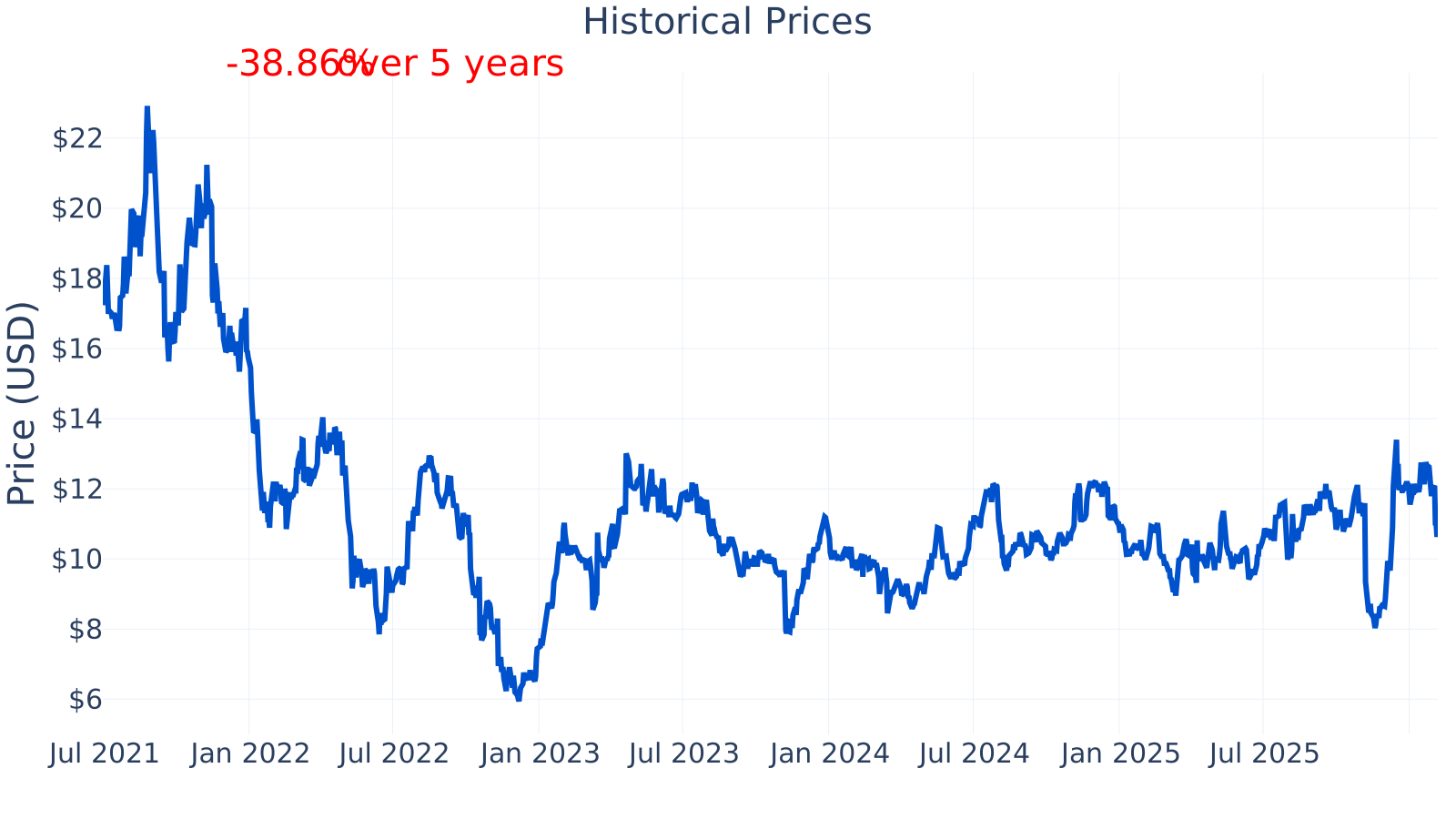
EverCommerce’s market capitalization is about $2.0 billion and its beta is about 1.04 (historically close to broad-market volatility). Profit margin is roughly -0.09% versus an industry median around 6.9%, meaning the company is near break-even but still below typical profitability for its peer group. Revenue growth is about 5.3% year over year versus an industry median around 15.2%, indicating slower recent growth than many software infrastructure peers. Debt-to-equity is about 74.7% versus an industry median near 19.8%, showing higher leverage than the typical company in its industry group. Free cash flow over the trailing twelve months is about $119 million, which highlights that cash generation can be stronger than net income suggests.
Growth (medium)
EverCommerce operates within the broader shift of small and mid-sized service businesses moving from manual processes (phone calls, spreadsheets, paper invoicing) to software-based workflows. Over time, this trend can support steady demand for scheduling, customer management, and digital payments. The overall category is mature in many sub-areas, but adoption can still deepen as businesses standardize their tools and try to reduce administrative work.
Strategically, EverCommerce’s approach generally centers on providing “vertical” solutions (software tailored to specific service industries) and increasing revenue per customer by offering more modules (for example: marketing tools plus scheduling plus payments). This can be durable when products become embedded in daily workflows, because switching can be disruptive for a small business.
The year-over-year revenue growth trend shown cools materially from very high growth in 2021–2022 to low single digits in more recent quarters, including at least one notable decline. This pattern often reflects a mix of factors such as normalization after acquisition-driven expansion, a tougher environment for small businesses, and/or a strategic shift toward profitability rather than maximizing growth rate.
Free cash flow improves over time in the periods shown (from roughly $35 million in 2021 to over $110 million by 2025). For long-term business durability, this matters because cash flow is what ultimately funds debt repayment, reinvestment in the product, and potential acquisitions without relying as much on new financing.
Potential catalysts for future growth tend to be execution-based rather than dependent on a single event: improving product bundling and cross-selling, increasing payment-related attachment (where applicable), and continued cost discipline that converts more revenue into cash. Any acceleration would also depend on demand conditions among small and mid-sized service businesses.
Risks (high)
This article is for informational purposes only and does not constitute financial advice. Some content is AI-generated. See Disclaimer