Stock Analysis · Etsy Inc (ETSY)
Overview
Etsy, Inc. operates online marketplaces that connect independent sellers with buyers looking for handmade items, vintage goods, and craft supplies. The company’s best-known marketplace is Etsy.com, and it also owns Reverb (music gear), Depop (fashion resale), and Elo7 (a marketplace focused on Brazil). Across these platforms, Etsy focuses on helping small businesses reach customers while improving search, discovery, marketing tools, payments, and trust & safety.
Etsy’s revenue is mainly tied to activity on its marketplaces: when items sell and when sellers choose paid services to promote or simplify selling. In its filings, Etsy groups revenue into two main lines:
- Marketplace revenue (largest): primarily transaction fees and payments-related fees that generally scale with the value of goods sold.
- Services revenue (smaller): seller services such as advertising and other optional tools that support selling.
At a high level, the recent income flow shows revenue rising from about $2.33B (2021) to $2.81B (2024), with gross profit also increasing (about $1.67B to $2.03B). Operating income was negative in 2022 but returned to positive levels in 2023–2024, and net income was positive again in 2023–2024.
Key Figures
| Metric | Value | Industry ⓘ |
|---|---|---|
| Date | Feb 08, 2026 | |
| Context | ||
| Sector | Consumer Cyclical | |
| Industry | Internet Retail | |
| Market Cap ⓘ | $5.73B | |
| Beta ⓘ | 1.76 | |
| Fundamental | ||
| P/E Ratio ⓘ | 39.07 | 34.01 |
| Profit Margin ⓘ | 6.38% | 6.32% |
| Revenue Growth ⓘ | 2.40% | 11.35% |
| Debt to Equity ⓘ | -276.44% | 34.80% |
| PEG ⓘ | 2.52 | |
| Free Cash Flow ⓘ | $656.82M | |
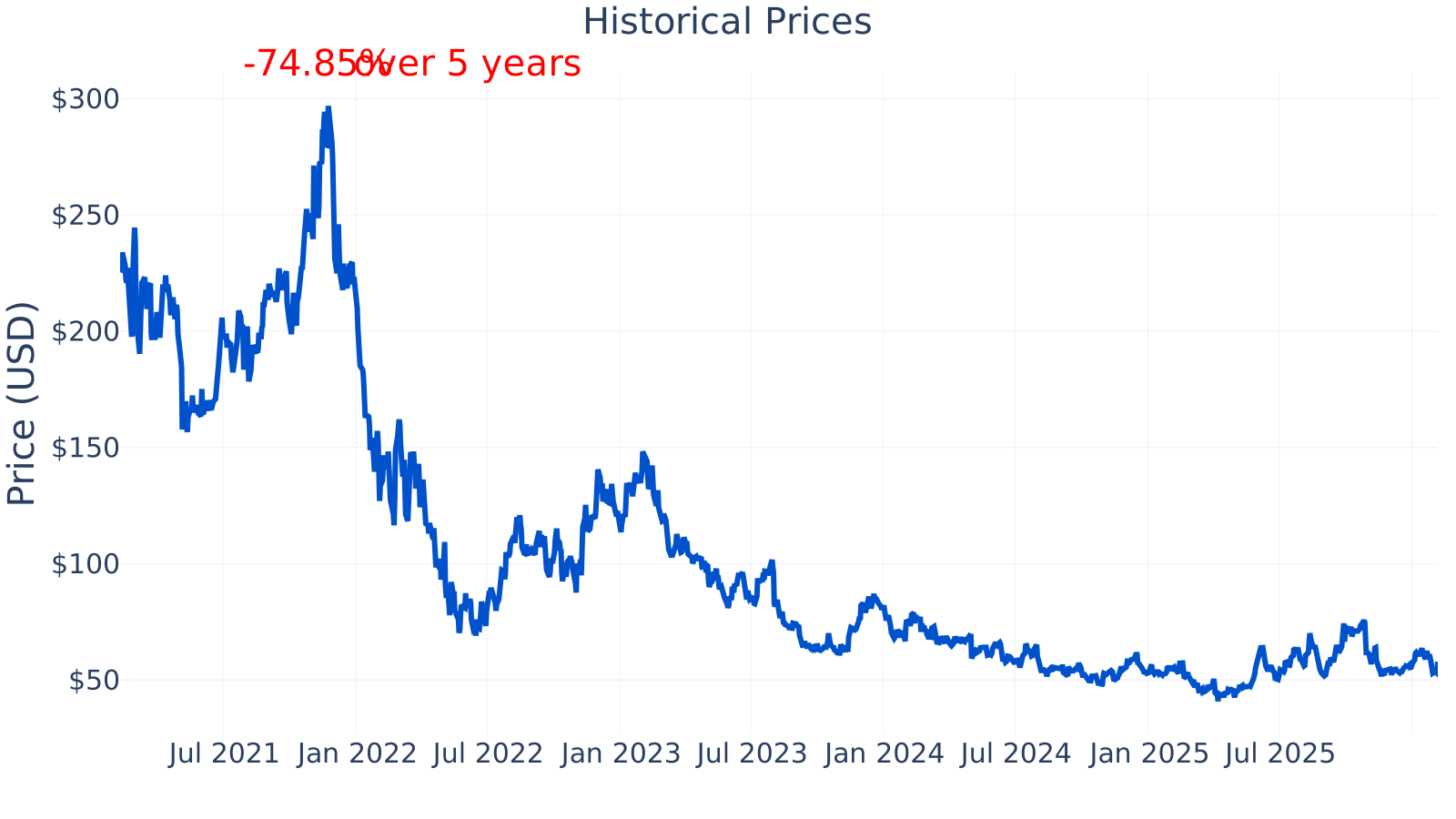
Etsy’s market capitalization is about $5.7B, and the stock’s beta (~1.76) indicates it has historically been more volatile than the overall market. Profit margin is about 6.38%, roughly in line with the industry median shown (~6.32%). Year-over-year revenue growth is about 2.4%, which is below the industry median shown (~11.35%). Trailing free cash flow is about $657M. The P/E ratio is about 39.1 versus an industry median of about 34.0, and the PEG ratio shown is about 2.52 (a metric that relates valuation to expected growth).
Growth (Medium)
Etsy operates in e-commerce, where long-term growth has been supported by consumers shifting more shopping online. Within that broad trend, Etsy is positioned around differentiated categories (handmade, vintage, creative goods) rather than competing purely on speed and scale. The company also has multiple marketplaces, which can diversify growth sources beyond the core Etsy site, although performance can vary by brand and region.
Recent revenue growth has been modest compared with the industry median shown in the table, which suggests Etsy’s near-term expansion is not keeping pace with parts of the broader internet retail group. The year-over-year revenue growth trend also shows a meaningful slowdown from the unusually high growth seen earlier in the period, with more recent quarters generally in the low single digits.
One supportive element is cash generation. Free cash flow over the trailing twelve months is substantial, and the multi-year pattern shown remains positive. This matters because internally generated cash can be used for operating flexibility—such as product improvements, marketing efficiency work, or balance-sheet actions—without relying as much on external financing.
Potential catalysts (in the neutral, factual sense) typically include improving marketplace product features (search and discovery), higher adoption of seller services (such as advertising tools), stronger repeat buying behavior, and successful execution at the company’s other marketplaces. The key question for long-term growth is whether Etsy can increase buyer frequency and seller success while maintaining a distinct shopping experience that is difficult to replicate at scale.
Risks (High)
This article is for informational purposes only and does not constitute financial advice. Some content is AI-generated. See Disclaimer