Stock Analysis · Enphase Energy Inc (ENPH)
Overview
Enphase Energy, Inc. designs and sells home energy technology that helps convert and manage electricity produced by solar panels. Its best-known products are microinverters (small devices attached to individual solar panels that convert DC electricity into the AC electricity used in homes). Over time, the company has expanded into a broader “home energy” offering that can include solar-related power electronics, battery storage, monitoring software, and related accessories that support residential solar installations.
Enphase’s revenue is primarily generated from product sales to solar distributors, installers, and equipment partners. In general terms, the largest share comes from its microinverter and related solar electronics business, with additional revenue coming from home energy storage products and other supporting items (such as communications/monitoring components and services). Exact percentages by product category can vary by period and are typically detailed in the company’s annual report and quarterly filings.
Main revenue sources (typical grouping used by the company):
- Microinverters and related solar electronics (historically the largest contributor)
- Battery storage and energy management offerings (smaller than microinverters, but strategically important)
- Other / services / accessories (generally the smallest portion)
From an income-statement perspective, Enphase’s results have shown meaningful swings over recent years. For example, total revenue rose from about $1.38B (2021) to $2.33B (2022), stayed near $2.29B (2023), then declined to about $1.33B (2024) before increasing to about $1.47B (2025). Net income also varied materially over the same period, reflecting both market conditions and operating leverage.
The multi-year income flow highlights how revenue expanded significantly from 2021 to 2022, remained elevated in 2023, then dropped sharply in 2024 before a partial recovery in 2025. Over the same window, research and development and selling/general/administrative spending stayed substantial, which suggests continued investment in product development and go-to-market capabilities even as revenue fluctuated.
Key Figures
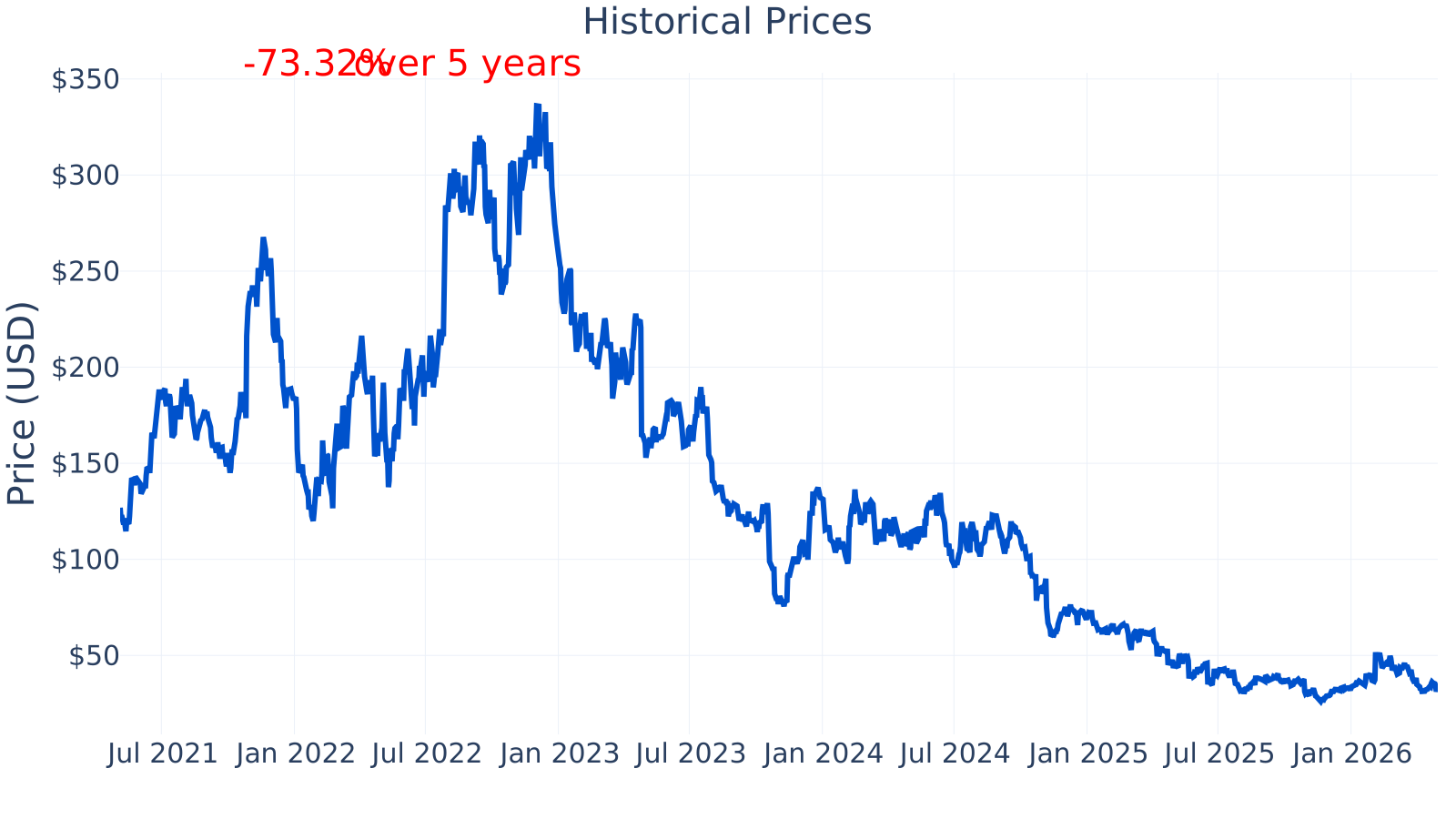
The share price history reflects a large rise into 2022, followed by a multi-year decline into late 2025, and then a rebound into early 2026. This kind of pattern is consistent with a business exposed to cyclical demand and changing financial conditions in the residential solar market.
| Metric | Value | Industry ⓘ |
|---|---|---|
| Date | May 04, 2026 | |
| Context | ||
| Sector | Technology | |
| Industry | Solar | |
| Market Cap ⓘ | $4.46B | |
| Beta ⓘ | 1.38 | |
| Fundamental | ||
| P/E Ratio ⓘ | 33.51 | 30.59 |
| Profit Margin ⓘ | 9.64% | 7.06% |
| Revenue Growth ⓘ | -20.60% | 23.60% |
| Debt to Equity ⓘ | 52.72% | 99.05% |
| PEG ⓘ | 0.90 | |
| Free Cash Flow ⓘ | $145.07M | |
At the latest point shown, Enphase has a market capitalization of about $4.46B and a beta of ~1.38, indicating the stock has historically moved more than the broader market. The P/E ratio is ~33.5 versus an industry median of ~30.6. Profitability is positive, with a profit margin of ~9.6% compared with an industry median of ~7.1%. However, recent growth is negative: revenue growth year-over-year is about -20.6%, while the industry median shown is positive. Leverage appears moderate versus peers: debt-to-equity is ~52.7% compared with an industry median near ~99.1%. Trailing twelve-month free cash flow is positive at about $145.1M.
Growth (Medium)
Enphase operates in the residential solar and home energy market, which is tied to long-term electrification trends: households adopting solar power, adding batteries for backup and self-consumption, and using software-enabled systems to monitor and optimize energy use. Over the long run, these themes can support demand for power electronics and storage solutions, especially in regions with high electricity prices or reliability concerns.
That said, the path is not smooth. Residential solar demand can be sensitive to interest rates (because many systems are financed), local regulations and utility policies (which affect solar economics), and installer/channel inventory cycles. This helps explain why a company can show strong growth in some periods and contraction in others.
The year-over-year revenue growth trend shows a shift from very high expansion rates earlier in the period to a pronounced contraction across multiple quarters, with some interim stabilization and then a return to negative growth at the latest point shown (about -20.6%). This pattern suggests the business has been moving through a downcycle rather than delivering steady, linear growth.
Free cash flow remains positive but has declined from earlier peaks. The latest trailing twelve-month free cash flow is about $145.1M, down from substantially higher levels shown in prior years. For long-term context, sustained positive free cash flow can provide flexibility for research and development, operations, and balance sheet management, but the downtrend indicates that recent operating conditions have been less favorable.
Potential catalysts for future growth (in a neutral, descriptive sense) generally relate to: (1) recovery in residential solar installation volumes, (2) greater adoption of home batteries and energy management systems, and (3) ongoing product improvements that can strengthen installer preference and customer outcomes. The timing and magnitude of these factors depend heavily on market conditions and policy environments.
Risks (High)
Enphase’s main risks are tied to the cyclicality and policy sensitivity of residential solar. Changes in net metering rules, incentive programs, permitting and interconnection constraints, and consumer financing conditions can all affect demand. In addition, the company depends on a global supply chain and contract manufacturing relationships, which can introduce risks related to component availability, costs, quality control, and geopolitical or trade-related disruptions.
Competition is another key risk. Enphase is well known for microinverters in residential solar, but it competes with alternative inverter approaches (such as string inverters) and with other companies offering integrated solar-plus-storage systems. Competitors can pressure pricing, influence installer preferences, and accelerate innovation cycles. Enphase’s competitive positioning often centers on product performance, reliability, software/monitoring features, and an ecosystem that installers know how to deploy; however, maintaining that position typically requires continued investment and execution.
In broad terms, notable competitors and alternatives include companies focused on:
- String inverter and power electronics solutions (a major alternative architecture to microinverters)
- Solar + battery system providers competing for the same home energy budget
- Emerging inverter and storage brands that may compete on price or distribution reach
Leverage has improved markedly over time in the series shown. The latest debt-to-equity is ~52.7%, which is lower than the industry median shown (~75.9%) and far below the company’s own higher levels earlier in the period. This reduces one category of financial risk compared with periods when leverage was higher, though it does not remove the underlying demand and competitive risks in the market.
Profit margins have also been volatile. Earlier periods show significantly higher margins (including levels above 15–20% at times), followed by compression during the downturn, with the latest profit margin around 9.6%. This is still above the industry median shown (~8.35%), but the overall pattern indicates profitability can move meaningfully with volume, pricing, and cost structure.
Valuation
Valuation is commonly discussed using earnings-based multiples such as the price-to-earnings (P/E) ratio, but it is important to interpret it alongside business volatility. A higher P/E can reflect expectations of future growth and durable profitability, while a lower P/E can reflect uncertainty, cyclical earnings, or lower expected growth. For Enphase, the latest P/E shown is about 33.5, somewhat above the industry median shown (~30.6).
The historical P/E trend shows large swings over time, including periods where the multiple was far higher than today. More recently, the multiple has tended to be closer to the broader peer range, though it still moves as earnings and expectations change. Given the recent negative revenue growth and fluctuating margins, the current multiple can be read as reflecting a mix of (1) ongoing profitability and (2) uncertainty about how quickly end-market demand normalizes and how durable margins will be through a full cycle.
Conclusion
Enphase Energy is a residential solar and home energy technology company best known for microinverters, with an expanding product set that includes storage and energy management. The company has demonstrated it can be profitable and generate free cash flow, and its balance sheet leverage appears lower than earlier periods in the time series shown.
At the same time, recent results highlight meaningful cyclicality: revenue growth is currently negative, profit margins have compressed compared with earlier highs, and the stock price history reflects sizable swings. The long-run industry direction (electrification, distributed generation, and storage adoption) can support demand, but the near- to medium-term path can be heavily influenced by financing conditions, regulation, competitive dynamics, and channel inventory cycles.
Sources:
- SEC EDGAR — Enphase Energy, Inc. filings (Form 10-K, Form 10-Q)
- Enphase Energy, Inc. Investor Relations — Quarterly and annual materials (press releases and shareholder information)
- Wikipedia — “Enphase Energy” (general background information)
This article is for informational purposes only and does not constitute financial advice. Some content is AI-generated. See Disclaimer