Stock Analysis · Enphase Energy Inc (ENPH)
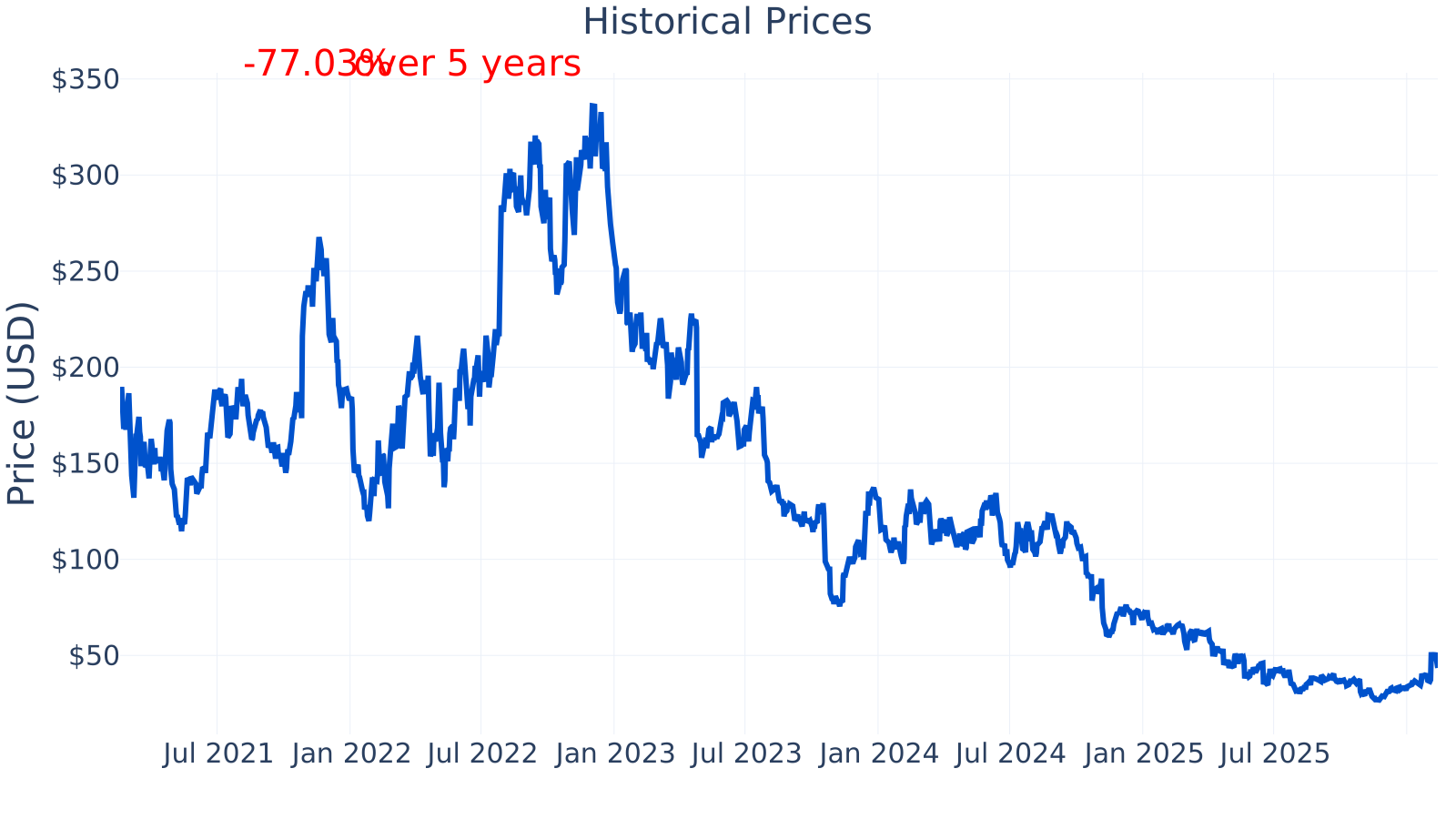
Overview
Enphase Energy, Inc. designs and sells equipment used in solar energy systems, mostly for homes. Its best-known products are “microinverters,” small devices installed under (or near) each solar panel to convert electricity into a form usable in a home and on the grid. The company also sells battery storage systems and related software/services that help monitor and manage home energy production and usage.
Enphase’s business model is centered on selling hardware (microinverters and batteries) largely through solar installers and distributors, with additional value coming from software features and services connected to its systems. Because Enphase is focused on “behind-the-meter” energy (home energy production, storage, and control), demand is closely tied to residential solar installation activity and consumer financing conditions.
In its filings, Enphase generally describes revenue at a high level rather than breaking it into detailed public percentages by product line in a way that is consistently comparable over time. In practical terms, the company’s main revenue streams are:
- Microinverter and related solar electronics sales (historically the largest portion)
- Battery storage systems and related accessories (smaller than microinverters, but strategic for “solar + storage” adoption)
- Software, monitoring, and other services (typically a smaller portion, but supportive of customer retention and system management)
The company’s revenue and profit profile has shown large swings over recent years: revenue rose strongly into 2022–2023 and then dropped sharply in 2024, with profits compressing at the same time. This pattern is consistent with a business exposed to changes in residential solar demand, inventory cycles in the distribution channel, and pricing/competition dynamics.
Key Figures
| Metric | Value | Industry ⓘ |
|---|---|---|
| Date | Feb 16, 2026 | |
| Context | ||
| Sector | Technology | |
| Industry | Solar | |
| Market Cap ⓘ | $5.69B | |
| Beta ⓘ | 1.37 | |
| Fundamental | ||
| P/E Ratio ⓘ | 33.71 | |
| Profit Margin ⓘ | 11.69% | 0.27% |
| Revenue Growth ⓘ | -10.30% | 33.90% |
| Debt to Equity ⓘ | 110.80% | 139.55% |
| PEG ⓘ | 1.00 | |
| Free Cash Flow ⓘ | $95.90M | |
Enphase has a market capitalization of about $5.7B and a beta of ~1.37, which indicates the stock has tended to move more than the overall market. The profit margin is ~11.69%, well above the industry median shown (~0.27%), while year-over-year revenue growth is about -10.29%, below the industry median shown (~33.9%). Debt relative to equity is about 111%, below the industry median shown (~140%), and trailing twelve-month free cash flow is about $95.9M. The P/E ratio is about 33.7, and the PEG ratio is about 1.00 (a metric that relates valuation to expected earnings growth, but is sensitive to forecasting assumptions and earnings volatility).
Growth (Medium)
Enphase operates within the broader solar and home electrification ecosystem—an industry supported by long-term trends such as declining solar costs over time, rising consumer interest in energy independence, and the gradual electrification of heating and transportation. However, the company’s largest exposure has historically been residential solar, which can be more cyclical than utility-scale solar because it depends heavily on household economics, installer activity, and loan/lease affordability.
The revenue growth pattern shows why Enphase is often viewed as a “cycle-sensitive” growth company. After very strong growth rates in 2021–2022 and parts of 2023, revenue growth turned negative through several quarters and only partially rebounded before turning negative again (about -10% most recently). For long-term business momentum, a key question is whether residential solar demand normalizes while Enphase maintains pricing power and share, and whether storage attach rates (selling batteries alongside solar) continue to rise.
Strategically, Enphase’s product direction—combining solar generation, batteries, and software into a more integrated home energy system—fits the idea that households increasingly want not just cheaper electricity, but also backup power and smarter energy control. Potential catalysts (described in general terms in company materials and typical industry dynamics) include:
- Recovery in residential solar installations after slower periods driven by financing conditions
- Higher adoption of home batteries (for backup power and self-consumption)
- Expansion in international markets and deeper penetration with new products and installers
Free cash flow has been positive across the periods shown, though it has fluctuated meaningfully—from higher levels around 2023 to lower levels more recently. For long-term durability, consistency in cash generation matters because it can support continued research and development, manufacturing and supply-chain investments, and balance sheet flexibility during downturns.
Risks (High)
This article is for informational purposes only and does not constitute financial advice. Some content is AI-generated. See Disclaimer


