Stock Analysis · D-Wave Quantum Inc (QBTS)
Overview
D-Wave Quantum Inc (QBTS) is a technology company focused on quantum computing. In simple terms, quantum computers aim to solve certain specialized problems faster than traditional computers by using different physics. D-Wave’s commercial approach has historically emphasized systems designed for optimization-type problems (for example: scheduling, routing, resource allocation), alongside software tools that help customers build and run quantum or “quantum-inspired” applications.
The company’s revenue is primarily generated by selling access to its technology and related services. Based on how companies like D-Wave typically present their business in SEC filings, the main revenue categories generally include:
- Quantum computing as a service / cloud access (customers pay to use systems and tools)
- Professional services (implementation support, application development, and training)
- System-related revenue (in some cases, on-premises systems and related support)
In recent years, the company has been operating at a relatively small revenue scale while spending heavily on research, engineering, and commercialization—typical for an early-stage hardware and deep-tech business.
Over the years shown, total revenue stays in the single-digit millions, while operating expenses remain many times larger. Research and development and selling/general/administrative costs together represent the bulk of spending, which helps explain the large operating losses visible across the period.
Key Figures
| Metric | Value | Industry ⓘ |
|---|---|---|
| Date | Feb 07, 2026 | |
| Context | ||
| Sector | Technology | |
| Industry | Computer Hardware | |
| Market Cap ⓘ | $7.66B | |
| Beta ⓘ | 1.57 | |
| Fundamental | ||
| P/E Ratio ⓘ | N/A | 25.91 |
| Profit Margin ⓘ | N/A | 3.74% |
| Revenue Growth ⓘ | 99.90% | 21.50% |
| Debt to Equity ⓘ | 5.93% | 4.92% |
| PEG ⓘ | N/A | |
| Free Cash Flow ⓘ | -$54.76M | |
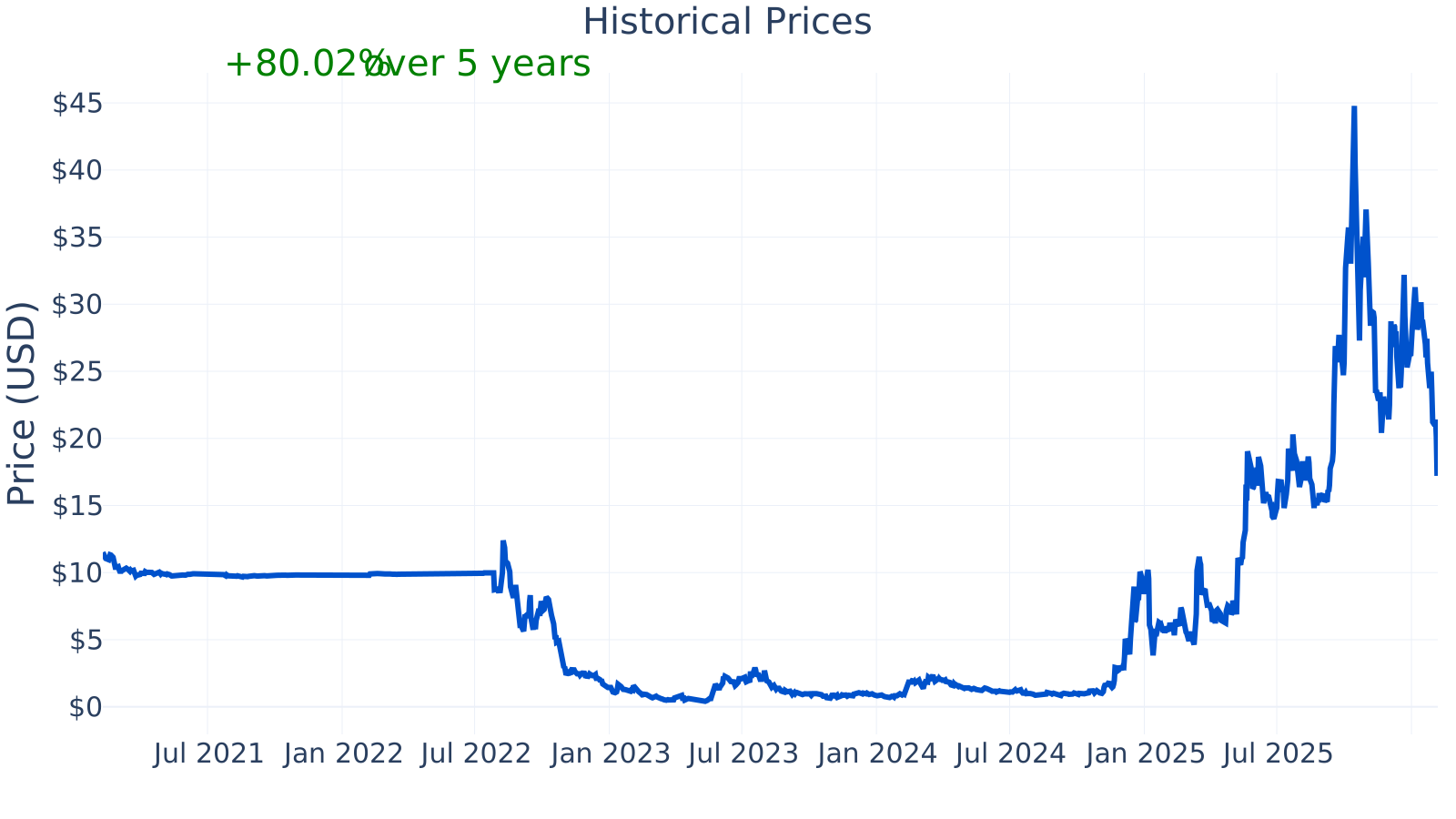
D-Wave’s market capitalization is about $7.66B, and the stock’s beta of 1.57 suggests price moves have been more volatile than the broader market. The company’s trailing profit margin is shown as 0% here, while the industry median is about 3.74%, consistent with a business that is not currently profitable. Year-over-year revenue growth is shown around 99.95%, above the industry median of about 21.5%, but this can be affected by a small starting revenue base. Debt-to-equity is about 5.93% versus an industry median near 4.92%, which is relatively low in absolute terms.
Growth (High)
Quantum computing is widely viewed as a long-term emerging field, with potential applications in optimization, materials science, and certain complex simulations. That said, commercialization timelines can be long and uneven, and adoption often depends on whether quantum systems can deliver reliable performance advantages at acceptable costs for real customer workloads.
D-Wave’s strategy—selling access through cloud-based offerings and pairing hardware with software tooling and services—fits a common “platform” model: reduce friction for customers, encourage experimentation, and attempt to expand usage over time. For long-term growth, the biggest potential catalysts tend to be (1) measurable improvements in system capability and reliability, (2) repeatable customer use cases that move from pilot projects into ongoing production use, and (3) partnerships that expand distribution and credibility.
The year-over-year revenue growth rate has been volatile, including periods of decline and periods of sharp acceleration. The most recent points show very high growth percentages, but with revenue still at a small absolute level historically, individual contracts or timing effects can strongly influence the growth rate from quarter to quarter.
Free cash flow has been consistently negative over the period shown (roughly -$35M to -$60M range), with the latest value around -$54.76M. This pattern indicates ongoing cash consumption, which is common for R&D-heavy companies, but it increases dependence on cash reserves and/or future fundraising until the business can reach sustainable cash generation.
Risks (Very High)
This article is for informational purposes only and does not constitute financial advice. Some content is AI-generated. See Disclaimer