Stock Analysis · Dutch Bros Inc (BROS)
Overview
Dutch Bros Inc is a U.S. beverage company best known for its drive-thru-focused coffee stands. The menu typically centers on espresso-based drinks, cold beverages, and other customizable offerings, with a strong emphasis on speed, convenience, and customer experience. The company operates and grows a network of shops, and it also works with franchise partners in a smaller portion of the system (based on how the business describes its structure in its filings).
From a revenue perspective, the company primarily generates sales from beverages and related items sold through its shops. In its public reporting, this is generally reflected as revenue from company-operated locations, with additional revenue streams tied to franchised locations (for example, fees and other franchise-related income, depending on the period and reporting categories used).
Main sources of revenue (typical structure described in filings):
- Sales from company-operated shops (the primary driver)
- Franchise-related revenue (smaller than company-operated sales)
- Other/ancillary revenue (if reported, generally minor)
The company’s recent financial trajectory shows a business scaling revenue while working to expand operating profit. Total revenue increased from about $498M (2021) to about $1.64B (2025), while net income moved from a loss to positive results over the same period.
Across 2021–2025, revenue rose steadily (about $498M to about $1.64B). Over that span, operating income improved from negative (about -$112M in 2021) to positive (about $161M in 2025), and net income improved from about -$12.7M to about $79.8M. One notable ongoing cost line is interest expense, which is meaningful relative to net income in multiple years.
Key Figures
| Metric | Value | Industry ⓘ |
|---|---|---|
| Date | Mar 02, 2026 | |
| Context | ||
| Sector | Consumer Cyclical | |
| Industry | Restaurants | |
| Market Cap ⓘ | $8.82B | |
| Beta ⓘ | 2.55 | |
| Fundamental | ||
| P/E Ratio ⓘ | 83.77 | 27.73 |
| Profit Margin ⓘ | 4.87% | 7.24% |
| Revenue Growth ⓘ | 29.40% | 7.35% |
| Debt to Equity ⓘ | 159.96% | 99.20% |
| PEG ⓘ | N/A | |
| Free Cash Flow ⓘ | $54.41M | |
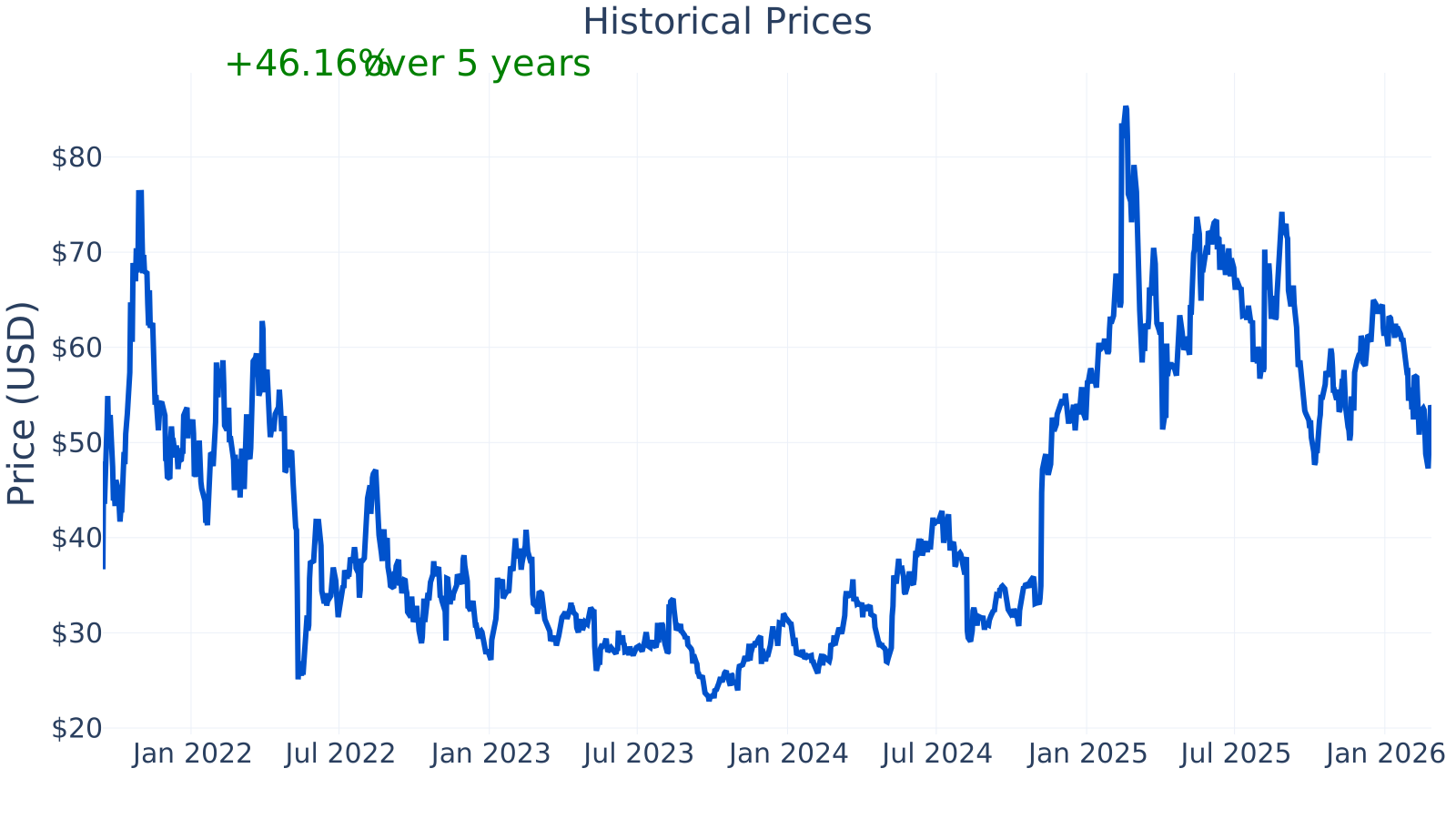
Dutch Bros’ market capitalization is about $8.8B, and the stock’s beta of 2.55 indicates it has historically moved much more than the broader market (higher volatility). The company’s P/E ratio is ~83.8, well above the industry median ~27.7, meaning the market price implies higher expectations for future earnings growth than a typical peer. Profitability is currently positive but comparatively lower, with a net profit margin of ~4.9% versus an industry median ~7.2%. Growth is a standout: year-over-year revenue growth is ~29.4% versus an industry median ~7.4%. Leverage is also higher than typical, with debt-to-equity ~160% versus an industry median ~99%. Free cash flow over the trailing twelve months is positive at about $54.4M.
Growth (Medium)
Dutch Bros operates in the quick-service beverage space, which overlaps with both restaurants and specialty coffee. This is not a niche category: it is a broad consumer market where convenience, brand loyalty, store execution, and unit expansion can drive results. For a company like Dutch Bros, long-term growth often depends on opening new locations, improving sales at existing locations, and maintaining a product lineup that keeps customers returning frequently.
A key indicator of current momentum is the company’s sustained high revenue growth rate. While growth has varied quarter to quarter, the overall pattern shown is consistently elevated compared to typical restaurant peers.
Revenue growth has remained positive and relatively strong over time, reaching about 29.4% most recently. This is materially above the listed industry median (about 7.4%), suggesting Dutch Bros has been expanding faster than many comparable restaurant companies.
Another important piece for long-term scalability is whether growth is translating into cash generation. Free cash flow has been negative in earlier periods shown and then turned positive more recently, which can matter because expanding a store base usually requires ongoing capital spending.
Free cash flow improved from negative levels (for example, about -$127.5M as of 2023-03-31 and about -$64.6M as of 2024-03-31) to positive (about $32.3M as of 2025-03-31 and about $54.4M most recently in the table). This shift can indicate improving operating efficiency and/or a better balance between growth spending and cash generation.
Potential catalysts commonly discussed in company filings for businesses of this type include continued unit growth, improved shop-level economics, better throughput (serving more customers per hour), and digital engagement (for example, loyalty programs) that supports repeat purchasing. The durability of growth typically depends on execution and on how well the concept travels beyond its strongest regions.
Risks (High)
Dutch Bros operates in a highly competitive, promotion-heavy category. Beverage-focused quick-service brands often compete on convenience, pricing, speed of service, and product innovation. Competitive intensity can pressure traffic, force discounting, and raise marketing costs.
Financial risk is another meaningful consideration. The company’s leverage is above the industry median, and interest expense has been material in the income statement across multiple years. Higher debt can reduce flexibility during weaker consumer demand or cost inflation periods.
Debt-to-equity has been volatile but remains elevated, with the most recent value around 160% versus an industry median around 99%. While the ratio has come down substantially from the very high levels seen in 2022–2023, it still indicates greater use of debt than many peers.
Profitability is improving, but margins remain lower than the industry median. If costs rise (labor, commodities like coffee, occupancy costs) faster than pricing power allows, margin progress can stall.
Net profit margin improved from negative territory in 2021–2022 to a positive level of about 4.9% most recently, but it is still below the industry median of about 7.2%. This gap suggests the company may still be in a margin-building phase relative to more mature or more efficiently scaled peers.
On competitive advantages, Dutch Bros’ differentiation is often described around its service model (fast drive-thru), brand culture, and a menu that encourages customization and frequent visits. These elements can support customer loyalty, but they do not eliminate competition from much larger chains and well-funded regional concepts.
Major competitors in the broader category include large coffee and beverage chains and quick-service brands that sell coffee and cold beverages (including operators with extensive scale, marketing budgets, and supply chain advantages). Relative positioning tends to look like this: Dutch Bros is a smaller player than the largest category leaders, but it has been growing faster than typical restaurant peers, which can matter if it sustains unit expansion and improves margins over time.
Valuation
Valuation often reflects a trade-off between growth expectations and current profitability. Dutch Bros shows high revenue growth and improving profitability, but its current earnings-based valuation appears elevated relative to industry norms.
The latest P/E ratio is about 83.8 versus an industry median of about 27.7. Historically, the company’s P/E shown on the chart has moved widely (with several periods not shown as meaningful values), and in the displayed periods it has remained far above the industry median. In practical terms, a higher P/E generally means the market price implies stronger future earnings growth and/or higher future margins than the average peer. If growth slows or margin gains take longer than expected, a high P/E can leave less room for disappointment. On the other hand, if growth and profitability scale meaningfully, a high valuation can persist for extended periods.
Conclusion
Dutch Bros is a growing beverage-focused restaurant company that has expanded revenue substantially over the last several years and has improved from losses to positive net income. The growth profile stands out versus typical restaurant peers, and free cash flow has recently turned positive, which can be an important sign for a business funding ongoing expansion.
At the same time, the company operates in an intensely competitive market, with profitability still below the industry median and leverage above typical peer levels. The stock’s valuation, as reflected by its P/E ratio, is also materially higher than the industry median, indicating that the current market price embeds relatively ambitious expectations about future earnings growth and margin improvement.
Sources:
- SEC EDGAR — Dutch Bros, Inc. filings (Form 10-K, Form 10-Q)
- Dutch Bros, Inc. Investor Relations — SEC filings and investor materials (company-hosted)
- Wikipedia — “Dutch Bros.” (basic company background)
This article is for informational purposes only and does not constitute financial advice. Some content is AI-generated. See Disclaimer


