Stock Analysis · Dutch Bros Inc (BROS)
Overview
Dutch Bros Inc is a drive-thru-focused beverage company best known for specialty coffee and other made-to-order drinks. The brand operates primarily in the United States and emphasizes speed, convenience, and a customer experience built around frequent visits and a broad menu of customizable beverages.
The company’s business model is largely tied to company-operated shops, where it sells beverages directly to consumers. It also has a smaller franchising presence, where franchisees operate shops and pay fees and/or royalties.
In general, Dutch Bros revenue is mainly generated from:
- Company-operated shop sales (drinks and related items sold directly to customers)
- Franchising and related revenue (fees/royalties and other franchise-related income, smaller portion of total)
Over time, the income structure has shown a rapid expansion in total revenue and a shift from losses to profitability, with operating costs (including labor and other store-level costs) and corporate overhead being the biggest claims on gross profit.
From 2021 to 2024, total revenue rose from about $498M to about $1.28B, while net income moved from a loss (about -$12.7M) to a profit (about $35.3M). This points to a company that has been scaling quickly and gradually converting that scale into positive earnings, even as costs and operating expenses remain a meaningful part of the picture.
Key Figures
| Metric | Value | Industry ⓘ |
|---|---|---|
| Date | Feb 07, 2026 | |
| Context | ||
| Sector | Consumer Cyclical | |
| Industry | Restaurants | |
| Market Cap ⓘ | $9.39B | |
| Beta ⓘ | 2.55 | |
| Fundamental | ||
| P/E Ratio ⓘ | 116.41 | 29.16 |
| Profit Margin ⓘ | 4.04% | 7.98% |
| Revenue Growth ⓘ | 25.20% | 6.90% |
| Debt to Equity ⓘ | 157.88% | 69.29% |
| PEG ⓘ | N/A | |
| Free Cash Flow ⓘ | $65.41M | |
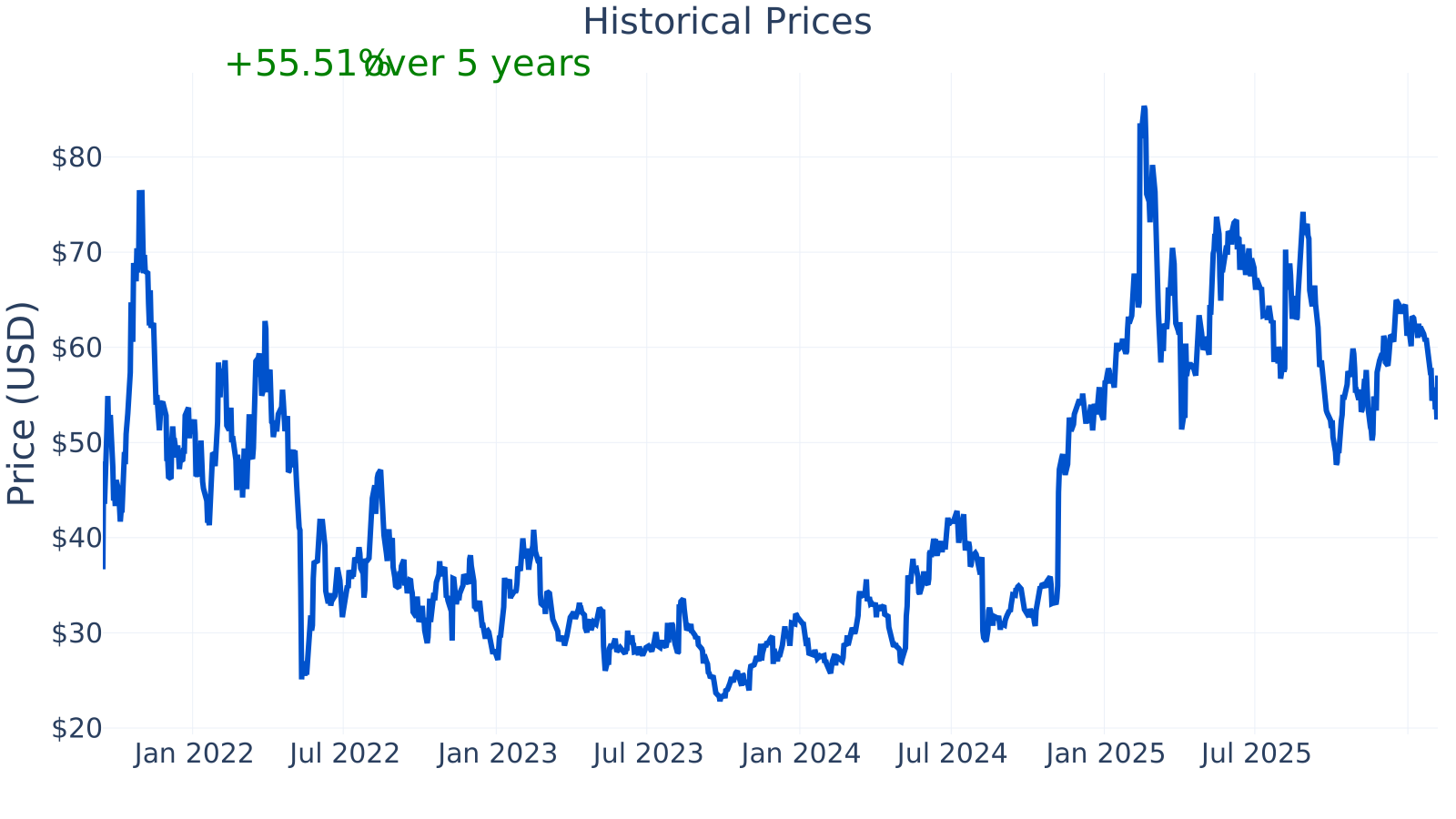
Dutch Bros’ market capitalization is about $9.39B. The stock’s beta of 2.55 signals that its price has tended to move much more than the broader market (in both directions), which can matter to long-term holders who prefer steadier price behavior.
On valuation, the company’s P/E ratio is about 116.4, well above the restaurant industry median of about 29.2. Profitability is still relatively thin: the profit margin is about 4.0% versus an industry median of about 8.0%. At the same time, Dutch Bros has been growing faster than many peers, with year-over-year revenue growth around 25.2% versus an industry median around 6.9%.
Leverage is higher than typical for the peer set: debt-to-equity is about 158% versus an industry median around 69%. On cash generation, trailing twelve-month free cash flow is about $65.4M, which is notable because earlier periods shown were negative.
Growth (Medium)
Dutch Bros operates in the large, established quick-service beverage and coffee market, where demand is supported by habitual consumption, convenience formats (especially drive-thru), and product innovation (cold beverages, energy-style drinks, seasonal offerings). While coffee is not a “new” category, unit growth and same-shop sales execution can still produce expansion for chains that add locations efficiently and maintain strong customer traffic.
A key part of Dutch Bros’ growth strategy has been expanding its shop footprint and increasing sales per shop through speed of service, menu breadth, and marketing that encourages repeat purchases. This matters because new shop openings can lift total revenue even if the broader industry grows more slowly.
The revenue growth pattern shows a transition from extremely high growth rates (above 40–55% in parts of 2021–2022) toward still-strong but more “normalized” growth more recently (around the mid-20% range in the latest period shown). This can be consistent with a business moving from an earlier scaling phase into a larger base where maintaining very high percentages becomes harder.
Cash generation has also improved over time. The free cash flow series moves from negative values in earlier periods to positive territory in the most recent periods shown (about $32.3M in early 2025 and $65.4M most recently). For a growing restaurant chain, this shift can be important because new shop development requires ongoing investment; positive free cash flow can offer more flexibility in how growth is financed.
Potential catalysts for future growth typically center on (1) continued unit expansion, (2) improved shop-level efficiency and margins as the system scales, and (3) sustained customer traffic from product innovation and loyalty engagement. Whether these translate into durable results depends on execution and competitive intensity.
Risks (High)
This article is for informational purposes only and does not constitute financial advice. Some content is AI-generated. See Disclaimer