Stock Analysis · Duolingo Inc (DUOL)
Overview
Duolingo, Inc. is a digital learning company best known for its language-learning app. It offers short, game-like lessons designed to keep people practicing consistently. Over time, the company has expanded beyond languages into additional learning areas and has also built an English-language proficiency test that can be used in certain education-related contexts.
The core model is “free to use, with optional paid upgrades.” Many learners use Duolingo for free, while a smaller portion pays for subscriptions that remove ads and add features. Duolingo also generates revenue from advertising shown to free users and from its English test offering, which is tied to assessment rather than daily practice.
From company filings, Duolingo’s revenue is typically described under three main lines:
- Subscriptions (largest)
- Advertising
- Duolingo English Test (generally the smallest of the three)
In recent years, the company has emphasized subscriptions as the main driver of growth, supported by product improvements and broader global reach.
One notable pattern over time is that revenue has risen substantially (from $369.5M in 2022 to $748.0M in 2024), while the company has moved from losses to positive net income (from -$59.6M in 2022 to +$88.6M in 2024). Operating costs have also increased, especially research and development, which can be consistent with a strategy of reinvesting in product quality and new features.
Key Figures
| Metric | Value | Industry ⓘ |
|---|---|---|
| Date | Feb 08, 2026 | |
| Context | ||
| Sector | Technology | |
| Industry | Software - Application | |
| Market Cap ⓘ | $5.52B | |
| Beta ⓘ | 0.85 | |
| Fundamental | ||
| P/E Ratio ⓘ | 15.04 | 27.79 |
| Profit Margin ⓘ | 40.03% | 6.02% |
| Revenue Growth ⓘ | 41.10% | 15.80% |
| Debt to Equity ⓘ | 7.44% | 25.15% |
| PEG ⓘ | N/A | |
| Free Cash Flow ⓘ | $354.08M | |
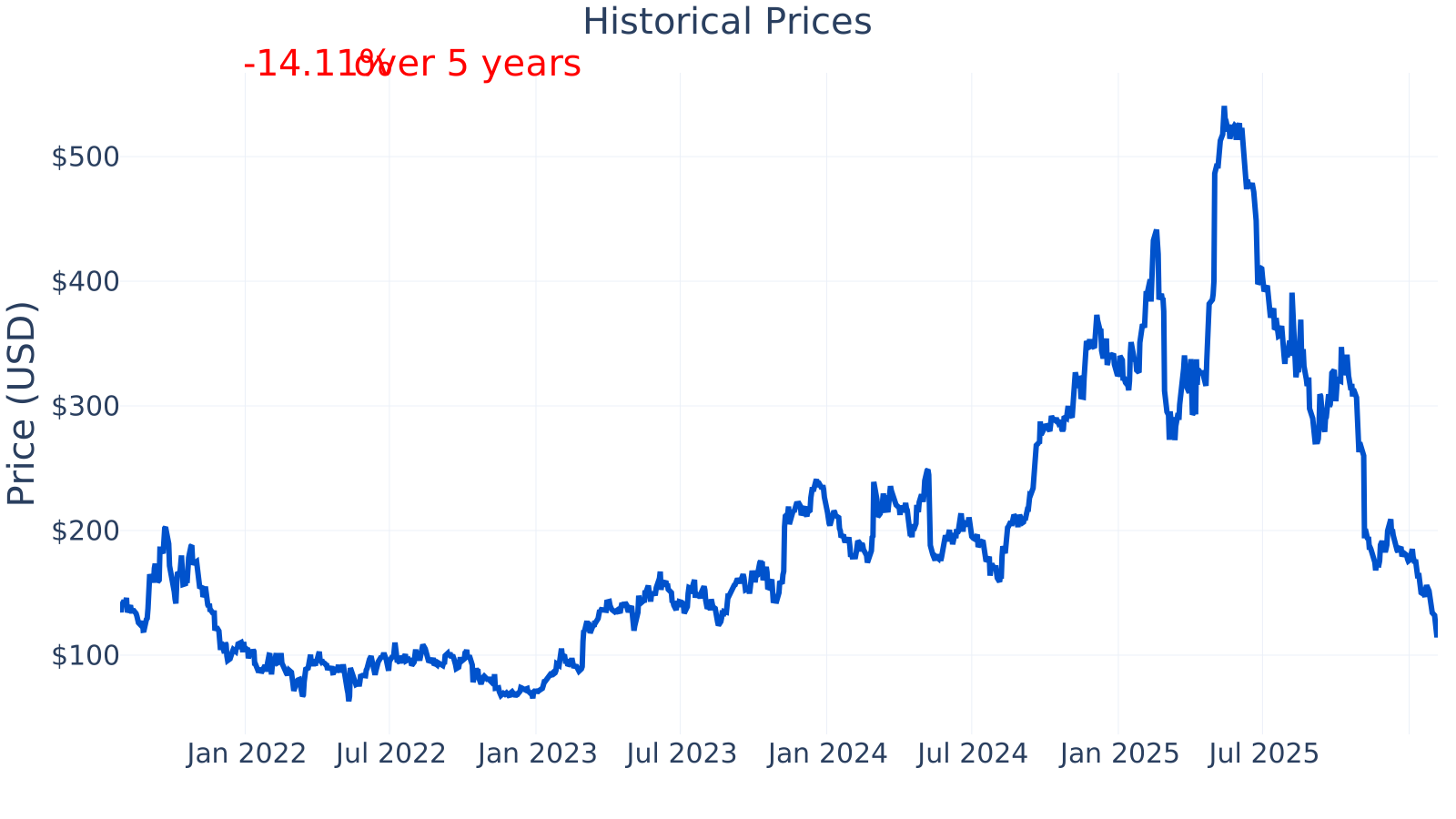
Duolingo’s market capitalization is about $5.52B, and its beta of 0.85 suggests the stock has been somewhat less volatile than the broader market on average (though individual periods can still be very volatile). The company shows a P/E ratio of ~15.0, below the industry median shown here (~27.8). Reported profit margin is ~40.0%, which is far above the industry median (~6.0%), and year-over-year revenue growth is ~41.1%, also above the industry median (~15.8%). Debt appears relatively modest with debt-to-equity of ~7.4% versus an industry median near ~25.2%. Trailing twelve-month free cash flow is about $354.1M.
Growth (High)
Duolingo operates in digital education, where learning is increasingly happening on mobile devices and through subscription-based software. Language learning, in particular, is a large global category with demand tied to work, immigration, travel, and personal development. The company’s app-based delivery model scales internationally without needing physical locations, which can support growth if user acquisition and retention remain strong.
A key part of Duolingo’s strategy is turning a very large base of free learners into paying subscribers over time. Product iteration (new course content, improved lesson design, and features aimed at higher engagement) supports that conversion funnel. Another growth lever is expanding beyond the original use case (language learning) into broader learning categories, while leveraging the same engagement-focused product approach.
The year-over-year revenue growth trend shown remains high across multiple periods, generally ranging around the high-30% to ~50% area, with the most recent value near 41%. Sustaining growth at these levels typically depends on continued subscriber expansion, pricing/packaging discipline, and keeping the free-to-paid conversion engine healthy.
Free cash flow has also increased meaningfully over time (from about $6.0M in 2021 to roughly $290.2M by early 2025 in the trend shown, and about $354.1M on a trailing basis in the latest metrics). For a subscription-led software business, improving cash generation can be an important indicator that the model is scaling and that operating efficiency is improving, even while the company continues to invest in product development.
Risks (Medium)
This article is for informational purposes only and does not constitute financial advice. Some content is AI-generated. See Disclaimer


