Stock Analysis · Driven Brands Holdings Inc (DRVN)
Overview
Driven Brands Holdings Inc. operates a large network of automotive service businesses focused on routine maintenance and repair. Instead of manufacturing cars or selling vehicles, the company mainly serves drivers after a vehicle is already on the road—handling services such as oil changes, car washes, collision repair, paint and dent work, glass repair, and other day-to-day car care needs. It operates through a mix of company-owned locations and franchised shops, depending on the brand and service line.
From a “why it exists” perspective, Driven Brands is positioned around recurring vehicle needs: cars require maintenance over time, and accidents and cosmetic damage happen regardless of new-car sales cycles. In filings, the company generally emphasizes scale (a broad store base), brand recognition, and standardized operating systems as ways to run local service businesses with more consistency.
Main sources of revenue are reported by operating segment in company filings (exact mix can shift year to year based on acquisitions, franchising vs. company-operated mix, and store growth). In general terms, the business is built around multiple service categories:
- Maintenance (e.g., quick lube / oil change and related services)
- Car wash
- Paint, collision, and related repairs
- Other automotive services (including smaller service lines and royalties/fees where applicable)
Across the years shown, total revenue grew from about $1.47B (2021) to about $2.34B (2024). Over the same period, operating results swung from positive operating income (2021–2022) to large operating losses (2023–2024), while interest expense increased materially (from about $76M in 2021 to about $157M in 2024). This combination suggests that profitability has been pressured by a mix of operating costs and financing costs, even as the overall business became larger.
Key Figures
| Metric | Value | Industry ⓘ |
|---|---|---|
| Date | Feb 23, 2026 | |
| Context | ||
| Sector | Consumer Cyclical | |
| Industry | Auto & Truck Dealerships | |
| Market Cap ⓘ | $2.81B | |
| Beta ⓘ | 1.04 | |
| Fundamental | ||
| P/E Ratio ⓘ | N/A | 19.15 |
| Profit Margin ⓘ | -8.12% | 2.54% |
| Revenue Growth ⓘ | 6.60% | 3.90% |
| Debt to Equity ⓘ | 347.26% | 157.49% |
| PEG ⓘ | N/A | |
| Free Cash Flow ⓘ | $41.33M | |
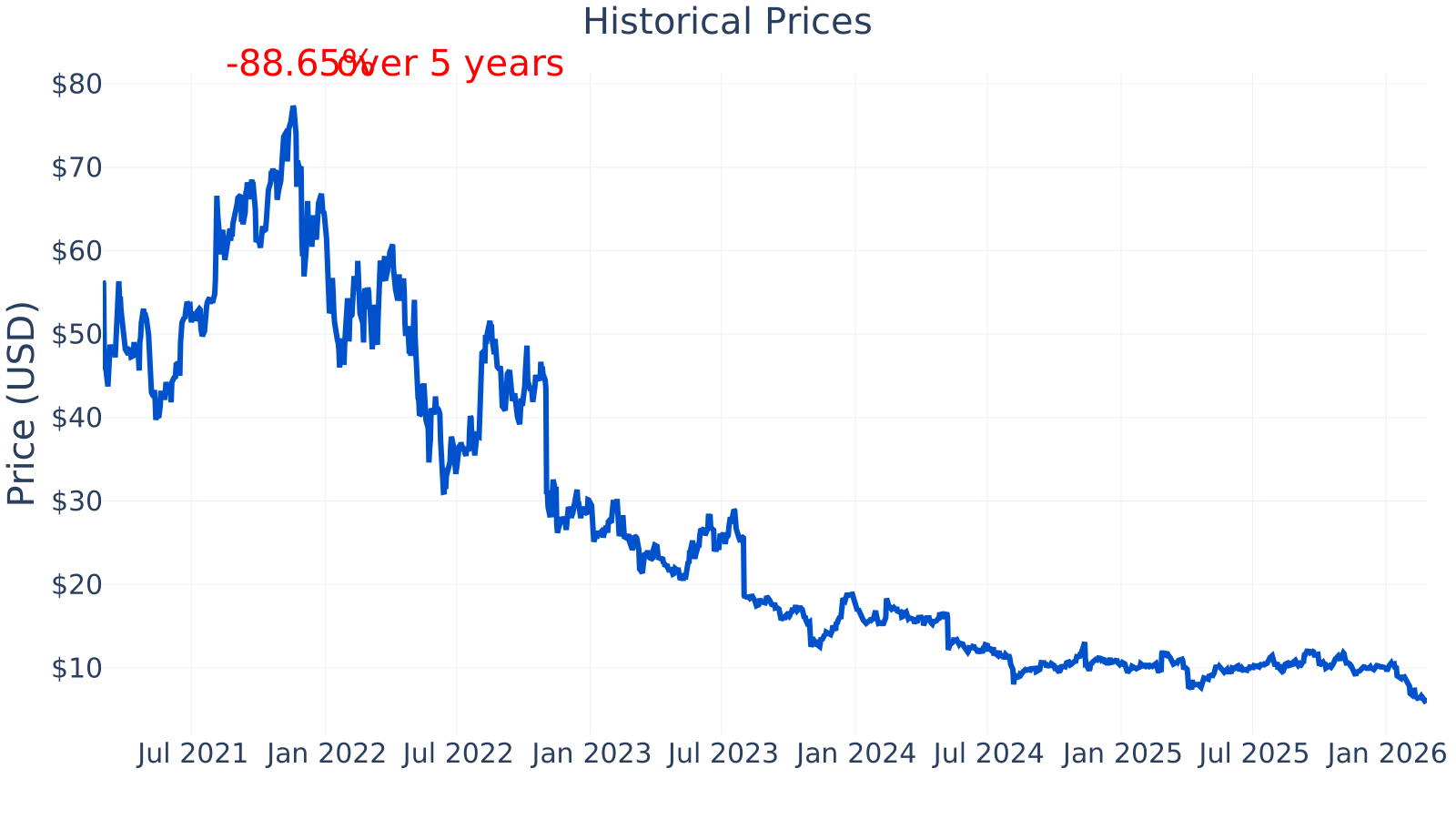
Driven Brands’ market capitalization is about $2.81B, and the stock’s beta (~1.04) indicates price moves that have been broadly similar to the overall market on average. The company shows a negative profit margin (about -8.12%) versus an industry median near +2.54%, which points to weaker recent profitability than many peers. At the same time, year-over-year revenue growth (~6.6%) is above the industry median (~3.9%), indicating faster top-line expansion than the typical company in its peer set. Leverage is elevated, with debt-to-equity ~347% compared with an industry median near 157%. Trailing twelve-month free cash flow is shown at about $41.3M, which is positive but modest relative to the company’s size.
Growth (Medium)
The company operates in a “car parc”-driven market: as long as vehicles stay on the road, owners need maintenance and repairs. This demand tends to be supported by long vehicle lifespans in the U.S. and ongoing usage of existing vehicles. Compared with industries that depend on customers making large discretionary purchases, routine auto service can be steadier—although it is not immune to slower driving activity, deferred maintenance during tight household budgets, or changes in insurance-related repair volumes.
Driven Brands’ growth approach, as reflected in filings, typically combines: (1) adding stores (including franchised expansion), (2) expanding services and throughput at existing locations, and (3) acquisitions that add brands, geography, or capabilities. The potential advantage of this strategy is scale: larger systems can spread advertising, technology, training, and procurement across more locations. The tradeoff is that acquisitions and rapid integration can introduce complexity and can raise financing needs.
Year-over-year revenue growth was very high in 2021–2022 (consistent with a period that can include acquisition impacts and post-pandemic normalization), then slowed markedly, turning negative in parts of 2024 and again in the most recent quarter shown (2025-09-30). The pattern looks more like a business that has moved from rapid expansion to a more moderate (and sometimes uneven) growth profile.
Free cash flow swung significantly over the period shown: positive in 2021–2022, deeply negative in 2023–2024, and then closer to breakeven in early 2025 before returning to positive on a trailing basis in the latest metrics table. For long-term business building, consistency in cash generation can matter because it influences how easily the company can reinvest, reduce debt, or withstand downturns without raising additional capital.
Risks (High)
This article is for informational purposes only and does not constitute financial advice. Some content is AI-generated. See Disclaimer