Stock Analysis · Dropbox Inc (DBX)
Overview
Dropbox Inc. is a software company best known for cloud-based file storage and synchronization. In simple terms, it helps people and organizations save files online, keep them updated across devices, and share them with others. Over time, Dropbox has positioned its product suite around everyday work needs such as collaboration, content sharing, and document workflows, with offerings that generally fit into the broader “cloud productivity” category.
Dropbox primarily earns money through subscriptions. Users (individuals and businesses) pay recurring fees to access paid plans that include more storage, added security and administration features, and additional tools. The company reports revenue largely as a single line item rather than multiple detailed product lines in the way some larger software firms do, but the business model is centered on these recurring subscription payments.
Main sources of revenue (high level):
- Paid subscriptions (individual and business plans) — the core revenue driver for Dropbox
- Add-on features and higher-tier plans — upgrades that expand storage, controls, and workflow capabilities
In recent years, Dropbox’s total revenue has been relatively stable around the mid-$2B range annually (see the operating flow chart below for the overall scale and how costs and expenses compare to revenue).
The operating flow highlights a business with meaningful gross profit (typical for software), but also substantial ongoing spending—especially research and development. It also shows that while revenue has not expanded significantly from 2024 to 2025, operating expenses declined notably in 2025, which can materially affect profitability and cash generation.
Key Figures
| Metric | Value | Industry ⓘ |
|---|---|---|
| Date | Feb 23, 2026 | |
| Context | ||
| Sector | Technology | |
| Industry | Software - Infrastructure | |
| Market Cap ⓘ | $6.66B | |
| Beta ⓘ | 0.63 | |
| Fundamental | ||
| P/E Ratio ⓘ | 14.48 | 24.87 |
| Profit Margin ⓘ | 20.17% | 6.79% |
| Revenue Growth ⓘ | -1.20% | 15.30% |
| Debt to Equity ⓘ | -119.81% | 26.59% |
| PEG ⓘ | 1.95 | |
| Free Cash Flow ⓘ | $930.80M | |
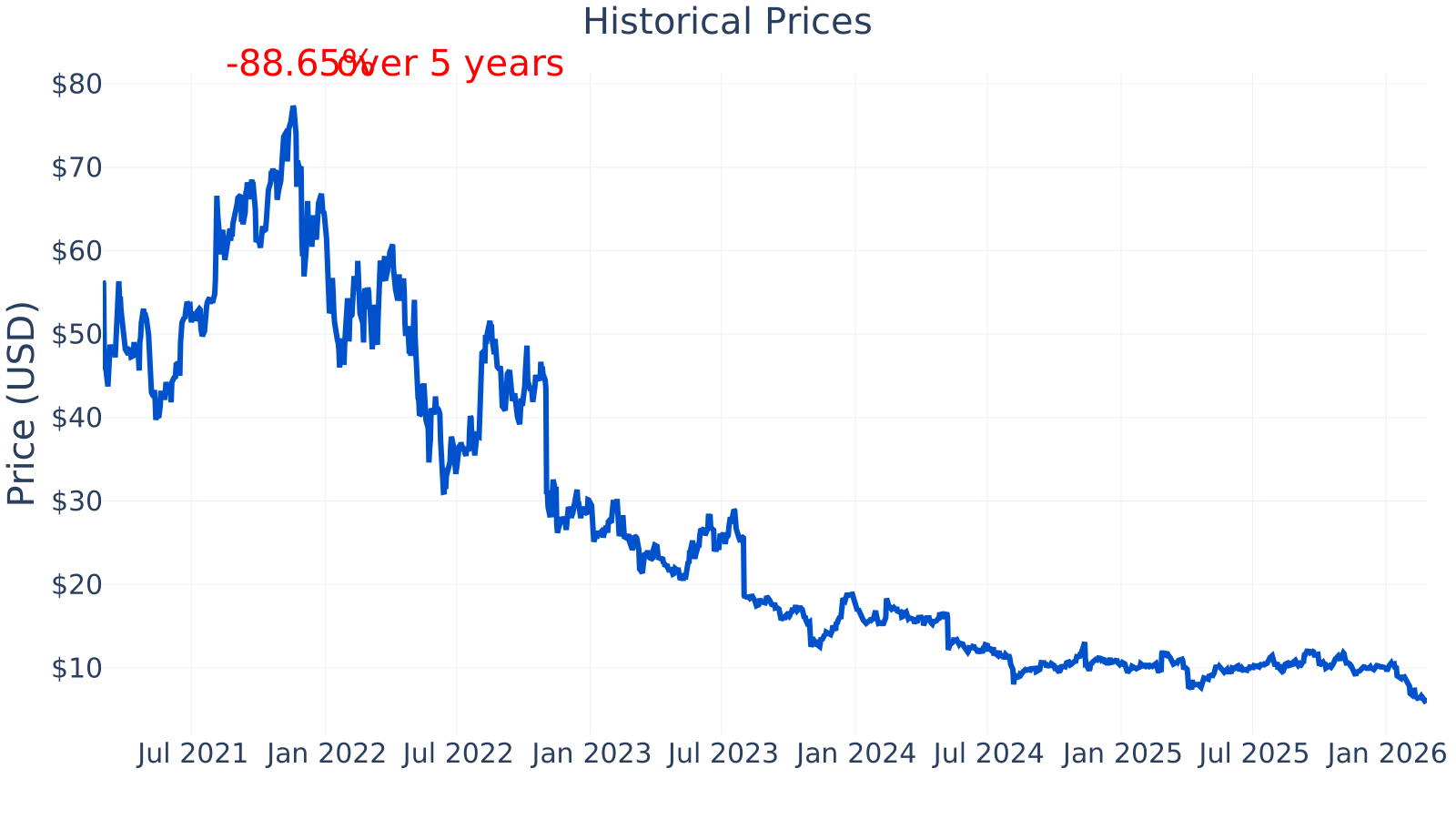
Dropbox’s market capitalization is about $6.7B and the stock’s beta of 0.63 indicates it has historically moved less than the broader market on average (beta is a measure of price volatility relative to the market). The company’s P/E ratio is ~14.5, below the industry median (~24.9), while its profit margin is ~20.2%, well above the industry median (~6.8%). At the same time, the most recent year-over-year revenue growth is about -1.2%, compared with an industry median of ~15.3%, reflecting a slower (and recently slightly declining) top-line trajectory. The free cash flow (TTM) is about $931M, which is a notable cash generation level relative to the company’s size. The reported debt-to-equity is negative (about -120%), which commonly occurs when a company has negative book equity; this can make the ratio less intuitive to interpret than for firms with positive equity.
Growth (Low)
Dropbox operates in the broad market for cloud software used to store, sync, and collaborate on digital content. That overall area has long-term demand drivers (more content being created, more distributed work, ongoing security needs, and cross-device workflows). However, the category is also mature in many segments, with several large platforms offering similar features bundled into wider suites.
Recent revenue trends suggest limited momentum. Dropbox’s year-over-year revenue growth gradually slowed from low-double-digit rates earlier in the timeline to around flat, and then slightly negative most recently.
Even in a low-growth revenue environment, a software company can still improve long-term economics by increasing efficiency, focusing on higher-value customer segments, and improving retention. Cash generation is one practical indicator of that “self-funding” capacity: Dropbox has produced substantial free cash flow over time, and the trailing-twelve-month level is near the high end of the period shown.
Possible catalysts typically discussed for subscription software businesses like Dropbox (described at a high level) include: expanding higher-tier plans for business customers, improving conversion from free to paid users, bundling additional workflow tools into subscriptions, and continued cost discipline. Whether these translate into durable growth depends on product differentiation and competitive intensity.
Risks (Medium)
This article is for informational purposes only and does not constitute financial advice. Some content is AI-generated. See Disclaimer