Stock Analysis · Dream Finders Homes Inc (DFH)
Overview
Dream Finders Homes, Inc. (DFH) is a U.S. homebuilder. In simple terms, it builds and sells single-family homes—mainly in a set of markets where it acquires lots (or controls lots through options), builds homes, and delivers them to buyers. Like most homebuilders, its results can move up or down with mortgage rates, housing affordability, local supply/demand, labor and material costs, and the availability and price of land.
Revenue is primarily generated when a home is delivered to a buyer (the sale is recognized at closing). Homebuilders can also generate smaller revenue streams from activities tied to homebuilding (for example, selling lots or other items), but the core business is selling completed homes.
Main sources of revenue (typical structure for a homebuilder; exact segmentation and percentages depend on the company’s reporting in its filings):
- Homebuilding revenue (home sales at closing) — usually the large majority
- Land and lot-related sales and other — typically smaller and more variable
The company’s income statement profile in recent years shows rising total revenue and profits, while costs (construction costs and operating expenses) and interest expense are key items that influence the final net income.
From 2021 to 2024, total revenue increased from about $1.92B to about $4.45B. Over the same period, gross profit rose (about $314M to $829M) and net income also increased (about $122M to $335M). One notable change is interest expense, which was minimal in earlier years shown and then became much larger in 2024 (about $177M), highlighting how financing conditions and the capital structure can materially affect earnings.
Key Figures
| Metric | Value | Industry ⓘ |
|---|---|---|
| Date | Feb 08, 2026 | |
| Context | ||
| Sector | Consumer Cyclical | |
| Industry | Residential Construction | |
| Market Cap ⓘ | $1.82B | |
| Beta ⓘ | 1.86 | |
| Fundamental | ||
| P/E Ratio ⓘ | 6.89 | 12.00 |
| Profit Margin ⓘ | 6.16% | 8.48% |
| Revenue Growth ⓘ | -3.60% | -4.90% |
| Debt to Equity ⓘ | 116.05% | 34.53% |
| PEG ⓘ | N/A | |
| Free Cash Flow ⓘ | $40.16M | |
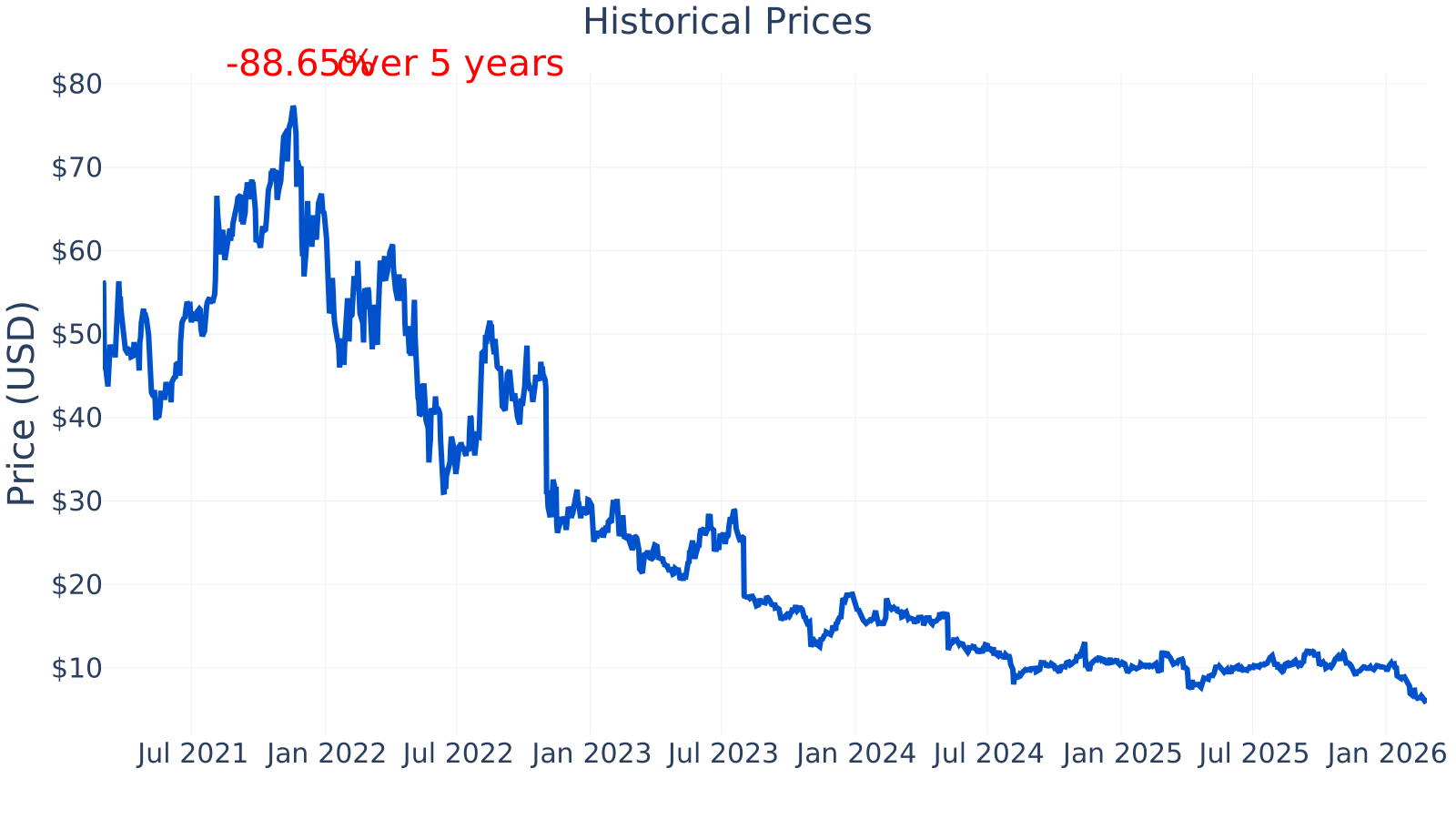
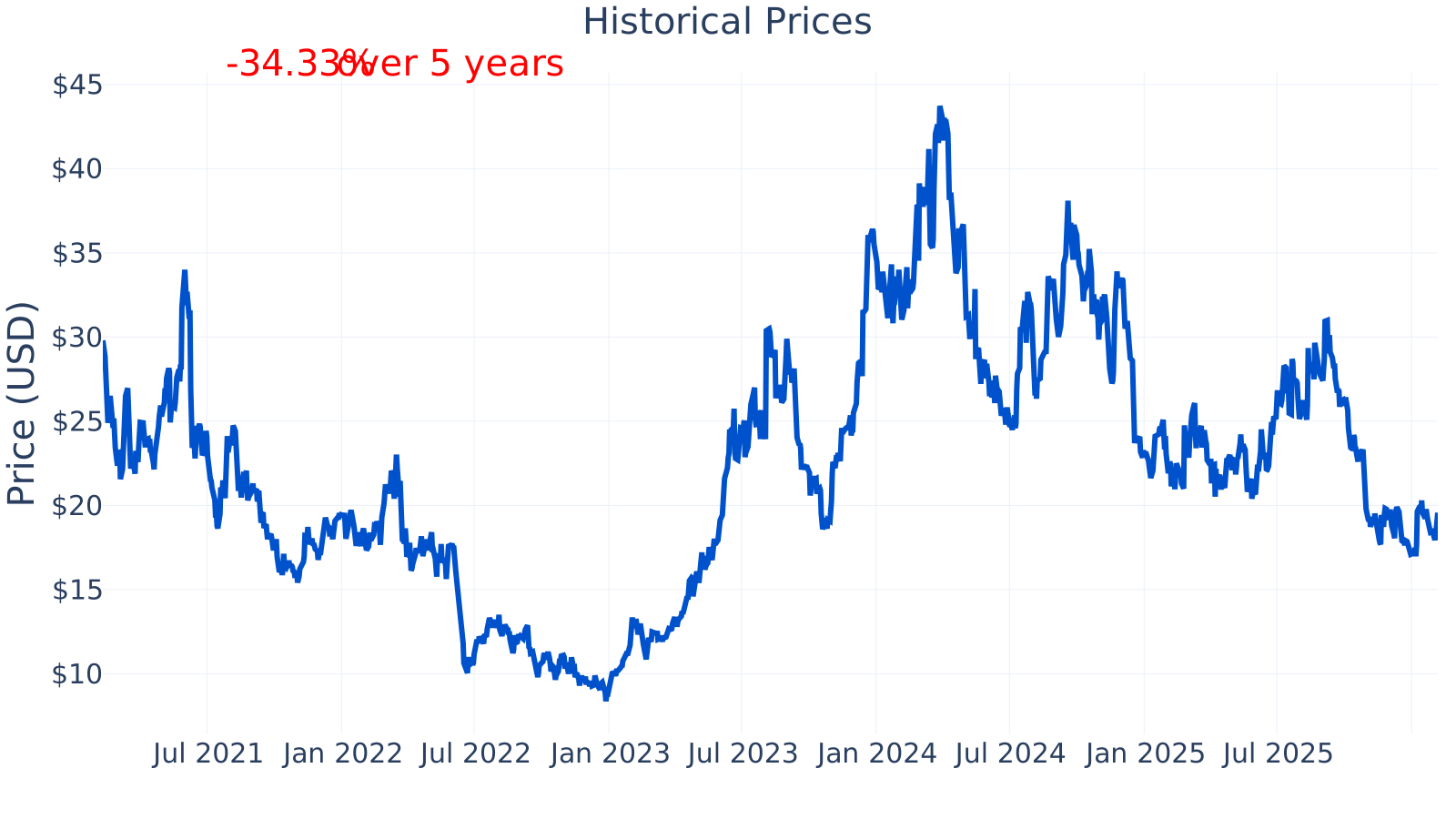
DFH’s market capitalization is about $1.82B. The stock’s beta (~1.86) suggests it has tended to move more than the broader market, which is common for cyclical homebuilders. The company’s P/E ratio (~6.9) is below the residential construction industry median shown (~12.0). Current profit margin (~6.16%) is below the industry median shown (~8.49%). Latest year-over-year revenue growth (~-3.6%) is slightly better than the industry median shown (~-4.9%), though still negative. Debt-to-equity (~116%) is materially above the industry median shown (~34.5%). Trailing twelve-month free cash flow is positive at about $40.2M.
Growth (Medium)
Homebuilding is generally a long-cycle industry tied to population growth, household formation, employment, wages, and available housing supply. Over long periods, demand can be supported by structural needs for housing, but year-to-year performance can swing sharply with interest rates and affordability. That makes “growth” in this industry less about uninterrupted expansion and more about whether a builder can gain share, manage land and construction efficiently, and protect margins through different parts of the cycle.
For DFH specifically, the recent revenue growth pattern illustrates this cyclicality: very strong expansion in 2021–2022, cooling to modest growth through 2023–2024, and then turning slightly negative most recently. In practice, this can happen when the market shifts from rapid demand to a more rate-sensitive environment, where sales pace, pricing, and product mix change.
Free cash flow (cash left after operating needs and capital spending) is important for homebuilders because land and construction require significant working capital. DFH’s free cash flow has been positive in some periods and negative in others, which is common in this business. The most recent trailing period shown is positive, but earlier swings (including a sizable negative period) underline that cash generation can vary based on inventory build, land spend, and closings timing.
Potential catalysts in a homebuilder’s outlook typically include changes in mortgage rates, stabilization (or improvement) in affordability, local housing shortages in the company’s markets, and the company’s ability to control land and convert backlog to closings efficiently. These are not company-specific guarantees; they are common drivers that can help or hurt results over time.
Risks (High)
This article is for informational purposes only and does not constitute financial advice. Some content is AI-generated. See Disclaimer